News Summary
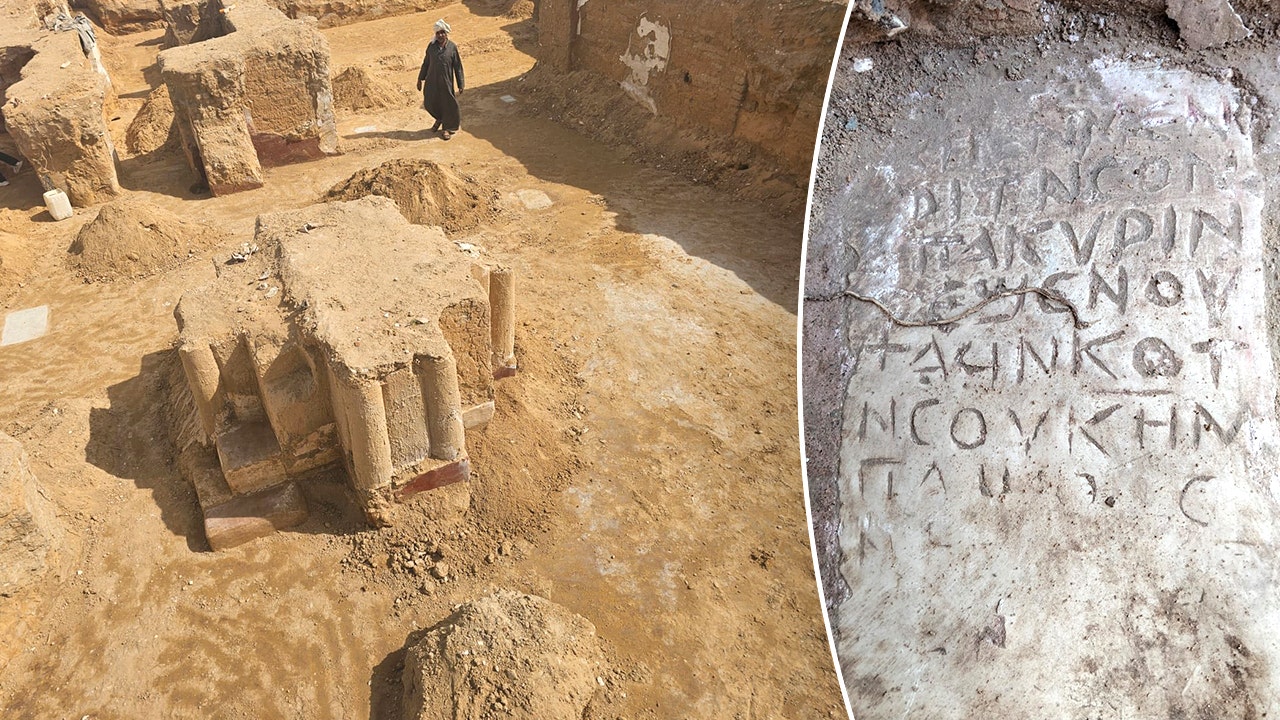
Egypt's Ministry of Tourism and Antiquities announced on March 23 that archaeologists uncovered a 5th-century Christian monastic complex in the Qallaya area of Beheira Governorate. The newly identified structure is interpreted as a guesthouse or communal building associated with early Coptic monasticism and contains 13 multipurpose rooms thought to have been used for hospitality and teaching, plus service areas such as a kitchen and storage. Photographs released by the ministry show well-preserved walls and architectural features; investigators report later architectural additions indicating changing use over time. Excavators found wall paintings, a complete marble column, large numbers of pottery shards (some decorated with plant and geometric motifs and some bearing Coptic letters), bird and animal bones, and oyster shells. An early Greek inscription was also found; officials say it may read “Abba Kir, son of Shenouda,” and suggest it could be a tombstone, but the reading is presented as tentative. Ministry officials, including Hisham El-Leithy of the Supreme Council of Antiquities, described the finds as significant for the study of early Coptic art and for understanding the shift from individual monastic cells to semi-communal living. The announcement references other recent Egyptian discoveries of early Christian sites (e.g., Al-Duwair and Kharga Oasis).
Biblical Reflection
This discovery aligns with the historical record that Christianity and organized monastic life were established in Egypt by the 4th–6th centuries. From a Christian perspective the find is encouraging: it provides material culture that helps trace how believers practiced faith, cared for guests, and formed communal religious life. At the same time, readers should note the provisional nature of archaeological interpretation—the reported translation of the Greek inscription is tentative, dating and function are inferred from architecture and material culture, and full scholarly publication and peer review are needed before firm conclusions. Media accounts sometimes emphasize age and sensational lines (for example, “400 years after Jesus”) in ways that imply certainty beyond what excavation reports typically support. Spiritually, artifacts can strengthen appreciation for our historical rootedness, but they are not substitutes for the gospel or for the church’s present mission. Christians can celebrate stewardship of these remains—praying for their protection and for responsible scholarship—while keeping theological humility: ancient objects point to faith lived in a past time, but do not prove doctrinal claims. Finally, beware of two modern temptations: (1) turning archaeology into proof-texting that elevates objects over Scripture and faith, and (2) nationalistic or commercial exploitation of sacred heritage. Biblical faith commends both gratitude for such discoveries and careful, sober interpretation.
Scripture in context
This outlook does not yet include contextual Scripture citations. Do not treat a general biblical theme as an exegetical conclusion.
Faithful Response
No prescribed response is offered. Consider the reflection prompts below in your own church context.
Reflection and Discussion
- 1Does the article present the archaeological claims as tentative findings or as settled facts? How does that framing affect your assessment of its reliability?
- 2Are we tempted to make ancient objects substitutes for spiritual certainty, or to measure faith by antiquity rather than by the gospel? What balance should Christians maintain?
- 3Who benefits from the publicity around such discoveries (scholars, local communities, governments, tourism), and how might that shape the way the story is told?
Sources
Reporting links are evidence inputs; Sanctuary News' biblical reflection is commentary.
This outlook currently relies on fewer than two linked sources. Broaden verification before teaching from it.
- 1.Original reportprimary