News Summary
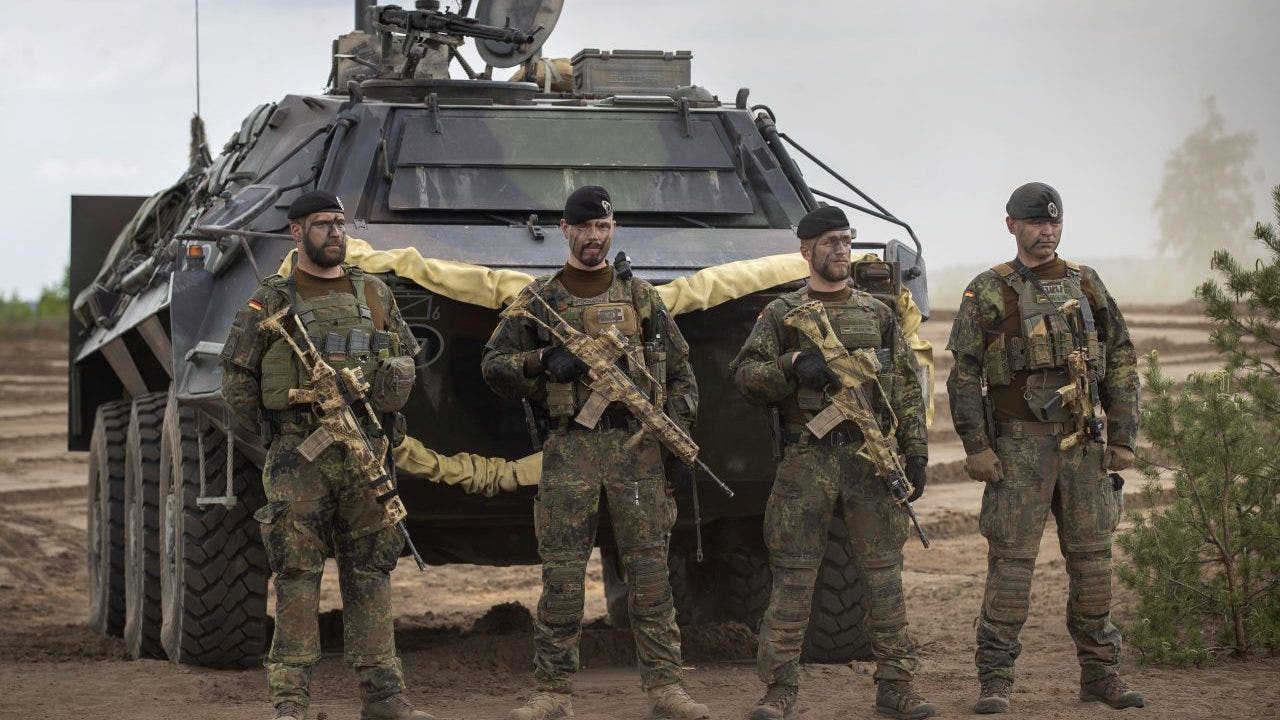
Frontline NATO members closest to Russia — notably the Baltic states, Poland, Romania and Bulgaria — are increasing military spending and rapidly acquiring capabilities to strengthen deterrence. NATO set a new benchmark at the 2025 Hague summit asking members to reach 5% of GDP in defense and security-related spending by 2035 (3.5% for core defense and 1.5% for infrastructure/security). Experts quoted (including retired Rear Adm. Mark Montgomery and U.S. Army War College professor John Deni) say eastern allies are moving faster because of geographic proximity to Russia and are often buying off-the-shelf systems rather than waiting for domestic programs. Finland and Sweden’s accession added advanced capabilities, and some commentators praise Germany’s increased investment and potential role in rebuilding Europe’s defense industrial base. SIPRI data cited shows large Western European economies spending below the 5% target (UK 2.4%, Germany 2.3%, Spain 2.1%, France 2.0%, Italy 1.9% in latest figures). Analysts warn Europe still depends on U.S. strategic enablers (air/sea lift, refueling, space, ISR, cyber) and must expand capacity, rebuild industry, and develop high-end support capabilities. The article references specific developments — Romania planning an average of 3.4% defense spending next year after previously raising to 2% during a prior U.S. administration, and a Russian drone incident in Galați, Romania that injured civilians and prompted an emergency U.N. Security Council session. The piece notes internal U.S. Pentagon deliberations about rotations and some long-range systems, and concludes with expert optimism that NATO will strengthen as Europe invests more and transatlantic ties stabilize.
Biblical Reflection
This report highlights a real strategic gap and legitimate concerns about burden-sharing and deterrence. The factual emphasis on geography-driven urgency is accurate: states nearer to a threat naturally prioritize defense. But the framing centers military responses and U.S.-European dynamics in a way that can underplay diplomatic, humanitarian, and institutional routes to lasting security. From a Christian perspective, protecting the vulnerable and preventing further loss of life are moral goods — yet strength must be tempered by humility, truthfulness, and a pursuit of peace. Beware narratives that normalize perpetual arms competition or that suggest security is solely a matter of military capacity; Christian wisdom calls us to weigh stewardship of resources, the protection of civilians, and the search for just peace alongside deterrence. Also note the article’s sources are primarily defense experts and Western security analysts, which can skew attention toward technical and military solutions and toward U.S. perspectives. Christians should pray for wise, humble leaders who pursue both deterrence and reconciliation, advocate for the safety of civilians, and prioritize long-term stability over prestige or partisan advantage.
Scripture in context
This outlook does not yet include contextual Scripture citations. Do not treat a general biblical theme as an exegetical conclusion.
Faithful Response
No prescribed response is offered. Consider the reflection prompts below in your own church context.
Reflection and Discussion
- 1Whose safety and voices are prioritized in this security conversation, and who might be left out of the planning?
- 2Are we assuming military buildup is the primary path to peace, and what nonmilitary measures (diplomacy, aid, reconciliation) are being underemphasized?
- 3How does reliance on a single great power for key capabilities affect allied responsibility, mutual trust, and long-term stewardship of resources?
Sources
Reporting links are evidence inputs; Sanctuary News' biblical reflection is commentary.
This outlook currently relies on fewer than two linked sources. Broaden verification before teaching from it.
- 1.Original reportprimary