News Summary
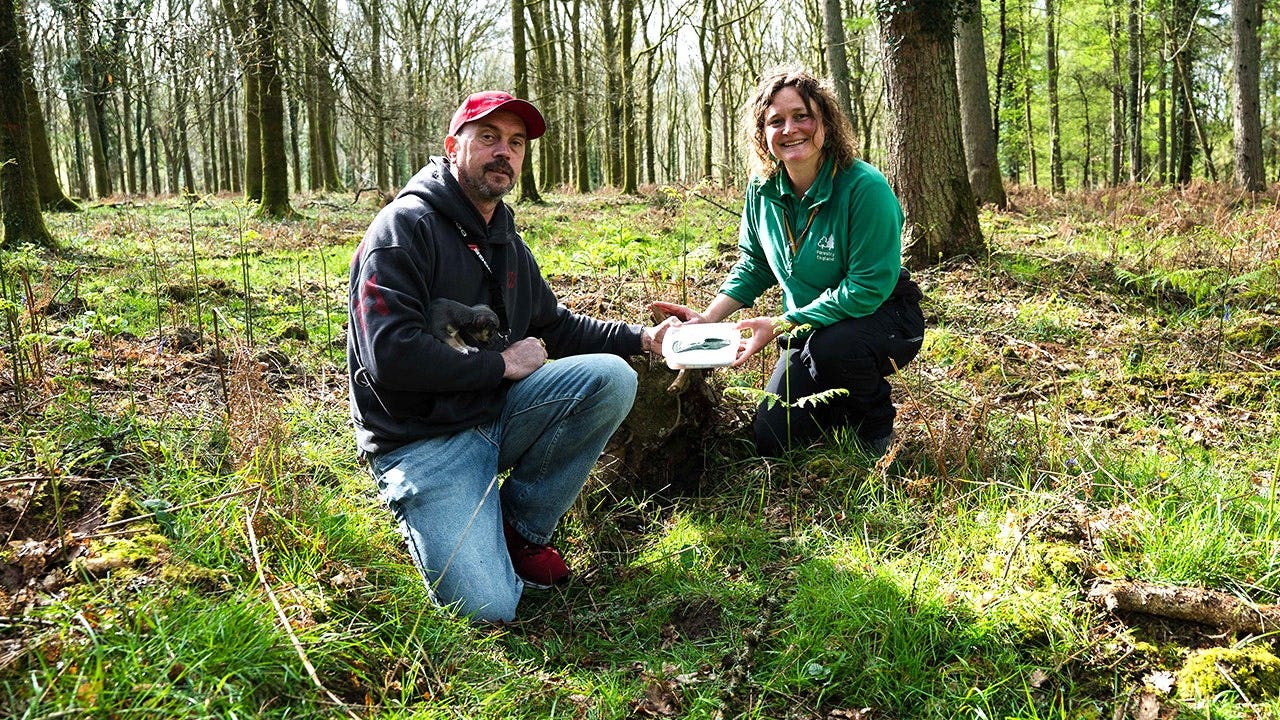
Forestry England announced that a dog walker named John found a Metal Age axe head among the roots of a fallen tree near Brierley in the Forest of Dean, Gloucestershire. Specialists identified the object as a palstave axe made from a copper alloy (likely bronze) and dating to the Middle Bronze Age (roughly 1500–1200 B.C.), making it about 3,000 years old. Kayleigh Spring, an objects conservator at the Wiltshire and Swindon History Centre, examined and conserved the axe: tests showed no chloride ions, soil and corrosion were removed under magnification, and a protective coating (Incralac) was applied. The artifact was recorded and transferred to the Dean Heritage Centre in Soudley for further curation. Forestry England described the find as noteworthy but not unprecedented for an ancient forest with long human activity. The article also briefly references other recent amateur discoveries in the UK and opens with an unrelated mention of a Stone Age dog skeleton found in a Swedish bog.
Biblical Reflection
From a Christian perspective, this story invites humility and wonder at the long span of human history God has overseen. Archaeological finds like this palstave axe provide concrete links to people who lived, worked, and worshiped long before us; they remind us that human dignity and creativity extend across time. The article is largely factual and sourced to conservators and Forestry England, but it leans into feel-good language (“incredible,” anecdotal emphasis on the dog walker) that highlights novelty more than the disciplined work of dating, conservation, and interpretation. Christians should appreciate the stewardship shown by reporting the find and conserving it for the community, while also resisting sensationalism or speculative claims about meaning beyond what evidence supports. Spiritually, such discoveries can prompt gratitude for God’s sustaining of human communities and a sober reminder that our lives are part of a larger story—one that calls for careful stewardship of both the natural world and cultural heritage. Finally, we should check whether reporting centers local expertise and proper custodial practice (it does here) and be wary when media converts archaeological context into mere click-driven narrative.
Scripture in context
This outlook does not yet include contextual Scripture citations. Do not treat a general biblical theme as an exegetical conclusion.
Faithful Response
No prescribed response is offered. Consider the reflection prompts below in your own church context.
Reflection and Discussion
- 1How does the article’s emphasis on the dramatic find (the dog walker, the word “incredible”) shape your sense of the artifact compared with the quieter, methodical work of archaeologists and conservators?
- 2What can the survival and care of ancient objects teach us about our responsibility to steward both the natural environment and the cultural memory of other peoples?
- 3Does this discovery broaden your view of human continuity and dignity across time, and how might that shape the way we tell and preserve histories?
Sources
Reporting links are evidence inputs; Sanctuary News' biblical reflection is commentary.
This outlook currently relies on fewer than two linked sources. Broaden verification before teaching from it.
- 1.Original reportprimary