News Summary
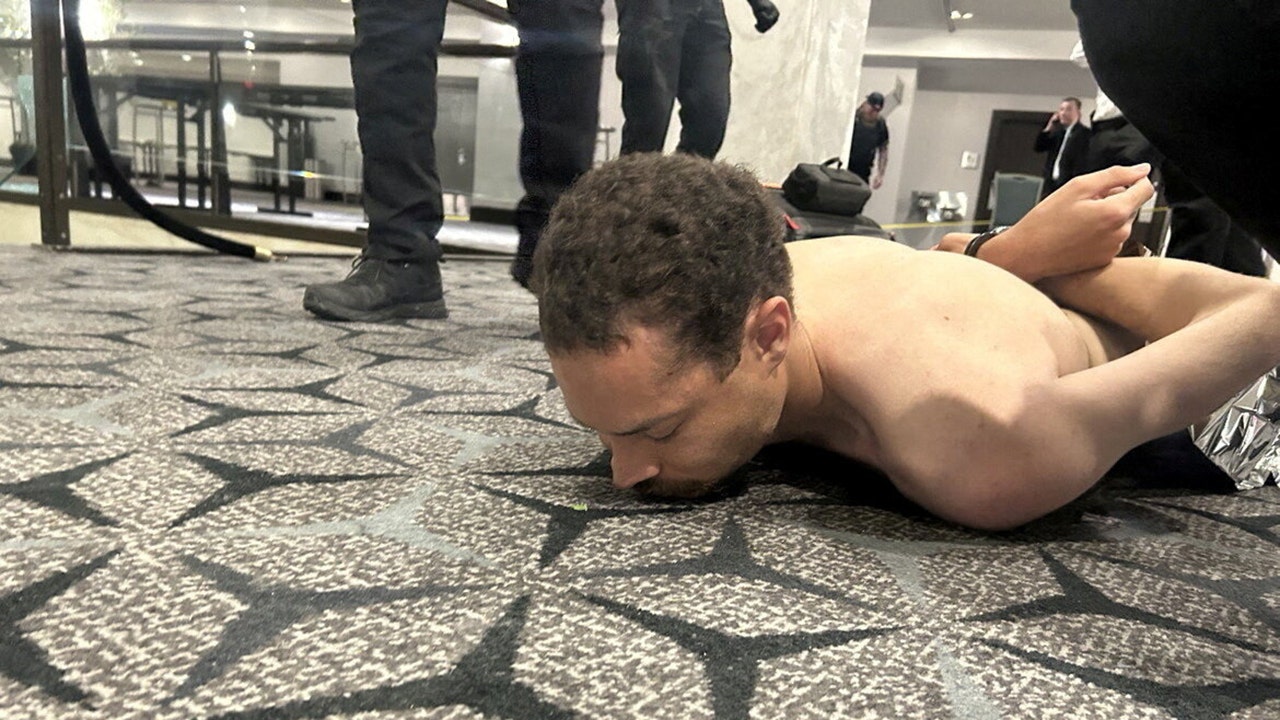
On April 25, 2026, Cole Tomas Allen allegedly fired one shot from a 12‑gauge shotgun at the Washington Hilton during the White House Correspondents' Association Dinner after moving from his 10th‑floor hotel room into the ballroom lobby. Security footage reportedly shows him passing through a magnetometer and firing one shot; a pellet struck a Secret Service agent’s ballistic vest but the agent was not seriously injured. One agent fired five rounds at Allen without hitting him; Allen fell and was apprehended. He is held in a Washington, D.C., jail and was scheduled for arraignment on May 11. Authorities say Allen expressed anti‑Trump sentiments in a manifesto and sent a pre‑scheduled email to family and friends minutes before the incident explaining his actions. A preliminary Department of Homeland Security “Critical Incident Note,” obtained via public records and viewed by Reuters, stated Allen had “multiple social and political grievances” and said the war in Iran “may have contributed to his decision to conduct the attack.” DHS described such notes as information shared with partners after significant incidents and declined to comment on internal communications. The report reportedly relied in part on Allen’s social media posts. Fox News Digital sought comment from Allen’s attorney.
Biblical Reflection
From a Christian perspective, this incident highlights several realities: human beings are capable of grave violence when grievances, ideology, or personal turmoil combine with access to weapons and a willingness to act. The DHS note’s phrasing — that the Iran war “may have contributed” — is appropriately cautious; motive is often complex and rooted in a mix of personal, ideological, and situational factors. Christians should resist simplistic or politicized narratives that reduce acts of violence to a single cause or that use such events to inflame partisan divisions. Scripture calls us to pursue truth, justice, and mercy (Micah 6:8): seek facts from authorities and avoid jumping to conclusions that scapegoat entire peoples or political causes. At the same time, the church must condemn violence unequivocally and pray for victims, for the rule of law, and for the hearts of those who would do harm. We should also be attentive to how media framing and selective emphasis can shape public perception — for example, focusing on the Iran war link could deflect attention from individual responsibility, mental health needs, or failures in security and prevention. Ultimately, the biblical lens asks us to balance a pursuit of justice (holding perpetrators accountable) with compassion, discernment, and commitment to truth rather than partisan advantage.
Scripture in context
This outlook does not yet include contextual Scripture citations. Do not treat a general biblical theme as an exegetical conclusion.
Faithful Response
No prescribed response is offered. Consider the reflection prompts below in your own church context.
Reflection and Discussion
- 1Does emphasizing a single geopolitical factor (the Iran war) risk obscuring personal responsibility, mental health issues, or local security failures in understanding this act of violence?
- 2How might media framing of motive be used—consciously or unconsciously—to advance political narratives, and how can a Christian discern truth amid competing frames?
- 3In responding to political violence, how do we hold together justice (accountability and public safety) and mercy (prayer for hearts, avoidance of collective blame)?
Sources
Reporting links are evidence inputs; Sanctuary News' biblical reflection is commentary.
This outlook currently relies on fewer than two linked sources. Broaden verification before teaching from it.
- 1.Original reportprimary