News Summary
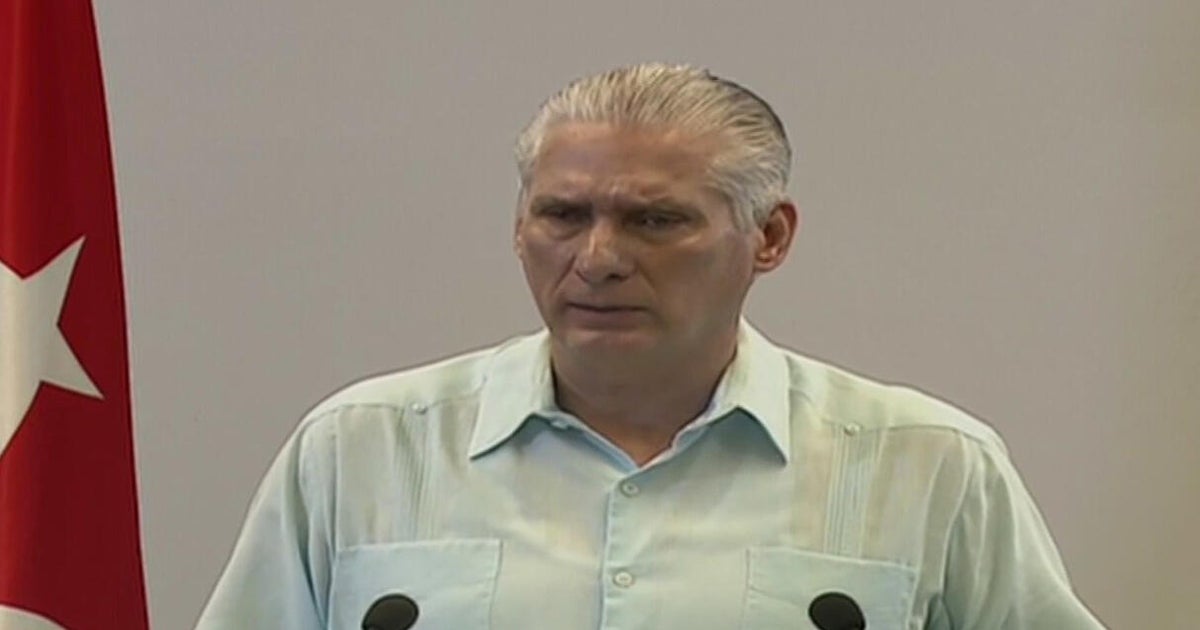
Cuban President Miguel Díaz-Canel confirmed that Cuban officials recently held discreet conversations with U.S. government officials aimed at addressing bilateral differences. He emphasized talks are in early stages, comparable to contacts during the Obama administration, and that negotiations take time and discretion. Díaz-Canel framed the talks as exploratory: identifying issues, possible resolutions, and whether both governments are willing to take steps that could benefit citizens of both countries. He also described a severe fuel shortage on the island—no fuel ships for three months—contributing to rolling blackouts and public hardship. The article notes that President Donald Trump imposed a blockade on oil shipments to Cuba and issued an executive order to sanction countries selling oil to Cuba; the U.N. reportedly has been in talks with the U.S. to allow humanitarian oil deliveries. Díaz-Canel thanked Mexico's President Claudia Sheinbaum, acknowledged receipt of some donations and aid, and announced the planned release of 51 prisoners—an action linked to the Vatican's mediating role. The piece references student-led protests in Cuba and demonstrations in South Florida by relatives of those affected, and quotes a University of Miami expert who sees the prisoner release as an initial gesture of goodwill toward the United States.
Biblical Reflection
From a biblical perspective, the move toward dialogue is broadly positive: Scripture honors peacemaking and reconciliation (e.g., "blessed are the peacemakers"), and Christians should welcome efforts that reduce suffering and open channels for mercy. Dialogue that seeks practical relief (humanitarian fuel, electricity, food) aligns with the call to care for the vulnerable (Isaiah 58, Acts 6). At the same time, the Bible urges discernment and a pursuit of justice (Micah 6:8). Quiet diplomacy can be necessary, but it must not be an excuse for opacity that hides ongoing injustice or the continued suffering of ordinary people. The announced release of prisoners and Vatican involvement may indicate positive openings, yet Christians should be cautious about accepting gestures at face value if systemic issues—lack of religious freedom, political repression, or economic policies that harm civilians—remain unaddressed. Also, policies that cause collective hardship (such as blockades) raise moral questions about proportionality and the protection of noncombatants; loving one’s neighbor across borders calls Christians to advocate for humanitarian relief and accountable, truthful governance. In short: encourage and pray for peacemaking and humanitarian relief, insist on transparency and justice for political prisoners and the poor, and hold both leaders and negotiators to standards of truth, compassion, and stewardship.
Scripture in context
This outlook does not yet include contextual Scripture citations. Do not treat a general biblical theme as an exegetical conclusion.
Faithful Response
No prescribed response is offered. Consider the reflection prompts below in your own church context.
Reflection and Discussion
- 1How can I pray for both practical relief (food, fuel, electricity) and for justice for those detained or oppressed in Cuba?
- 2Where can I, as an individual or church, support trustworthy humanitarian efforts that aid Cuban civilians without enabling abuses?
- 3Am I inclined to take political gestures at face value, or do I seek both compassion and accountability in leaders' actions?
Sources
Reporting links are evidence inputs; Sanctuary News' biblical reflection is commentary.
This outlook currently relies on fewer than two linked sources. Broaden verification before teaching from it.
- 1.Original reportprimary