News Summary
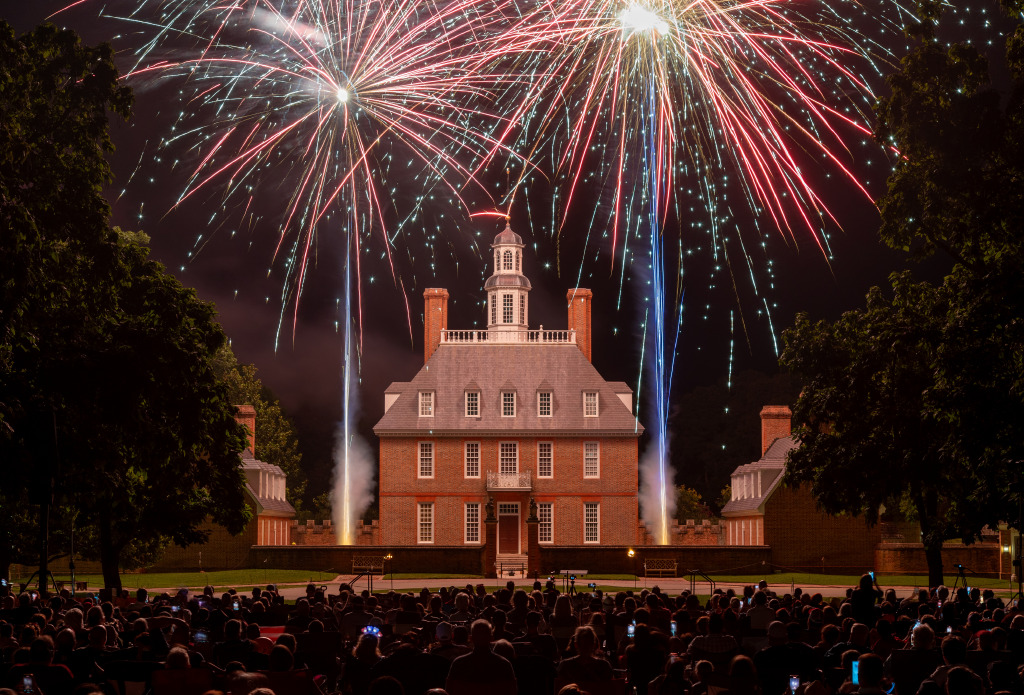
Colonial Williamsburg in Virginia is preparing for large crowds for America 250 celebrations on and around July 4, 2026, including what organizers describe as the largest fireworks show ever produced on site, a drone show, military reenactments, historical programming, costumed interpreters, and a dramatic reading of the Declaration of Independence. Colonial Williamsburg plans to offer free admission on July 4 with online registration for tickets. The article summarizes Williamsburg’s historical role as Virginia’s colonial capital—naming figures such as Washington, Jefferson, Patrick Henry and George Mason—and notes the June 12, 1776, adoption of the Virginia Declaration of Rights and its influence on the Declaration of Independence and the Bill of Rights. It also notes that a substantial portion of Williamsburg’s 18th‑century population was enslaved and says the site’s interpretation now highlights both the realities of slavery and the contributions of Black Americans. The piece recounts 20th‑century decline and restoration efforts led by Rev. W.A.R. Goodwin with major funding from John D. Rockefeller Jr., which created the living‑history museum that today attracts visitors.
Biblical Reflection
The article seeks to celebrate national heritage and attract visitors while acknowledging historical complexity. Its intentions appear promotional—highlighting spectacle, tourism, and patriotic commemoration—yet it does include acknowledgement of slavery and the site's efforts to interpret those stories. Christian discernment calls us to hold both truths together: gratitude for the ideas and institutions that have protected human dignity in some contexts, and humble repentance for the ways those same places and people participated in oppression. There is a risk in public commemoration that spectacle and pride will overshadow sober remembrance; Christians should test narratives for completeness (whose stories are centered, whose are marginalized?) and press for honest stewardship of memory that honors victims and seeks reconciliation. Celebrations can be opportunities for education, confession, and hospitality if organizers and visitors resist triumphalism and intentionally include voices of descendants and the marginalized.
Scripture in context
This outlook does not yet include contextual Scripture citations. Do not treat a general biblical theme as an exegetical conclusion.
Faithful Response
No prescribed response is offered. Consider the reflection prompts below in your own church context.
Reflection and Discussion
- 1Does the programming at this celebration center the full story of the nation—its ideals and its injustices—or mainly promote patriotic spectacle?
- 2Whose voices and experiences are given prominence in public history here, and who remains on the margins?
- 3How might a Christian posture of gratitude, lament, and repentance shape the way we participate in national commemorations?
Sources
Reporting links are evidence inputs; Sanctuary News' biblical reflection is commentary.
This outlook currently relies on fewer than two linked sources. Broaden verification before teaching from it.
- 1.Original reportprimary