News Summary
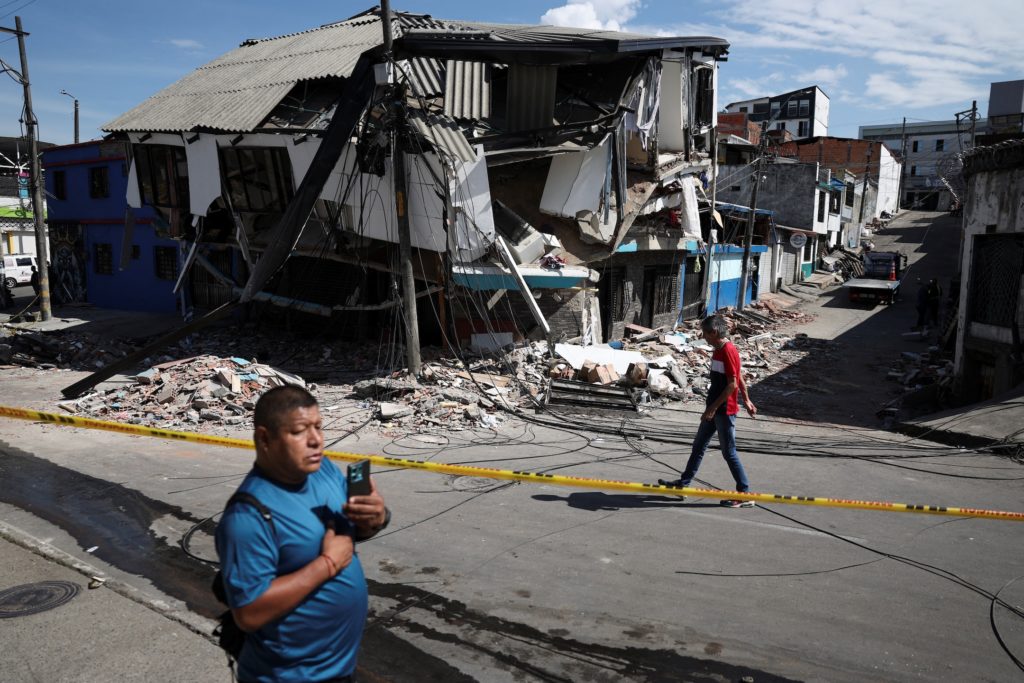
PBS NewsHour’s brief news wrap attributed three core claims to named officials: Colombia’s president said more than 260 people have been confirmed dead after this week’s earthquake; nearly 20 million people across the U.S. Midwest were reported to be under flood alerts amid ongoing severe storms; and U.S. Defense Secretary Robert Hegseth publicly disputed reports that poor conditions aboard the aircraft carrier USS Abraham Lincoln had caused low morale and suicide attempts among crew members. The wrap is concise and attributes the claims but provides no primary documents, detailed local data, or extended sourcing within the summary.
Source and Framing Analysis
The cluster is based on an aggregated news-wrap format (PBS NewsHour) that compresses separate, high-consequence items into very short lines. Each principal claim is attributed to a named source in the wrap (Colombia’s president; reporting on U.S. weather alerts; Defense Secretary Hegseth), which lends traceability, but the items lack direct links to primary statements, local authority reports, meteorological agencies, Navy reports, or independent verification. That brevity increases the risk that important context (exact timing, earthquake magnitude and epicenter, geographic distribution of casualties and damage, which agencies issued flood alerts, the nature and provenance of the reports about the USS Abraham Lincoln) is missing. Where the wrap summarizes a dispute (Hegseth disputing prior reporting), it records disagreement but does not document the original allegations or provide evidence either way. Readers should treat the wrap as a starting point for further verification, not as definitive accounting.
How sources covered this story
Sanctuary separately assesses reporting quality and alignment with Christian virtues. The virtues assessment considers truthfulness, dignity, compassion, justice, peacemaking, humility, and care for vulnerable people. It does not assess a publisher's faith or reward religious language.
Compare 1 reports
Reporting 75/100Virtues 70/100
- Distinctive contribution
- Confirms a quantified casualty figure (>260 confirmed dead) attributed to Colombia's president, and supplies brief, attributable mentions of large-scale flood alerts and an official dispute regarding shipboard conditions.
- Framing
- Concise, headline-style news wrap. Facts are presented briefly and attributed (to 'Colombia's president' and to 'Defense Secretary Hegseth' disputing reports). Tone is neutral and summary-oriented rather than analytical.
- Omissions or uncertainty
- Excerpt is truncated and lacks key contextual details: no date/time of the earthquake, no magnitude or epicenter, no breakdown of casualties or locations within Colombia, no sourcing beyond the named officials, no detail on the flood alerts (exact areas, source agency), and the U.S.S. reference is incomplete (ship not named, nature of reports unclear). Because the snippet is partial, it’s uncertain whether fuller reporting would provide corroborating sourcing or additional specifics.
- Why these scores
- As a brief news-wrap line, the excerpt responsibly attributes its main claims (to Colombia's president and to a named U.S. official) and gives a clear numeric figure, which is appropriate for a summary format. It is limited by brevity and truncation, lacking deeper context, sourcing detail, or explanatory information that a fuller report would provide, but within the apparent purpose (a quick news summary) it is clear and appropriately attributed. The excerpt is factual, non-sensational, and attributes claims to named officials, which aligns with honesty and humility. It does not dehumanize or exploit suffering. Because it is a terse summary, it does not display extended compassion, justice-focused context, or attention to vulnerable people, but it also shows no evident moral failings in its wording or framing.
Biblical Reflection
Factual reporting and pastoral response must be kept distinct. The facts reported, as attributed, point to urgent human suffering (loss of life in Colombia, large U.S. populations at flood risk) and to serious institutional questions about sailors’ wellbeing. A Christian outlook honors truth and seeks justice while practicing mercy and humility: (1) seek verified information from local Colombian authorities, humanitarian agencies, national meteorological services, and official Navy statements before forming or amplifying conclusions; (2) prioritize practical care for those who are suffering — grief support, emergency relief, safe shelter, and medical care — rather than political point-scoring; (3) advocate for transparent, evidence-based inquiry into reported harms to service members while avoiding gossip or premature judgment; (4) hold in prayer both victims and responders and the leaders responsible for coordinating relief and accountability. Concretely, Christians should combine prayer with informed giving to vetted relief partners, pastoral presence to affected communities and military families, and patient, justice-seeking reporting of verified facts.
Scripture in context
- 1Matthew 25:31-46 — Jesus’ teaching about the final judgment where care for the hungry, thirsty, stranger, naked, sick, and imprisoned is counted as care for him. — This passage summons Christians to recognize disaster victims and those in institutional hardship as neighbors deserving concrete, practical care. It grounds emergency relief, compassionate presence, and advocacy for the vulnerable as central to discipleship rather than optional extras.
Faithful Response
Pray specifically for the victims and families in Colombia, flood-threatened communities in the U.S. Midwest, and sailors and families connected to the USS Abraham Lincoln. Include prayers for responders, medical workers, and civic leaders.
Give to vetted, transparent humanitarian organizations with on-the-ground partners in Colombia and flood response capacity in the U.S.; prioritize agencies that publish logistics and use local networks.
Seek reliable, primary updates before sharing: monitor Colombian government briefings, national meteorological services for flood alerts, and official Navy statements or Inspector General reports regarding shipboard conditions.
Offer pastoral care and counseling to anyone distressed by the news; provide congregational resources and helplines for people with ties to affected areas or to the Navy.
Encourage sober advocacy: press for transparent investigations if institutional failures are credibly alleged while resisting rumor, sensationalism, or partisan exploitation of suffering.
Reflection and Discussion
- 1When news gives numbers without context, how does our call to love the neighbor guide how we respond practically and theologically?
- 2What steps can we take to resist rushing to judgment about institutional failures while still advocating for accountability and care for those harmed?
- 3How can our congregation balance prayerful attention with concrete action (giving, volunteering, advocacy) when disasters are distant but real?
Sources
Reporting links are evidence inputs; Sanctuary News' biblical reflection is commentary.
This outlook currently relies on fewer than two linked sources. Broaden verification before teaching from it.
- 1.News Wrap: Earthquake death toll in Colombia tops 260primary_reporting