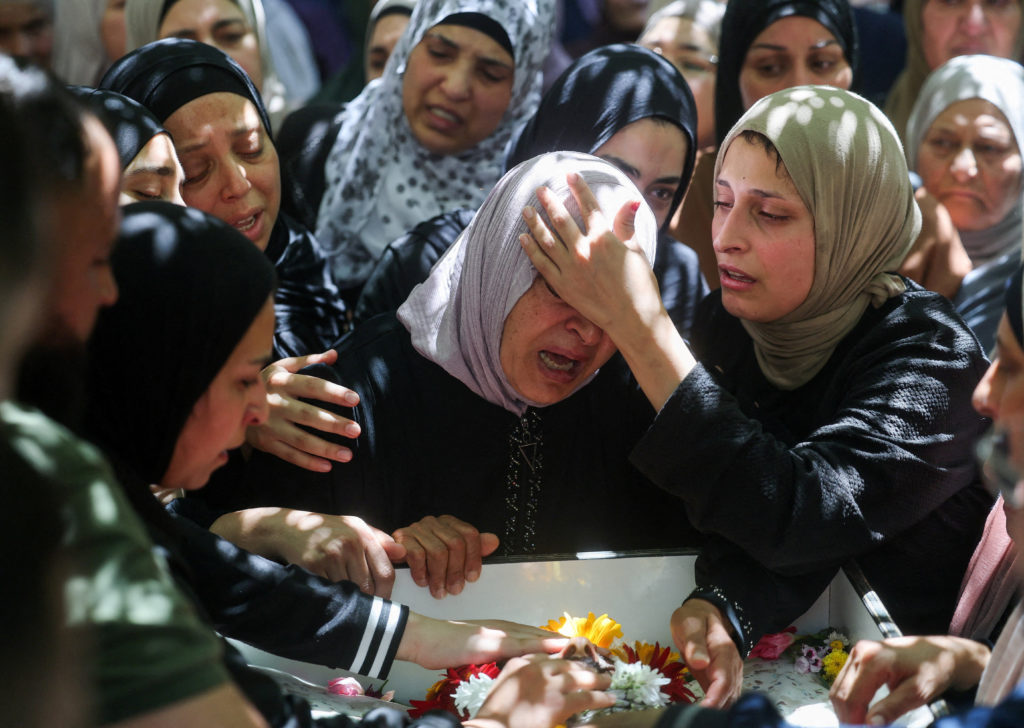
News Summary
Reported facts: PBS reports that after the killing of an Israeli settler, clashes broke out across the occupied West Bank; Israeli forces deployed widely in the territory with operations in Nablus; the violence left two Israeli soldiers and four Palestinian villagers dead; parts of the northern West Bank were placed under lockdown. Attributed claims and uncertainty: the article links the settler's killing as the trigger for the violence (as reported) but provides limited detail on the circumstances of that killing, the identity or affiliations of the dead Palestinian villagers, claims of responsibility or precise sequences of events, and independent verification of casualty counts.
Source and Framing Analysis
Material uncertainties that affect the story include limited contextual detail about the settler killing that allegedly precipitated the clashes, lack of on-the-record statements from all parties (Israeli military, Palestinian health or local authorities, and witnesses), and no additional independent sources provided to corroborate casualty figures and timelines. The article focuses on immediate events and official military movements, which can understate longer-term structural causes such as occupation, settlement activity, or prior incidents that shaped tensions.
Biblical Reflection
The deaths reported here remind Christians that human life is sacred and that pain is often multiplied in cycles of retaliation. Scripture repeatedly prioritizes compassion for the vulnerable and calls believers to be agents of reconciliation; that commitment asks us to grieve openly for those who die and to resist simplifications that turn people into enemies rather than neighbors. At the same time, seeking justice means asking hard questions about power, accountability, and the systems that allow violence to recur. Occupation, settlement expansion, and asymmetries of authority shape who is protected and who is exposed to harm.
Practically, the Christian response should include sober discernment about what is known and unknown, patience to avoid amplifying unverified claims, and a clear preference for protecting civilians and pursuing de-escalation. Christians can hold competing truths together: affirm the right of states to protect civilians while insisting on restraint, the humane treatment of detainees, transparent investigations into killings, and the moral urgency of nonviolent pathways to long-term reconciliation. Compassionate witness also means advocating for humanitarian access and supporting ministries and organizations that aid the wounded and grieving on both sides.
Finally, this event should prompt prayerful reflection rather than partisan triumphalism. In times of violence, the church’s credibility rests on its willingness to mourn all victims, to pursue truth without rancor, and to labor for peace in concrete ways—visiting the bereaved, providing relief, and urging leaders toward accountability and negotiations that protect life.
Scripture in context
- 1Matthew 5 (Sermon on the Mount) — In the Sermon on the Mount Jesus addresses the character expected of his followers, including blessings on the poor in spirit, the mourners, and those who pursue peace; he calls people to non-retaliatory righteousness within a community under Roman occupation. — This passage frames Christian responses to violence: mourn with those who mourn, seek to be peacemakers in settings of power imbalance, and refuse simple cycles of revenge while working for justice that restores life and dignity.
Faithful Response
Pray and lament publicly for all victims and their families without weaponizing grief for partisan gain.
Seek reliable reporting and avoid sharing unverified claims; encourage others to do the same.
Support neutral humanitarian and medical relief efforts that assist civilians affected by the clashes.
Advocate to elected leaders and church networks for protection of civilians, transparent investigations, and diplomatic de-escalation.
Reflection and Discussion
- 1In what ways does our news consumption shape which lives we mourn and which grievances we prioritize?
- 2How should Christians weigh immediate security concerns against long-term justice when public policy and military action are proposed?
- 3What practices can prevent our sympathy from hardening into dehumanization of the other side?
Sources
Reporting links are evidence inputs; Sanctuary News' biblical reflection is commentary.
This outlook currently relies on fewer than two linked sources. Broaden verification before teaching from it.
- 1.Northern West Bank in lockdown as clashes rock villages and Israel deploys troops in Nablusprimary_reporting