News Summary
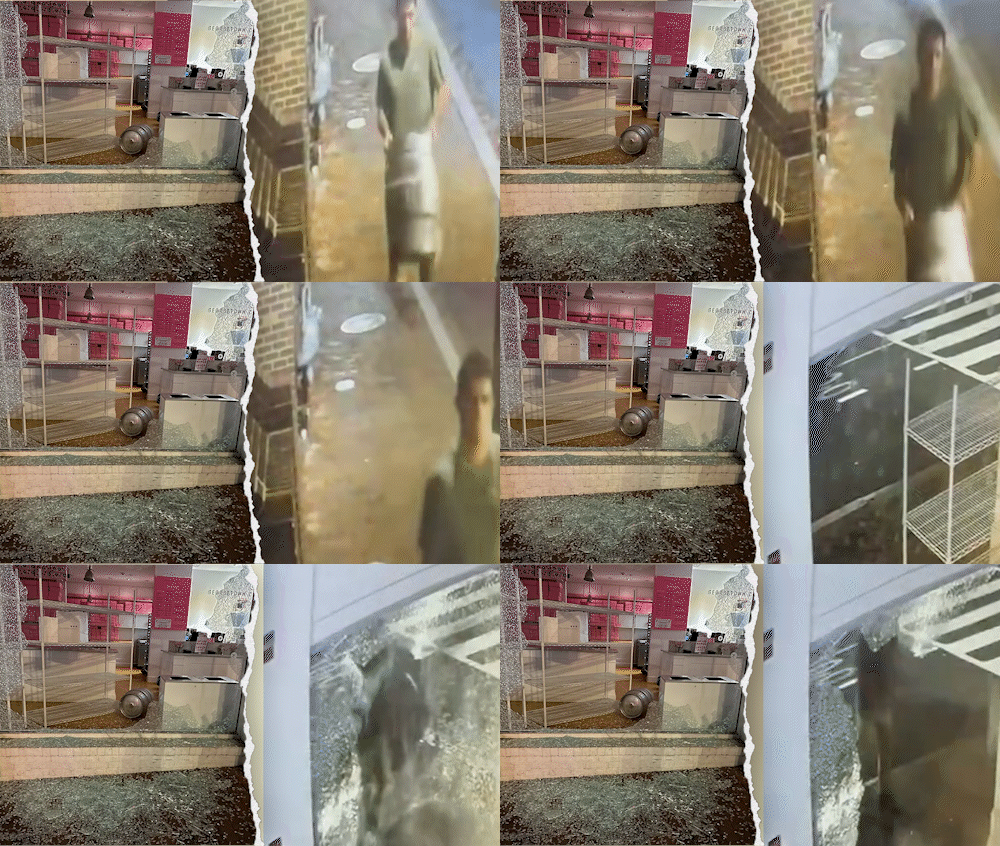
Police in Washington, D.C., circulated surveillance images after a beer keg was thrown through the front window of Georgetown Cupcake on M Street late Sunday night. Charles Joseph Ali of Rockville, Maryland, was identified by his father after the footage was released; Ali and his father went to the Metropolitan Police Department’s Second District Station and Ali surrendered with an attorney. Ali is charged with felony destruction of property and pleaded not guilty in court. A judge ordered his release before trial and instructed him to stay away from Georgetown Cupcake. Authorities suspect Ali may be connected to another April vandalism incident nearby but no charge has been filed in that case. The shop temporarily boarded the window and reopened hours after the incident; owners and at least one employee reported fear and psychological distress. Ali is scheduled to return to court on June 11.
Biblical Reflection
From a Christian perspective, this report highlights multiple moral and communal concerns. Vandalism is an affront to the biblical ethic of respecting others' persons and property; it causes tangible harm and fear to individuals and small businesses and undermines communal trust. The article largely reports facts about identification, surrender, and legal process, but it frames the story around a well-known business (Georgetown Cupcake), which can shift emphasis from broader community harm to a celebrity angle. Also note that while the suspect surrendered and has been charged, reporting presents allegations — not a conviction — so Christians should avoid premature moral certainties.
Biblically, we are called to seek both justice and reconciliation. Justice requires accountability, restitution where possible, and protection for victims (Isaiah 1:17; Micah 6:8). Mercy calls Christians to pray for repentance and transformation for the accused, while not excusing wrongdoing (Luke 17:3–4). The community response should include care for the traumatized employee and support for the small business, a pursuit of truth (not sensationalism), and a posture that holds legal process and due respect for everyone’s dignity.
Practically, Christians should resist voyeuristic or celebratory reactions to others’ misfortune, advocate for honest restitution and safety, and pray for healing — for those harmed and for the one accused — trusting lawful processes to determine guilt and consequence.
Scripture in context
This outlook does not yet include contextual Scripture citations. Do not treat a general biblical theme as an exegetical conclusion.
Faithful Response
No prescribed response is offered. Consider the reflection prompts below in your own church context.
Reflection and Discussion
- 1How does the article’s focus on a well-known shop shape your sympathy or outrage, and what risks does that pose to a fair assessment of community harm?
- 2In what ways can Christians balance calls for accountability and legal consequence with prayers and paths toward repentance and restoration?
- 3What practical steps can a local church or Christian neighbor take to support victims of property crimes while encouraging lawful justice for the accused?
Sources
Reporting links are evidence inputs; Sanctuary News' biblical reflection is commentary.
This outlook currently relies on fewer than two linked sources. Broaden verification before teaching from it.
- 1.Original reportprimary