News Summary
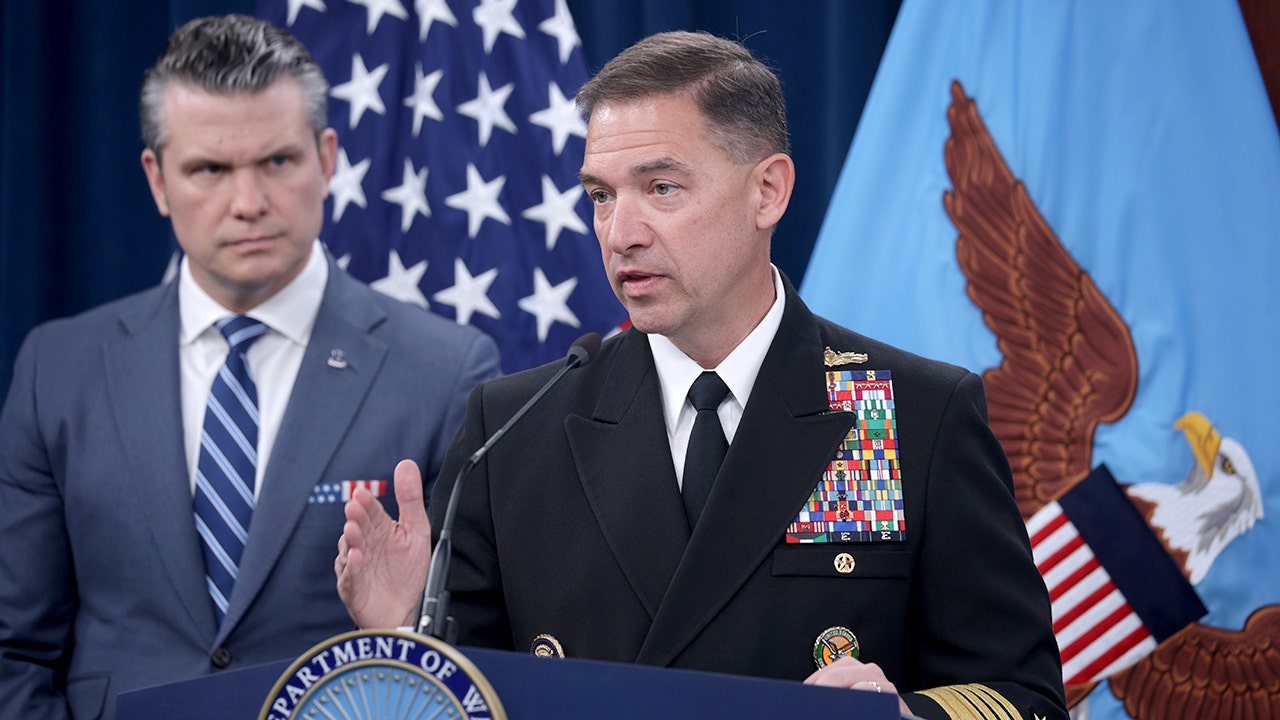
CENTCOM said it conducted "self-defense strikes" on Iranian radar and command-and-control sites for drones in Goruk, Iran and on Qeshm Island over a weekend. The strikes, carried out on Saturday and Sunday, were described by CENTCOM as a response to aggressive Iranian actions that included the shootdown of a U.S. MQ-1 drone operating over international waters. CENTCOM's statement said U.S. fighter aircraft eliminated Iranian air defenses, a ground control station, and two one-way attack drones that posed threats to ships in regional waters, and that no American service members were harmed. The article also reported, citing Fox News Live, that Iranian President Masoud Pezeshkian had submitted a resignation letter to the Office of the Supreme Leader. The piece attributes reporting to Alex Nitzberg of Fox News Digital and includes a Pentagon press briefing photo caption identifying Adm. Brad Cooper and naming "U.S. Secretary of War Pete Hegseth."
Biblical Reflection
From a Christian perspective, this report raises several concerns about truth, framing, and the moral burdens of armed response. The article presents a clear military narrative—CENTCOM's actions framed as "self-defense" in immediate response to a downed drone—which emphasizes protection of U.S. assets and portrays strikes as measured and necessary. That framing can be truthful when used accurately, but it also narrows the reader's view by centering the U.S. perspective and by using language that legitimizes force without exploring alternatives or wider consequences. The report includes factual claims that merit verification (for example, the reported resignation of Iran's president and the caption naming a "Secretary of War," which is not a current U.S. office title), showing how errors or incomplete context can distort understanding. Christian wisdom calls for honesty and humility: seek the truth, question one-sided narratives, and weigh whether actions truly protect the vulnerable or simply escalate violence. We should pray for the protection of innocents on all sides, for leaders to pursue de-escalation, and for transparent accountability about the facts and legal basis for military strikes. The story also invites reflection on what it means to love our neighbor in contexts of national security—caring for our own people while resisting narratives that make an enemy out of the unfamiliar and silence the perspectives of those directly affected.
Scripture in context
This outlook does not yet include contextual Scripture citations. Do not treat a general biblical theme as an exegetical conclusion.
Faithful Response
No prescribed response is offered. Consider the reflection prompts below in your own church context.
Reflection and Discussion
- 1How does the repeated use of the phrase "self-defense" shape our immediate judgment about the strikes, and what additional information would you need to judge its legitimacy?
- 2Whose voices are absent in this report (Iranian civilian or regional perspectives, independent observers, legal authorities), and how does that absence affect our understanding?
- 3Are there nonmilitary paths or diplomatic avenues being reported or pursued that could reduce risk to civilians and prevent further escalation?
Sources
Reporting links are evidence inputs; Sanctuary News' biblical reflection is commentary.
This outlook currently relies on fewer than two linked sources. Broaden verification before teaching from it.
- 1.Original reportprimary