A little more detail
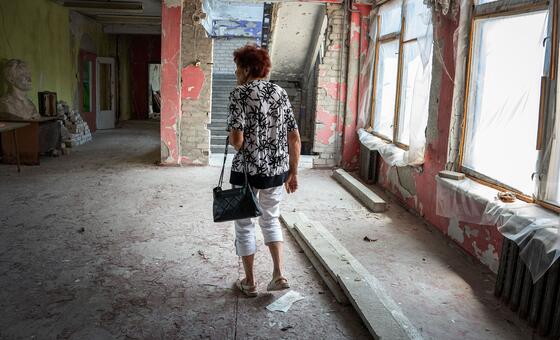
A UN News report cites the UN’s top humanitarian official saying a ceasefire in Oleshky, Ukraine, has created a fragile source of hope for civilians and that those who wish to leave must be allowed to do so safely and voluntarily. The same report also states that attacks on aid vehicles continue.
Source and Framing Analysis
Source: UN News article (attributing statements to the UN’s top humanitarian official). Framing is humanitarian and cautious: it emphasizes civilian protection (safety and voluntariness of departures) and describes the ceasefire as offering hope while noting ongoing attacks on aid vehicles. Strengths: clear attribution to a UN official and a protection-focused frame that centers civilian dignity. Limits and omissions: the report does not identify the named official in the excerpt, does not specify who is responsible for attacks on aid vehicles, gives no casualty, displacement, or humanitarian-access figures, and does not provide independent corroboration or the precise terms/duration/verification of the ceasefire. Because the report is single-sourced in the supplied material, key operational and accountability details remain unverified.
How sources covered this story
Sanctuary separately assesses reporting quality and alignment with Christian virtues. The virtues assessment considers truthfulness, dignity, compassion, justice, peacemaking, humility, and care for vulnerable people. It does not assess a publisher's faith or reward religious language.
Compare 1 reports
Rank 1
UN News: Ukraine: Oleshky ceasefire offers ‘hope’ for civilians as attacks on aid vehicles continueReporting 75/100Virtues 86/100
- Distinctive contribution
- Records the UN humanitarian leadership’s explicit emphasis that civilians who wish to leave must be allowed to do so safely and voluntarily, framing the ceasefire not only as respite but as an opportunity contingent on safety and consent.
- Framing
- Humanitarian and cautious — frames the ceasefire as a source of hope for civilians while foregrounding protection concerns (safety and voluntariness) rather than military or political triumphalism.
- Omissions or uncertainty
- The excerpt does not name the UN official, give dates or duration of the ceasefire, quantify how many civilians are affected, describe who guarantees safe passage, provide verification of the ceasefire’s conditions, or report whether evacuations or aid deliveries have actually occurred. It also does not explain the relationship between the ceasefire and the reported continued attacks on aid vehicles (mentioned in the headline but not in the excerpt).
- Why these scores
- The excerpt is concise, responsibly worded, and attributes the view to 'the UN’s top humanitarian official,' showing appropriate caution. It communicates a clear humanitarian principle (safety and voluntariness). Points are deducted because the excerpt omits identifying the speaker, specific facts (timing, scale, verification), and concrete evidence to support the claim within this excerpt. The content foregrounds protection of vulnerable civilians, respect for human dignity (voluntary movement), and compassion (hope for civilians), aligning strongly with virtues of care and justice. The excerpt demonstrates humility and non-coercive guidance. It loses a few points only because the brief text lacks detail about implementation or accountability measures that would further reflect care for the vulnerable.
Biblical Reflection
The UN's statement highlights a fragile pause in fighting that briefly expands safety for civilians but remains incomplete while attacks on aid continue. As Christians we should notice both the human need and the moral responsibility to protect noncombatants. The report is straightforward but sparse on details about the attackers, casualty figures, and the conditions of the ceasefire—so prudence and measured compassion are needed in our response. Pray for those trapped, support verified humanitarian relief, and insist that belligerents respect the dignity and choices of civilians.
Scripture in context
- 1 (Good Samaritan) — A teacher of the law asks Jesus who is his neighbor; Jesus tells the parable of the Good Samaritan, showing mercy across boundaries and highlighting practical care for a vulnerable person ignored by others. — Reminds Christians that compassion requires concrete action to protect and aid those in harm’s way, even when doing so crosses social or political lines—relevant to urging safe, voluntary passage and unimpeded humanitarian access.
Faithful Response
Pray regularly for civilians in Oleshky, humanitarian workers, mediators, and decision-makers, asking for protection, wisdom, and compassion.
Support reputable, vetted humanitarian organizations that can operate impartially and verify needs on the ground rather than sharing unverified reports.
Advocate—through prayer, respectful public witness, and peaceful civic channels—for safe, voluntary movement for civilians and unimpeded humanitarian access; insist on accountability for attacks on aid vehicles.
Encourage congregations to prepare pastoral care for refugees or traumatized persons and to avoid amplifying unverified claims that could increase fear or harm.
Offer pragmatic help locally (temporary shelter, material assistance, counseling) if your congregation can do so responsibly and in coordination with relief agencies.
Reflection and Discussion
- 1Who is being protected by this ceasefire and who remains at risk?
- 2How should Christians weigh hope in temporary pauses against the reality of ongoing harm?
- 3What concrete steps can our congregation take to support humane, voluntary evacuation and safe humanitarian access?
- 4How can we maintain compassion and discernment when the information available is limited and single-sourced?
Sources
Reporting links are evidence inputs; Sanctuary News' biblical reflection is commentary.
This is a developing, single-source report. Details may change as more reporting becomes available.
- 1.Ukraine: Oleshky ceasefire offers ‘hope’ for civilians as attacks on aid vehicles continueofficial_document