News Summary
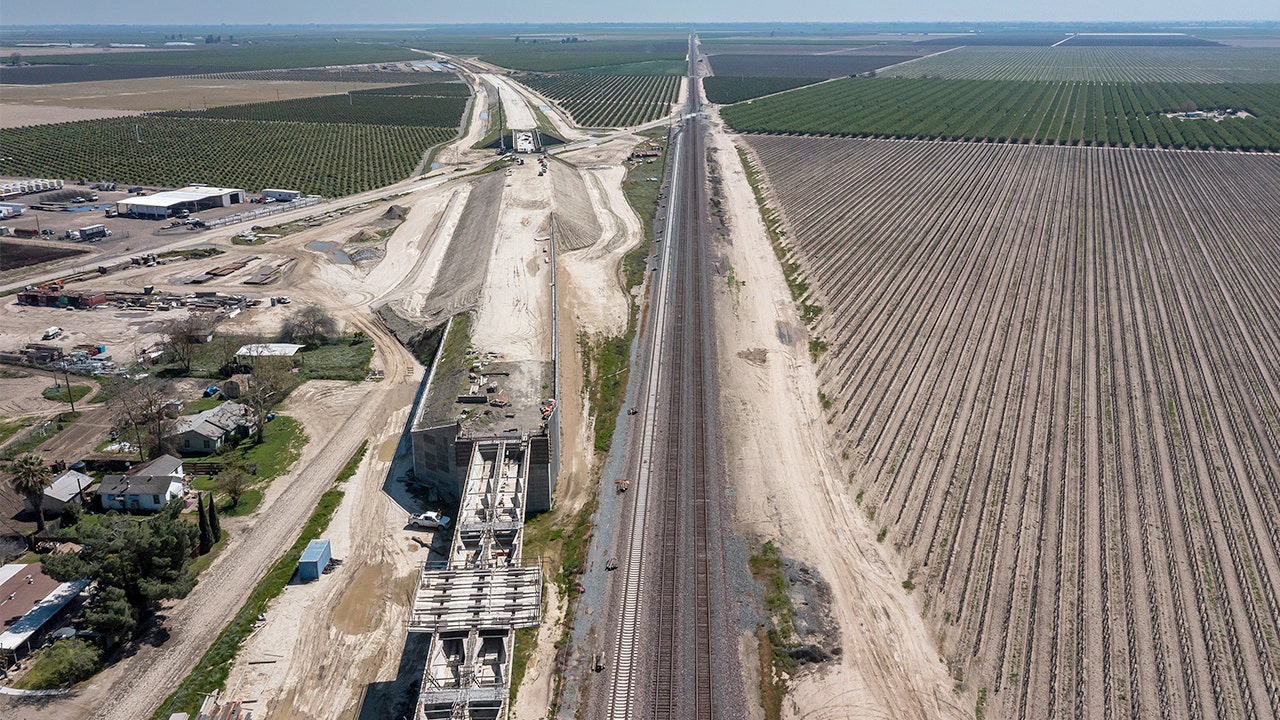
California officials and federal critics say the state’s high-speed rail project—originally presented to voters in 2008 with a $33 billion estimate—is now forecast to cost roughly $125–126 billion. Anthony Williams, a board member of the California High-Speed Rail Authority, gave the updated cost estimate on CBS’s 60 Minutes. State Transportation Secretary Toks Omishakin acknowledged mistakes and said some criticisms are fair. Nearly two decades after the project began, the only major visible work is a Central Valley segment between Bakersfield and Merced; no continuous Los Angeles–San Francisco track has been completed. The earliest projected opening has slipped to 2033. The project faces an estimated funding gap of about $90 billion. Critics, including Rep. Vince Fong and other Republican officials, labeled the effort mismanaged and urged cancellation, citing 597 change orders that cost more than $2.3 billion as of November 2025. The story quotes partisan figures (President Trump, federal Transportation Secretary Sean Duffy) who criticized the project and described federal actions to redirect or withhold funds. State officials say they remain confident additional funding can be found and that work continues on portions of the program.
Biblical Reflection
From a Christian perspective the core concerns here are stewardship, truth-telling, and the common good. Large public projects touch on stewardship of shared resources: taxpayers and communities expect competence, transparent planning, and honest accounting when public funds are committed. The article highlights both factual admissions of error by state officials and strongly partisan criticism; believers should notice both realities without allowing partisan rhetoric to replace sober assessment. The presence of candid acknowledgements—"there were mistakes made"—is a necessary first step toward repair, but confession must be followed by concrete accountability, correction, and restitution where appropriate (Luke 12:48; Matthew 3:8). At the same time, Christians should be wary of simplistic narratives that reduce complex engineering, legal, and funding issues to mere moral failure or partisan victory. The media piece frames the story primarily as an example of government waste and emphasizes political actors who benefit from that frame. That framing can sharpen public pressure for accountability, which is valuable, but it can also encourage cynicism and tribalism. A biblical response calls for discernment: demand accurate audits, transparent decision-making, and responsible oversight while resisting the temptation to celebrate another polity’s failure as moral vindication. Finally, in assessing truth claims, Christians should look for independent evidence (official audits, legal filings, engineering reports) rather than rely solely on political soundbites. Pray for humility from leaders, justice for those harmed by mismanagement, and wisdom for repair and wise use of resources going forward.
Scripture in context
This outlook does not yet include contextual Scripture citations. Do not treat a general biblical theme as an exegetical conclusion.
Faithful Response
No prescribed response is offered. Consider the reflection prompts below in your own church context.
Reflection and Discussion
- 1Which parts of this story are confirmed by primary documents (official audits, budgets, construction reports) and which are framed by partisan commentary?
- 2How does the article’s language (e.g., 'train to nowhere,' 'nightmare,' 'boondoggle') shape your emotional response, and does that language help or hinder sober stewardship?
- 3In what ways should Christian convictions about stewardship, honesty, and accountability shape public expectations for large government projects?
Sources
Reporting links are evidence inputs; Sanctuary News' biblical reflection is commentary.
This outlook currently relies on fewer than two linked sources. Broaden verification before teaching from it.
- 1.Original reportprimary