News Summary
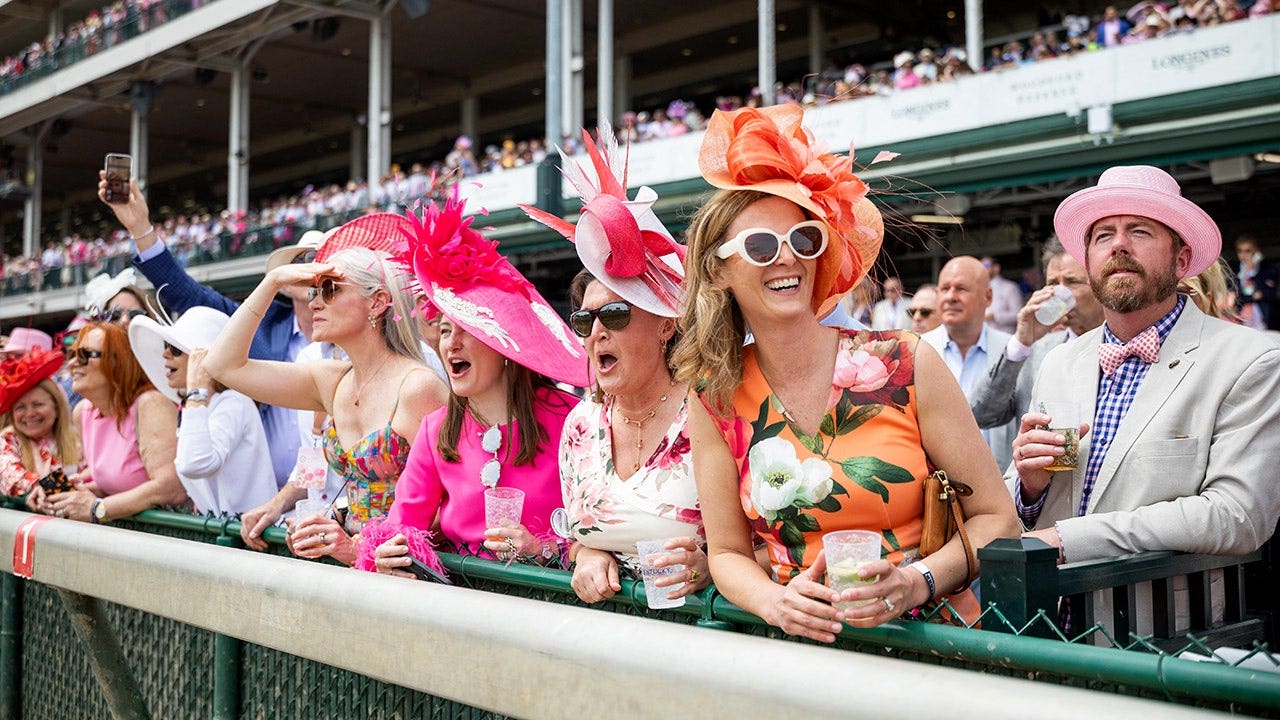
Fox News Digital reports that the Kentucky Derby at Churchill Downs (May 2, 2026) draws roughly 150,000 spectators on race day. The article describes the multi-month preparation behind the event: only three-year-old thoroughbreds qualify through a points system and many qualifying horses arrive at Churchill Downs in early March to train. Staff note morning training hours (about 5:30–10 a.m.), and the facility’s ‘backside’ includes 47 barns, roughly 1,400 horses on the grounds, and as many as 600 workers who live and work on-site; the backside also contains a chapel and a small school. The piece gives cost details for fans: infield access starts near $160, some grandstand seats about $800, cheaper grandstand options exist, about 60,000 grandstand seats are available, and higher-end experiences include Woodford Reserve Paddock Club tables quoted at $16,800 per seat and private turf suites starting at $280,000. The article highlights the scale of investment into horses and training, quotes Kentucky Derby Museum guide Stan Bowling and Churchill Downs representative Darren Rogers, and contrasts Derby pricing with non-Derby race-day ticket prices (as low as $10). It is a descriptive, behind-the-scenes look at preparation, facilities, workforce, and the range of fan experiences and prices.
Biblical Reflection
The article is primarily descriptive and accurate about logistics, timing, and costs; it centers the spectacle, tradition, and commercial scale of the Derby. From a Christian perspective this story raises several spiritual and ethical considerations without naturalizing any single judgment. On one hand, the Derby showcases human creativity, skill, discipline, and long-term commitment—qualities that can reflect stewardship of gifts and excellence (discipline of trainers, dedication of workers). On the other hand, the reporting focuses on consumerism and luxury experiences, while giving little attention to animal welfare, labor conditions, the moral implications of high-stakes gambling tied to racing, or how local communities are affected economically. The underlying worldview in the piece leans toward celebration of spectacle and market value—horses and experiences are presented primarily in terms of points, investment, and price. A faithful Christian reading should neither reflexively condemn cultural traditions nor ignore legitimate concerns. Scripture calls believers to both enjoy legitimate good gifts and to exercise stewardship, justice, and mercy. Ask whether the celebration amplifies idols of wealth, fame, or sport, and whether vulnerable parties—animals and lower-paid workers—are being cared for justly. The article is useful for factual orientation but incomplete for moral discernment; readers should supplement it with information about animal care standards, worker conditions, and the social impact of major sporting events before forming a settled judgment.
Scripture in context
This outlook does not yet include contextual Scripture citations. Do not treat a general biblical theme as an exegetical conclusion.
Faithful Response
No prescribed response is offered. Consider the reflection prompts below in your own church context.
Reflection and Discussion
- 1What is missing from this coverage (animal welfare, worker pay/conditions, local economic impact or gambling-related harms), and how would that information change your assessment?
- 2Does the article’s emphasis on luxury access and price normalize treating animals and workers primarily as means to spectacle and profit? How does that compare with biblical calls to stewardship and justice?
- 3Are we tempted to idolize excellence and spectacle in ways that drown out compassion and wise stewardship? How should Christians balance appreciation for skill and tradition with ethical responsibility?
Sources
Reporting links are evidence inputs; Sanctuary News' biblical reflection is commentary.
This outlook currently relies on fewer than two linked sources. Broaden verification before teaching from it.
- 1.Original reportprimary