News Summary
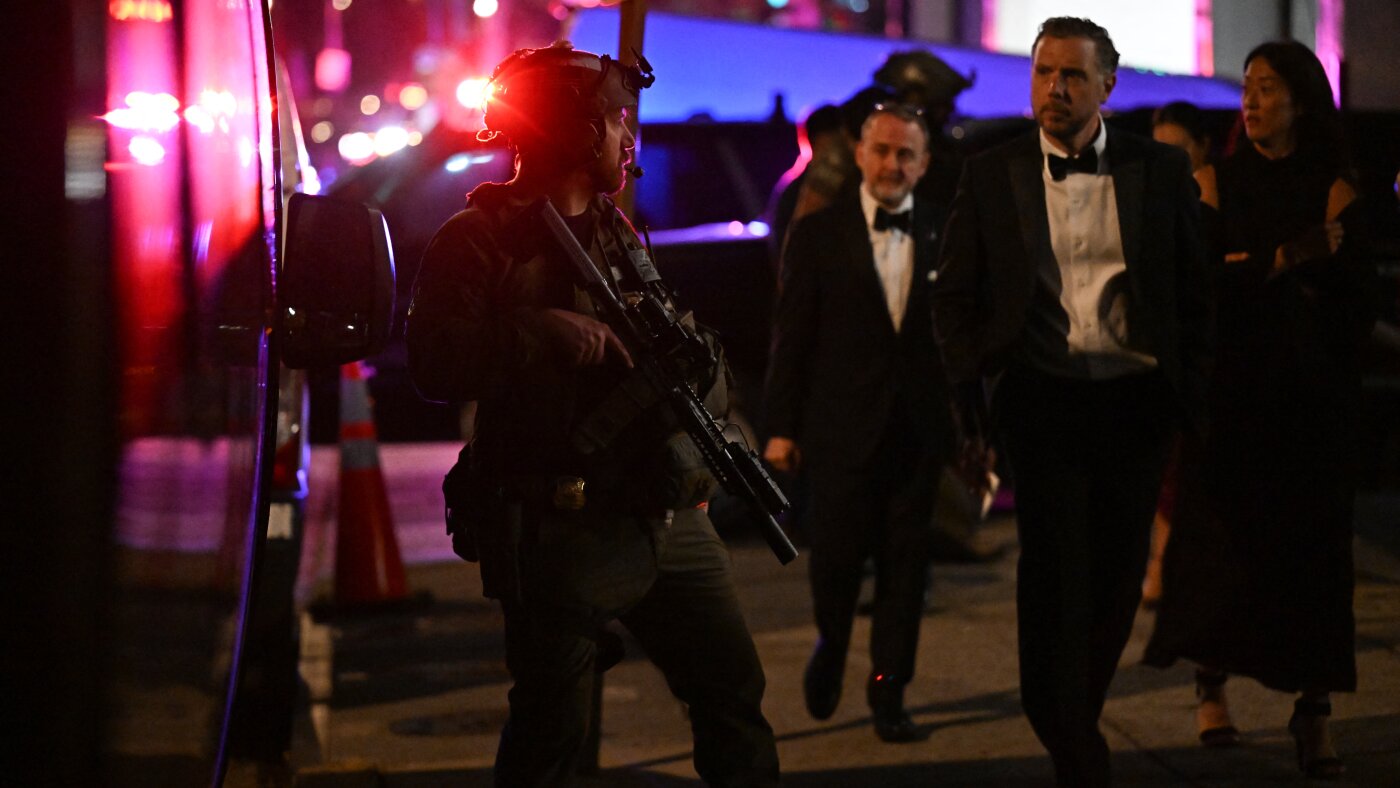
At the White House Correspondents' Association Dinner in Washington, D.C., shots were reportedly fired and guests sheltered under tables; the attacker was stopped before anyone was seriously hurt. The article contrasts that high-profile incident with several other shootings that same weekend: 16-year-old Marquise Byfield was fatally shot in a Brooklyn deli (police report that the precinct has seen multiple shootings this year); 17-year-old Trashawn Foster was shot near a park in Homestead, Florida, and died after being airlifted to a hospital; 16-year-old Kha'Mari Harrison was shot and killed in Hope Mills, North Carolina; a robbery suspect taken to a Chicago hospital allegedly shot two officers and escaped, and Officer John Bartholomew, a 10-year veteran, died; and Abdul Saleh, who co-ran Sal's Deli & Grocery in New York's East Village, was shot and died. The piece notes that while the correspondents' dinner attack made headlines, these other incidents exemplify routine, everyday gun violence affecting people without protective security, and it records President Trump calling for the dinner to be rescheduled with tighter security.
Biblical Reflection
The article highlights a painful reality: gun violence is both episodic (a thwarted attack at a high-profile event) and quotidian (multiple fatal shootings affecting teenagers, small-business workers, and police officers). From a Christian perspective this should provoke grief, discernment, and a commitment to justice and care. Grief: Scripture calls us to mourn with those who mourn (Romans 12:15); each named victim is an image-bearer whose loss matters. Discernment: the piece intentionally contrasts media attention on elites with the anonymity of everyday victims — a valid critique of public focus and a reminder that human value is not determined by social status. Bias and framing: the opinion selects incidents to make a moral point about attention and protection; readers should note that selection of examples shapes urgency but does not substitute for systematic data about causes or effective responses. Practical truth: the Christian worldview recognizes both the immediate need to protect the vulnerable and the deeper need to address brokenness — sin, poverty, trauma, fractured families, and social conditions that correlate with violence. Neither increased security nor policy alone addresses the whole problem; faithful response includes seeking justice (protecting the weak and holding wrongdoers accountable), showing mercy (caring for victims and families), and working for reconciliation and prevention (community support, mental-health care, and moral formation). Finally, avoid despair or partisan cynicism: Scripture calls believers to persistent prayer, to pursue peace, and to labor for the common good (Matthew 5:9; Micah 6:8).
Scripture in context
This outlook does not yet include contextual Scripture citations. Do not treat a general biblical theme as an exegetical conclusion.
Faithful Response
No prescribed response is offered. Consider the reflection prompts below in your own church context.
Reflection and Discussion
- 1Whose suffering receives public attention here, and how does the difference in coverage reveal cultural assumptions about whose lives are most 'newsworthy'?
- 2What causes and solutions does the article implicitly prioritize (security, enforcement, or social intervention), and what assumptions underlie those priorities?
- 3How does a Christian framework that values every human life reshape our assessment of both immediate protective measures and long-term prevention strategies?
Sources
Reporting links are evidence inputs; Sanctuary News' biblical reflection is commentary.
This outlook currently relies on fewer than two linked sources. Broaden verification before teaching from it.
- 1.Original reportprimary