News Summary
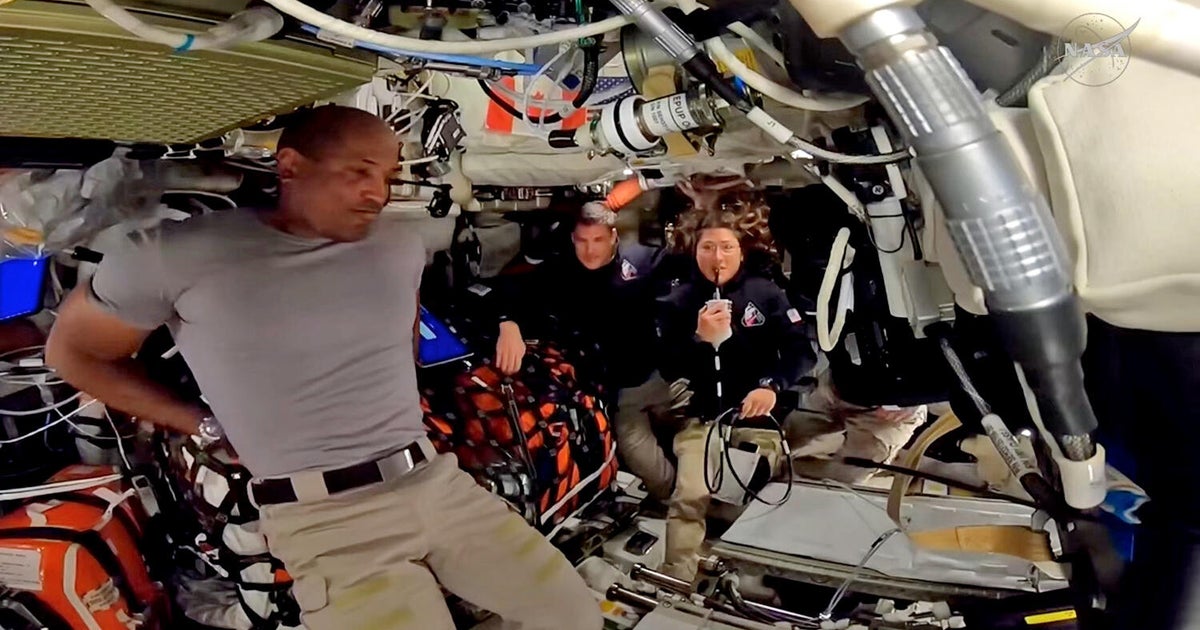
Four astronauts aboard NASA's Artemis II mission—commander Reid Wiseman, Victor Glover, Christina Koch and Canadian first-time flyer Jeremy Hansen—sent Easter greetings to Earth as their Orion spacecraft approached the moon. The crew presented "astronaut wings" to Hansen, conducted planned tests of the new orange Artemis pressure suits (including donning, pressurizing, and assessing movement, seating and drinking while suited), and prepared for a planned science observation pass behind the moon. Crew members reported clear, detailed views of lunar features (mission control and crew identified large basins such as Mare Imbrium), and engineers restored normal operation of Orion's toilet after earlier problems. At the time of the report, Orion was roughly 76,362 nautical miles from the moon and 168,000 miles from Earth and was scheduled to enter the moon's sphere of influence before coasting behind the moon. The mission aims to test Orion systems and procedures for future lunar crews; during the lunar far-side pass the spacecraft will be out of contact with Earth for about 40 minutes, pass within roughly 4,070 miles of the lunar surface at close approach, and will set a new distance record beyond the Apollo 13 mark.
Biblical Reflection
This article reports a primarily factual, human-interest account of a scientific mission, emphasizing both technical testing and the crew's personal moments. From a Christian perspective, several points stand out. First, the sense of wonder at creation reflected in the astronauts' descriptions of the moon aligns with a biblical appreciation for the heavens and the Creator (see Psalm 19). Scientific exploration and careful testing—developing safety procedures and gathering observations—are expressions of human stewardship and the God-given capacity for reason and creativity. The crew's public sharing of Easter greetings and a simple holiday tradition shows that faith and scientific work need not be in conflict; faith can provide perspective and comfort amid high-technology endeavors. At the same time, Christians should keep a healthy humility: praise for human achievement should not displace ultimate trust in God. The article's tone is celebratory and optimistic; it contains little critical analysis (e.g., costs, long-term priorities, or broader policy questions), so readers should note its human-interest framing and recognize it focuses on achievements and sights rather than systemic or ethical critiques. Overall, the piece largely aligns with truthful reporting of mission events and invites thoughtful gratitude for both scientific discovery and the transcendent meaning many find in such moments.
Scripture in context
This outlook does not yet include contextual Scripture citations. Do not treat a general biblical theme as an exegetical conclusion.
Faithful Response
No prescribed response is offered. Consider the reflection prompts below in your own church context.
Reflection and Discussion
- 1How does my reaction to human achievements in science and exploration reveal whether I am rightly praising the Creator rather than idolizing creation or technology?
- 2What responsibilities should Christians recall when celebrating scientific progress—especially regarding stewardship, humility, and care for resources and people?
- 3Does the article's human-interest framing (holiday greetings, personal wonder) change how I assess the mission's broader significance or ethical implications?
Sources
Reporting links are evidence inputs; Sanctuary News' biblical reflection is commentary.
This outlook currently relies on fewer than two linked sources. Broaden verification before teaching from it.
- 1.Original reportprimary