News Summary
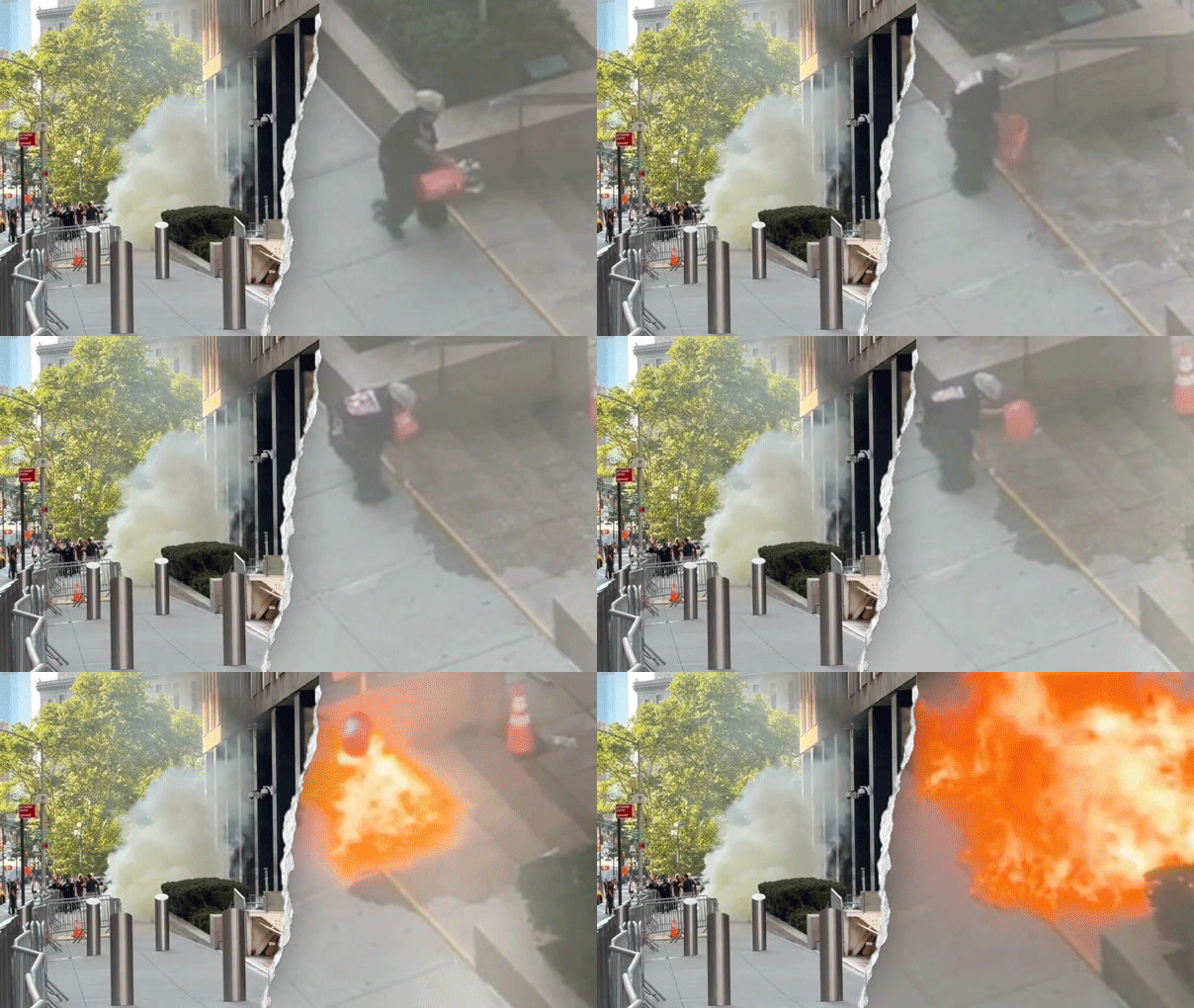
Reported facts: Video shows flames outside 26 Federal Plaza and police charged Andrew Arrabaca with arson. Reported attribution: Fox News attributes the footage and the charge to law enforcement sources and identifies Arrabaca as an Army veteran. Uncertainties: The article does not provide independent verification of motive, details of damage, injuries, arrest report, court filings, or corroboration from multiple official sources.
Source and Framing Analysis
The account relies on a single news report that references video footage and the arson charge; it uses vivid visual language ("bright orange flames") that can heighten emotional response. Important contextual details—police statements, official charging documents, motive, extent of damage, and any injuries—are absent. Because the article is based on one report and on footage, readers should note the limited evidentiary base and avoid drawing definitive conclusions beyond what law enforcement has formally stated.
Biblical Reflection
The Christian response to reports of violence should begin with clear-eyed truthfulness: the report describes an alleged criminal act that requires lawful investigation and, if proven, appropriate accountability. Christians are not called to leap from allegation to final judgment; due process and careful fact-gathering matter. At the same time, we must not minimize the real harm that fires and attacks on public buildings can cause—fear, danger to bystanders, and the potential for escalation.
Mercy and justice must move together. If the accused is a veteran struggling with trauma, illness, or other burdens, Christian compassion calls the church to care for him and for others like him; but care does not negate accountability. The community and church can pray for healing, encourage humane treatment, and also support systems—legal, medical, and pastoral—that protect neighbors and promote repentance and restoration where possible.
Finally, Christians should resist sensationalism and rumor. Pray for investigators, seek verified information, and use moments like this to promote peace and practical neighbor-love—offering assistance to anyone harmed, advocating for needed services (including mental-health resources for veterans), and speaking truth in love as the situation unfolds.
Scripture in context
- 1Romans 12:17-21 — Paul instructs the Christian community about ethical responses to wrongdoing in a context where believers lived amid social conflict and were tempted toward retaliation; he urges non-retaliation, pursuing what is honorable, and overcoming evil with good. — This passage cautions Christians against immediate personal vengeance while calling for honest pursuit of justice and practical care for those harmed; applied here, it supports lawful investigation and protection for victims along with measured, redemptive responses toward the accused.
Faithful Response
Pray for investigators, potential victims, and for the accused to receive fair process and proper care.
Avoid sharing unverified footage or rumors; prioritize official statements and primary documents when possible.
If you are in a position to help, support local organizations that serve veterans and mental-health needs, and encourage local leaders to fund appropriate services.
Reflection and Discussion
- 1How does Scripture shape the way I evaluate alleged wrongdoing before the facts are fully known?
- 2Where in my community are people vulnerable to crisis (including veterans), and what concrete steps might the church take to prevent harm?
Sources
Reporting links are evidence inputs; Sanctuary News' biblical reflection is commentary.
This outlook currently relies on fewer than two linked sources. Broaden verification before teaching from it.
Download source notes