News Summary
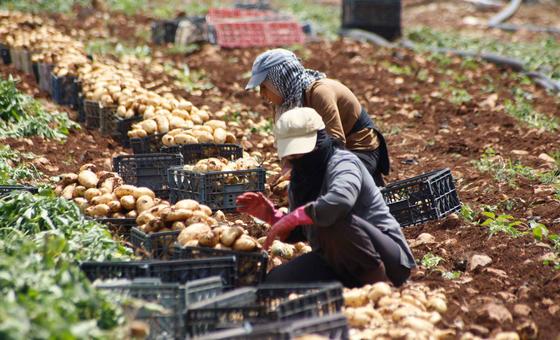
UN News reports that an extended Somali family abandoned their farm after armed groups arrived and demanded payments for the right to cultivate the land. According to the account supplied for this cluster, the family — described as six people (four children and two adults) — walked roughly 100 kilometers to a displacement camp; one child reportedly died during the journey. The report frames this anecdote as an example of how extortion and violence disrupt farming and contribute to food insecurity. Missing from the supplied material are the identity of the armed actors, precise location and dates, corroborating witness or agency statements, and broader data showing how representative this incident is.
Source and Framing Analysis
Primary source: UN News article 'As wars spread, the global food system unravels' (supplied excerpt and summary). The piece offers a human-centered, anecdotal account that links armed extortion to the abandonment of farmland. This framing effectively humanizes the harm but is limited as evidence for systemic conclusions: it is one case used illustratively, and the supplied excerpt/summary omits key corroborating details (actor identities, timing, precise location, witnesses, follow-up on the family, and quantitative data on scale). Readers should treat the narrative as a credible report of a specific incident by a reputable outlet while avoiding overgeneralizing from a single example. The report’s implicit causal thread (armed groups → extortion → farm abandonment → displacement and death) is plausible but incompletely sourced in the supplied material.
How sources covered this story
Sanctuary separately assesses reporting quality and alignment with Christian virtues. The virtues assessment considers truthfulness, dignity, compassion, justice, peacemaking, humility, and care for vulnerable people. It does not assess a publisher's faith or reward religious language.
Compare 1 reports
Reporting 75/100Virtues 80/100
- Distinctive contribution
- Identifies a specific incident and victims (a family with four children) in Somalia who abandoned their farm because armed groups demanded payments for the right to cultivate—giving a concrete illustration of extortion-driven displacement of farmers.
- Framing
- Anecdotal human-impact framing that links violent actors' economic extortion to the abandonment of agricultural land, implicitly connecting local insecurity to broader food-system disruption.
- Omissions or uncertainty
- The excerpt lacks date and precise location in Somalia, identity or affiliation of the 'armed groups,' scale or duration of the extortion, information about the family's prior production or livelihood, whether they received assistance, and any broader data to show how representative this case is.
- Why these scores
- Clear, concise, and non-sensational depiction of a human-impact incident with a direct causal claim (armed groups demanded payments → farm abandoned). As an isolated excerpt it responsibly conveys the core fact but lacks attribution details, contextual data, and specificity (dates, actors), limiting its standalone evidentiary strength. The excerpt humanizes vulnerable people (a family with children) and highlights an injustice (extortion by armed groups) without dehumanizing language or sensationalism. It aligns with concern for the vulnerable and draws attention to harm and disorder, though it does not itself offer remedies, calls for justice, or deeper compassionate context.
Biblical Reflection
A Christian response must distinguish clear factual reporting from moral interpretation. Factually, we acknowledge the reported violence and its immediate human cost. Ethically and pastorally, the story summons us to name injustice, mourn with those who mourn, defend the dignity of the vulnerable, and pursue both mercy and justice. Practically this means immediate care for displaced families (food, shelter, medical attention), sustained accompaniment to restore livelihoods where possible, and advocacy for measures that reduce impunity for armed extortion and protect farmers. We should resist simple answers drawn from a solitary anecdote while allowing the account to spur compassionate action, careful inquiry, and sustained engagement for peace and structural remedies.
Scripture in context
- 1See the teaching often cited from Matthew about care for neighbors in need (the Sheep and the Goats passage). — Jesus teaches that care for hungry, stranger, naked, sick, and imprisoned persons is a concrete marker of faithful discipleship and compels compassionate action toward those who suffer. — This story calls Christians to concrete mercy (feeding, sheltering, medical care) and to public witness for justice and peace — not as optional charity but as central to faithful response when violence strips people of livelihood and safety.
Faithful Response
Pray for the family, other displaced persons, and those providing relief; hold the situation before God with lament and intercession.
Support vetted humanitarian actors delivering food, shelter, medical care, and protection in Somalia and neighboring regions — prioritize organizations with established presence and accountability procedures.
Mobilize congregational giving toward sustained assistance that addresses immediate needs and helps restore livelihoods (seed, tools, cash assistance, legal help) rather than one-off relief only.
Advocate with policymakers for humanitarian access, protection of civilians, and measures that reduce armed extortion of rural producers; insist on reliable data before making sweeping policy claims.
Offer pastoral care and education locally: teach congregations how to respond compassionately without inflaming sectarian or political tensions, and create durable partnerships with relief agencies.
Reflection and Discussion
- 1Whose voices are present in this account and whose are missing? What additional information would we need before drawing broader conclusions?
- 2How should Jesus-shaped mercy and pursuit of justice shape our short-term relief and long-term advocacy for people driven from their land?
- 3What practical steps can our congregation take to accompany displaced farming families that respect dignity and avoid creating dependency?
- 4When a single tragic case is used to illustrate systemic problems, what forms of evidence (data, multiple witness accounts, NGO assessments) should we seek to build a responsible public response?
Sources
Reporting links are evidence inputs; Sanctuary News' biblical reflection is commentary.
This outlook currently relies on fewer than two linked sources. Broaden verification before teaching from it.
- 1.As wars spread, the global food system unravelsofficial_document