News Summary
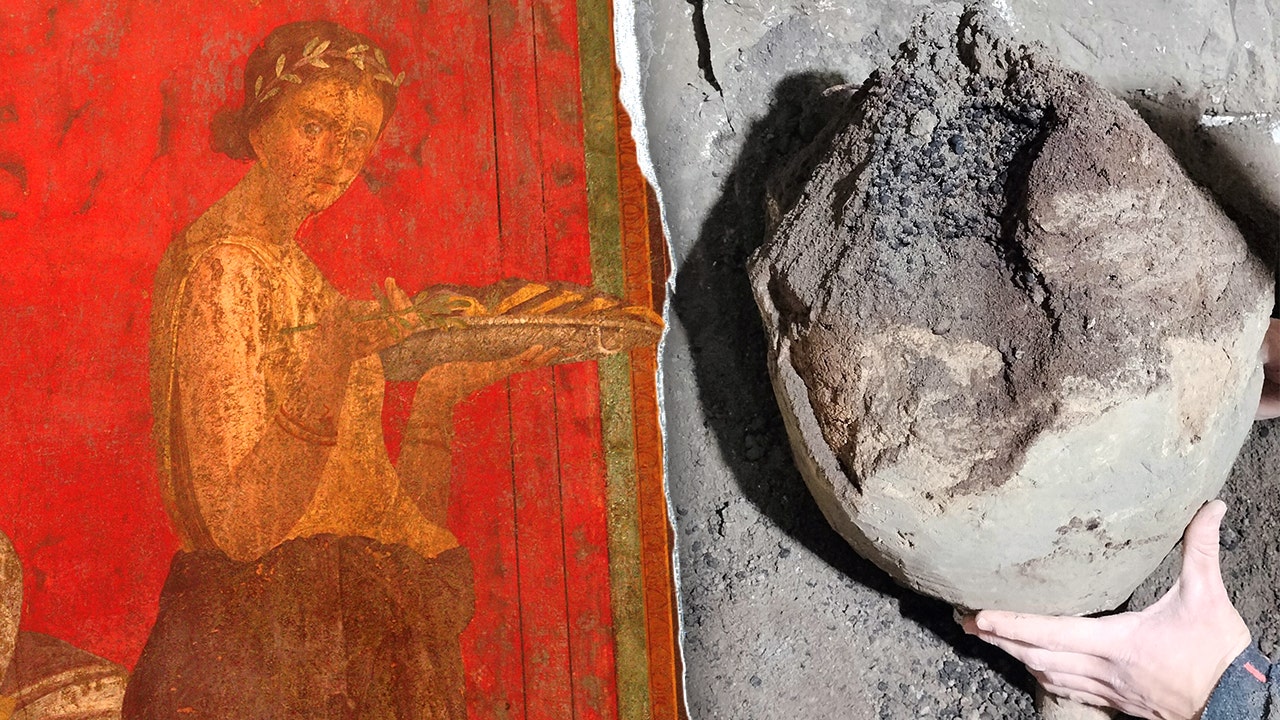
Archaeologists in Italy have uncovered well-preserved food remains in the slave quarters of the Civita Giuliana villa in ancient Pompeii, revealing details about the diet of enslaved people before the eruption of Mount Vesuvius. The foods discovered included fruit (pears, apples or sorbs) and amphorae of fava beans, found in upper-floor storage likely to protect from pests and control rationing. The villa's slave quarters were densely occupied, housing up to three beds in 16-square-meter cells, with an estimated 50 workers needing over 40,000 pounds of grain annually. Remarkably, the nutrition provided to these enslaved individuals was sometimes superior to that of free citizens, who often relied on handouts. The park director and study co-author, Gabriel Zuchtriegel, highlighted the inhumanity of the slave system, noting that despite being treated as tools, the humanity of the enslaved was not erased, and the distinction between slave and free was often blurred. The study also ties into broader research showing surprising aspects of ancient Roman diets.
Biblical Reflection
This discovery sheds light on both the resilience of the human spirit and the deep injustice of institutionalized slavery. While it is surprising that some enslaved people may have been better nourished than their free counterparts, the underlying reality is one of exploitation, dehumanization, and control. Scripture consistently affirms the inherent dignity and worth of every person, regardless of social status (Genesis 1:27; Galatians 3:28). The fact that enslaved people were sometimes better fed was not an act of kindness, but a tactic to preserve productivity and prevent illness—further evidence of a system that commodified human beings. Such revelations call us to remember that God values mercy, justice, and the breaking of oppression (Isaiah 58:6), and that Christ came to proclaim liberty for the captives (Luke 4:18). The passage from the study, reflecting on how the boundary between slave and free could be blurred, echoes the biblical insight that, in Christ, those distinctions are nullified. Still, the existence of such systems calls for repentance and renewed commitment to justice and equality.
Scripture in context
This outlook does not yet include contextual Scripture citations. Do not treat a general biblical theme as an exegetical conclusion.
Faithful Response
No prescribed response is offered. Consider the reflection prompts below in your own church context.
Reflection and Discussion
- 1How does understanding the lived experiences of the oppressed in history inform your view of justice today?
- 2In what ways can we affirm the dignity of every person, regardless of their status or past?
- 3Are there systems or attitudes in our society that still treat people as tools rather than as image-bearers of God?
Sources
Reporting links are evidence inputs; Sanctuary News' biblical reflection is commentary.
This outlook currently relies on fewer than two linked sources. Broaden verification before teaching from it.
- 1.Original reportprimary