News Summary
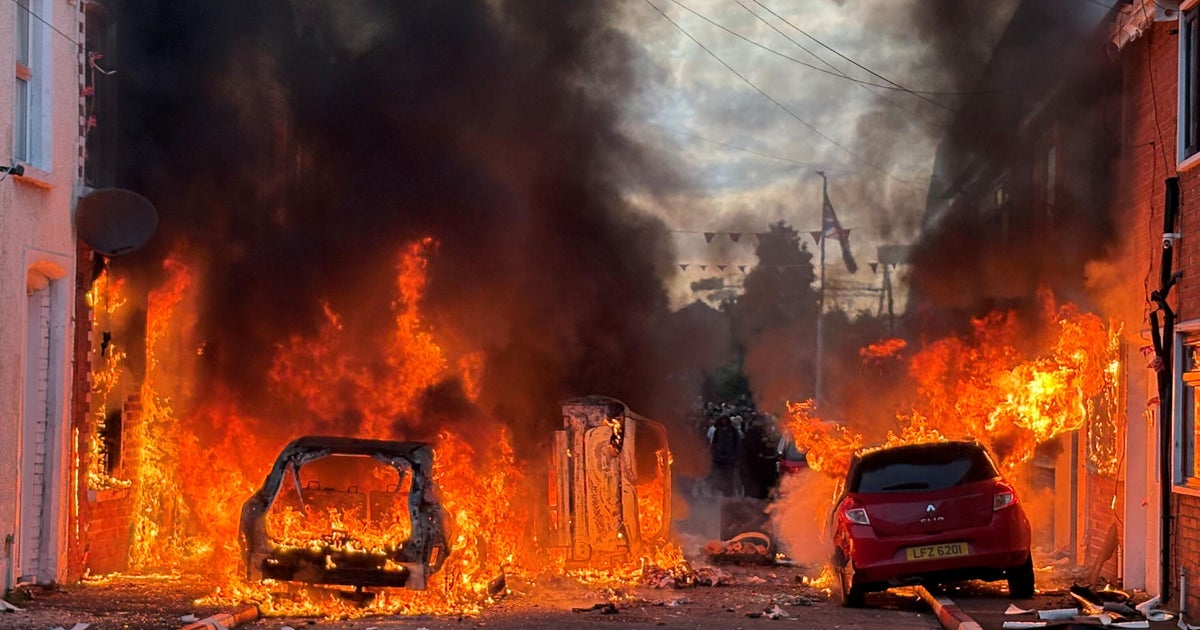
A list of addresses believed to belong to immigrants and their families was circulated on closed social media networks during violent anti-immigration protests in and around Belfast in June 2026. The unrest followed a brutal knife attack earlier in the week; graphic video of that attack spread widely online and helped spark two nights of rioting in which masked groups set fires to homes and a bus, threw rocks at police, and blocked roads. CBS News located a copy of a circulated list containing more than two dozen Belfast addresses and found an X account posting names and addresses of immigration lawyers and firms. Closed platforms like WhatsApp limited investigators' ability to trace the origin or full reach of the lists. The Police Service of Northern Ireland (PSNI) said it was aware of address-sharing and called it unacceptable; officials received calls from distressed residents. Northern Ireland’s Health and Social Care leaders said some international staff felt intimidated and too frightened to come to work after reports of masked men chasing a nurse. A Belfast Member of Parliament called the actions door-to-door targeting of immigrants a “race-based pogrom.” The suspect in the stabbing is a 30-year-old Sudanese man who had been granted a five-year visa in 2023 and has been charged with attempted murder and other offenses; police say no motive has been determined and do not believe the attack to be terrorism. Prominent figures shared the assault video and urged protests, but CBS News has not seen evidence those figures shared the address lists. The article notes similar anti-immigration protests in Southampton the prior week following an unrelated killing that also fueled online calls for demonstrations.
Biblical Reflection
From a Christian perspective this story highlights several moral failings and practical dangers. The circulation of private addresses and door-to-door targeting shows how fear, anger, and the desire for vengeance can quickly dehumanize neighbors and put vulnerable people at real risk. Social media and closed messaging apps amplify raw emotion and graphic content, often without context or regard for consequences; public figures who amplify violent footage bear pastoral and civic responsibility for the effects of that amplification. Christians should resist collective scapegoating: one person's criminal act does not justify attacks on whole communities. Scripture calls the community to protect the stranger, pursue justice, and restrain vigilantism; authorities also have a responsibility to protect residents and ensure a fair investigation. At the same time, the legitimate fear and grief felt by local communities must not be exploited to justify violence. The article appears fact-driven about what occurred and what authorities said, but readers should watch for narratives that turn a single crime into a justification for collective punishment or that conflate sharing video with endorsing doxxing; CBS notes it found no evidence high-profile sharers distributed address lists. Pastoral wisdom here is to mourn victims, seek truth, oppose violence and intimidation, care for those threatened, and pray for public leaders to act with courage and justice.
Scripture in context
This outlook does not yet include contextual Scripture citations. Do not treat a general biblical theme as an exegetical conclusion.
Faithful Response
No prescribed response is offered. Consider the reflection prompts below in your own church context.
Reflection and Discussion
- 1How does the spread of graphic content and closed-network messaging change our responsibility for what we share and the harm it can do?
- 2In what ways might fear and anger be pushing communities to treat neighbors as threats rather than as persons made in God’s image?
- 3Are public figures and community leaders being held accountable for rhetoric that inflames unrest, and how should Christians weigh truth-telling with the need for peace?
Sources
Reporting links are evidence inputs; Sanctuary News' biblical reflection is commentary.
This outlook currently relies on fewer than two linked sources. Broaden verification before teaching from it.
- 1.Original reportprimary