News Summary
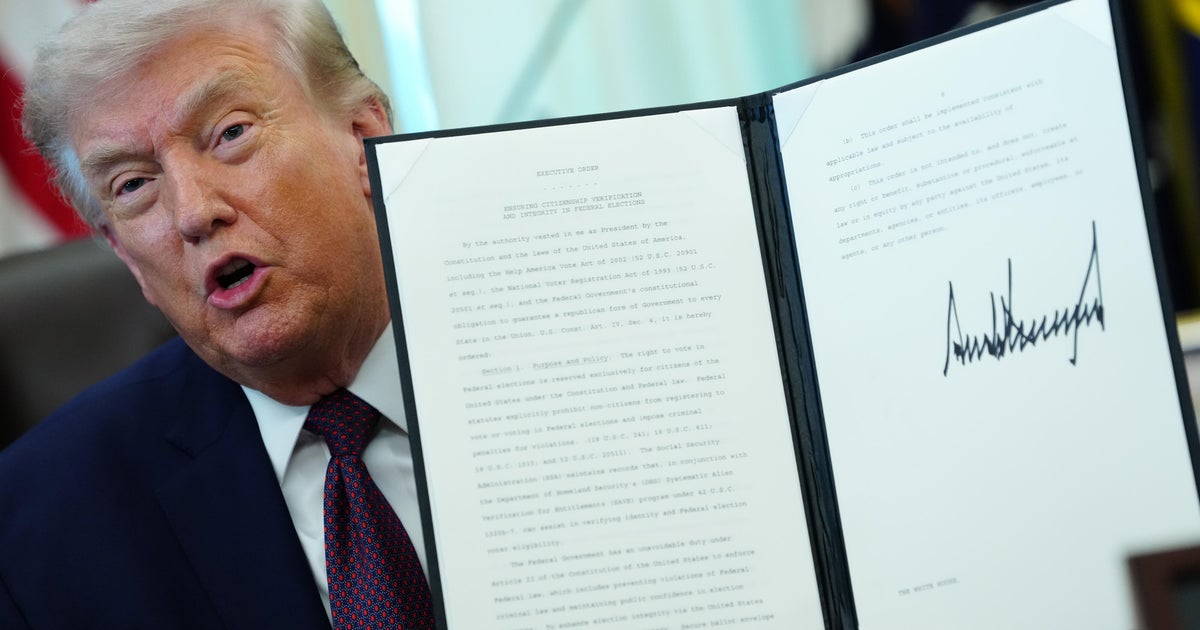
Twenty-three states (led by California) and the District of Columbia filed a federal lawsuit in Massachusetts seeking to block an executive order signed by President Trump that imposes new requirements on mail voting. The lawsuit argues the order unlawfully interferes with states' constitutional authority over the "time, place, and manner" of federal elections and amounts to federal overreach. The executive order directs the Department of Homeland Security to compile "State Citizenship Lists" of eligible voters for federal elections and requires the U.S. Postal Service to send mail or absentee ballots only to voters on those lists. It also prescribes requirements for mail ballot envelopes—such as unique barcodes for tracking—and threatens loss of federal funds for states and localities that do not comply. A coalition of Democratic groups has already challenged the order. The article notes President Trump’s long-standing public opposition to mail voting, while also recording that instances of mail-voting fraud are rare and that Trump and family members have voted by mail. It also references related legislative efforts (the SAVE America Act) and prior Trump executive actions on election rules that faced legal blocks.
Biblical Reflection
This dispute centers on competing commitments important to Christian civic thinking: the rule of law, the proper scope of governmental authority, and the need for elections to be both secure and accessible. The lawsuit frames the executive order as a constitutional problem of federalism and separation of powers—claims that point to the Bible’s concern for just limits on power and for institutions functioning under the rule of law (e.g., leaders exercising authority within rightful bounds). At the same time, concerns about election integrity reflect a legitimate civic virtue: protecting the trustworthiness of collective decision-making. The article largely reports the legal challenge and the executive order’s provisions; it also notes the low incidence of proven mail-voting fraud, which calls for careful evaluation of claims of widespread cheating. Christians should note two tendencies often present in such stories: (1) fear of loss (of political power or trust) can drive sweeping policy moves that bypass normal checks and balances; and (2) tribal rhetoric can make legitimate reforms or criticisms seem existential, narrowing space for sober evidence-based discussion. Biblical virtues here include seeking truth, requiring fair processes, pursuing justice for the vulnerable (ensuring access to lawful voting), and resisting the abuse of power. Christians called to public discernment should weigh both the legal-constitutional concerns and empirical evidence, avoid reflexive loyalty to party or leader, and advocate reforms that respect institutions, protect the right to vote, and restore public trust without discarding procedural safeguards.
Scripture in context
This outlook does not yet include contextual Scripture citations. Do not treat a general biblical theme as an exegetical conclusion.
Faithful Response
No prescribed response is offered. Consider the reflection prompts below in your own church context.
Reflection and Discussion
- 1What assumptions about power, fear of fraud, and the role of federal authority underlie the executive order — and how do those assumptions shape whether the measure protects or threatens democratic norms?
- 2How should evidence (for example, the rarity of documented mail-voting fraud) influence our evaluation of policies that expand executive control over state-run election systems?
- 3Where do we see rhetoric that encourages tribal loyalty rather than sober, lawful deliberation — and how might Christians resist that impulse in public discourse?
Sources
Reporting links are evidence inputs; Sanctuary News' biblical reflection is commentary.
This outlook currently relies on fewer than two linked sources. Broaden verification before teaching from it.
- 1.Original reportprimary