News Summary
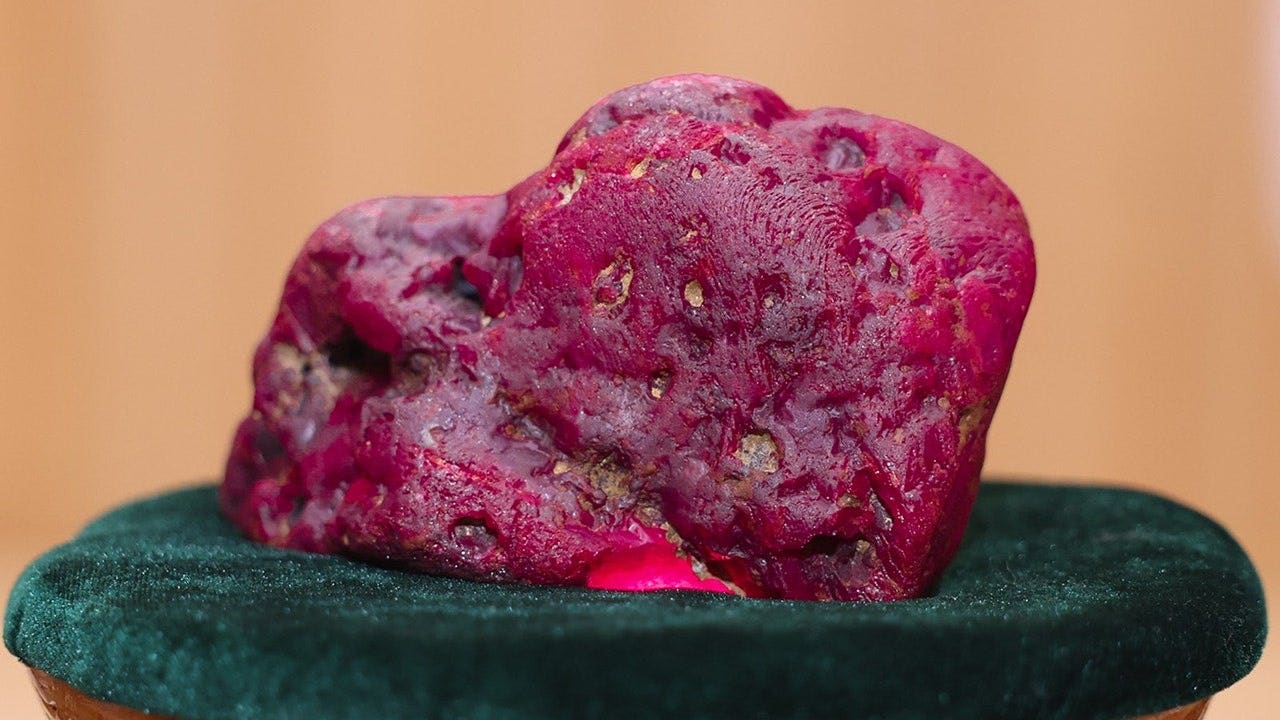
State media reported that an approximately 11,000-carat (about 4.8-pound) ruby was found near Mogok in Myanmar's Mandalay region in mid-April 2026. The stone was displayed in Naypyidaw and inspected by President Min Aung Hlaing and his cabinet on May 7, 2026. Officials and experts described the ruby's color as purplish-red with slight yellow tones, moderate transparency and a highly reflective surface. The discovery is being described as the second-largest ruby found in Myanmar, though a larger 21,450-carat ruby was found in 1996; some experts say the 2026 find may be more valuable due to higher quality. Myanmar produces a large share of the world's rubies, primarily from Mogok and Mong Hsu. Rights groups such as Global Witness have urged jewelers to avoid Burmese gemstones, arguing the gem trade—both legal and illegal—helps finance Myanmar’s military governments and ethnic armed groups. The article notes that gem-mining regions remain unstable: Mogok was seized by the Ta’ang National Liberation Army (TNLA) in July 2024 and later returned to military control under a China-brokered ceasefire late in 2025.
Biblical Reflection
This story presents a striking contrast: the beauty and value of a natural gem and the harsh realities of the political and economic context that surround its extraction. Factually, the report links the ruby to Myanmar’s key gem-producing region and notes longstanding concerns that gemstone revenues feed armed groups and the military. A Christian reading calls us to hold both tensions together: to appreciate the beauty of God’s creation while refusing to romanticize wealth that may be tangled with injustice. The article’s framing leans toward the rarity and potential value of the stone and mentions official display and inspection by the country’s leader; it gives less space to the voices of miners, local communities, or those harmed by conflict and exploitative extraction. That omission matters because the biblical witness repeatedly prioritizes the poor, the oppressed, and truth-telling about how resources are obtained. Christians should therefore be alert to narratives that celebrate treasure without reckoning with the human cost, and to the ethical implications of markets that may fuel violence. At the same time, the discovery is an occasion to pray for justice, transparency, and protection for vulnerable workers, and to advocate for supply chains that do not enrich oppression. The underlying worldview in much of the coverage privileges economic value and novelty; a gospel-shaped perspective calls for stewardship, accountability, and compassion for those harmed by resource-driven conflict.
Scripture in context
This outlook does not yet include contextual Scripture citations. Do not treat a general biblical theme as an exegetical conclusion.
Faithful Response
No prescribed response is offered. Consider the reflection prompts below in your own church context.
Reflection and Discussion
- 1Whose voices are centered in this report — officials and experts — and whose are absent (miners, displaced families, local communities)? What difference does that make for how we understand the discovery?
- 2How does the article treat the ruby primarily as a rare commodity rather than a potential source of harm or of revenue for those who are already powerful? What assumptions about wealth and value underlie that treatment?
- 3What systems and actors enable natural resources to become funding streams for violence, and how should Christians weigh admiration for beauty against demands for justice and transparent stewardship?
Sources
Reporting links are evidence inputs; Sanctuary News' biblical reflection is commentary.
This outlook currently relies on fewer than two linked sources. Broaden verification before teaching from it.
- 1.Original reportprimary