News Summary
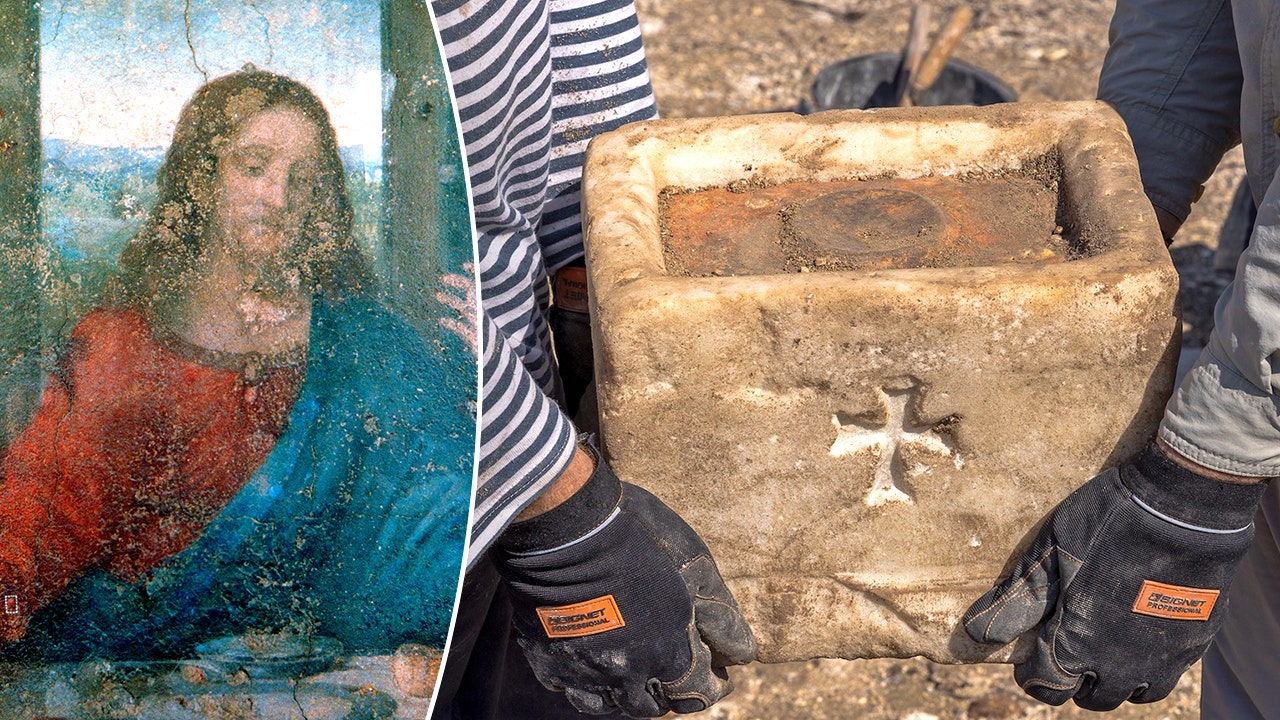
Archaeologists excavating at the Byzantine-era city of Hippos, near the Sea of Galilee, uncovered a marble block roughly 1,400 years old in a smaller baptismal hall (photisterion) associated with the cathedral. The block is rectangular and bears three hemispheric cavities (bowl-shaped basins) set side by side and was found beside a baptismal font. The smaller hall was constructed after 591 A.D. and destroyed in the 749 A.D. earthquake, providing the dating context. Researchers publishing the find (Michael Eisenberg and Arleta Kowalewska, PEQ) report that, after comparison with known material, there are no known parallels for this object. They hypothesize the three basins may have held different oils used in a threefold baptismal immersion or a previously undocumented stage of the baptismal rite. The excavation also yielded other liturgical objects, such as a bronze candelabrum. The report situates the find within Hippos’ importance as a regional Christian center; previous discoveries at Hippos include a Byzantine care facility and other artifacts.
Biblical Reflection
This discovery is interesting for church history because material culture can illuminate how Christian communities lived and worshiped. The researchers responsibly present a hypothesis (three basins possibly holding oils) rather than a firm conclusion; archaeology often proposes functions for unique finds but cannot convert every plausible use into certainty. The article’s framing — emphasizing proximity to the Sea of Galilee and calling the object “one-of-a-kind” — can invite readers to link the object directly to Jesus’ time or to essential doctrines. Scripture and historic Christian teaching, however, show that local liturgical forms varied widely while the core gospel remained constant. Baptism in the New Testament is presented primarily as a sign of union with Christ in his death and resurrection (Romans 6; Colossians 2), repentance, and initiation into the community (Acts). Whether early Byzantine communities used a twofold, threefold, or more complex ritual expression does not change that gospel reality. Christians should welcome such finds as gifts for understanding historical practice and for appreciating the church’s rootedness in history, but avoid elevating archaeological novelties into tests of orthodoxy or into substitutes for personal faith in Christ. Also be attentive to media tendency to sensationalize archaeological finds by overstating certainty or by invoking Jesus in ways the evidence does not support; the object postdates Jesus by many centuries and reflects Byzantine-era, not first-century, practice.
Scripture in context
This outlook does not yet include contextual Scripture citations. Do not treat a general biblical theme as an exegetical conclusion.
Faithful Response
No prescribed response is offered. Consider the reflection prompts below in your own church context.
Reflection and Discussion
- 1How does the archaeological date and context (Byzantine Hippos, 7th–8th centuries) affect claims that this find reveals practices from the time of Jesus or the earliest church?
- 2Are reporters and scholars distinguishing between reasonable hypotheses and proven functions when describing unique liturgical objects?
- 3What core theological truths about baptism are unchanged by discoveries of regional ritual variations, and how should that shape our response to new historical information?
Sources
Reporting links are evidence inputs; Sanctuary News' biblical reflection is commentary.
This outlook currently relies on fewer than two linked sources. Broaden verification before teaching from it.
- 1.Original reportprimary