News Summary
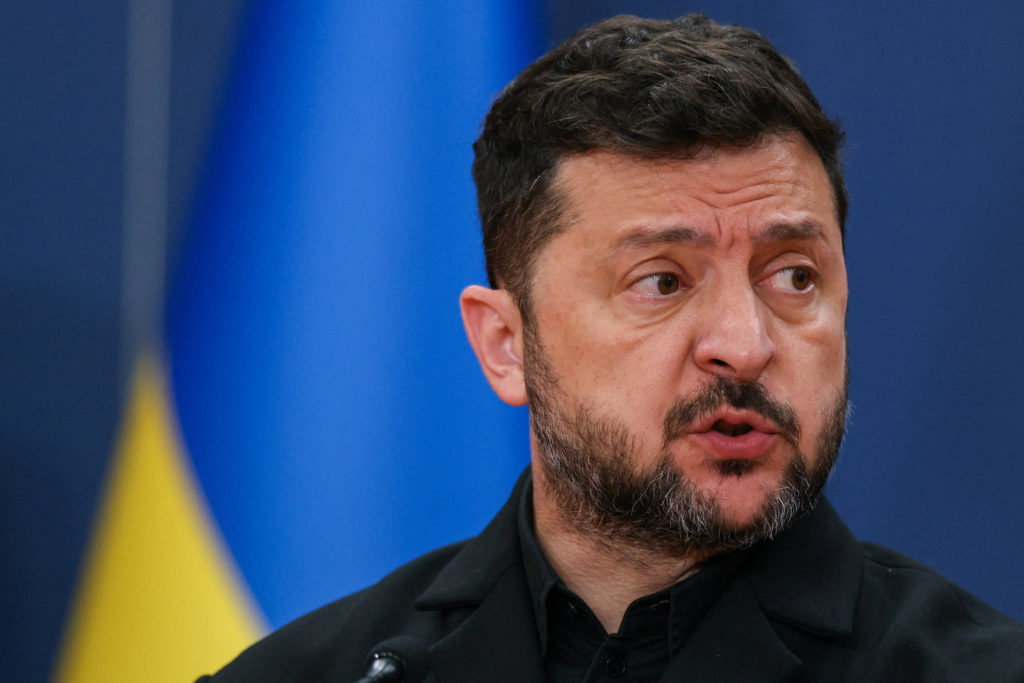
President Volodymyr Zelenskyy publicly described a dispute with dismissed Defense Minister Mykhailo Fedorov, saying he believes Fedorov’s actions — which Zelenskyy identified as participation in mass protests and public calls for an election — were misguided. The reporting attributes these characterizations to Zelenskyy; the article does not include a response from Fedorov, independent corroboration of the protests or their scale, or fuller context about the dismissal.
Source and Framing Analysis
The primary source for this cluster is a PBS NewsHour report that attributes the claims and judgments about Fedorov to President Zelenskyy. Framing is asymmetrical: the piece reports Zelenskyy’s account and evaluation but does not present the dismissed minister’s response or independent verification of the specific allegations (e.g., timing, size, or nature of the protests). The supplied material responsibly attributes opinion to Zelenskyy rather than converting it into established fact, but the lack of counterparty comment and supporting detail leaves material uncertainties. The original assessment rated the report as 'strongly supported' for reporting Zelenskyy’s statements while noting omissions; a reporting-quality score of 75 was assigned for measured attribution but limited depth. Additional sourcing is needed to corroborate contested factual claims and to capture Fedorov’s perspective and legal/political context for the dismissal.
How sources covered this story
Sanctuary separately assesses reporting quality and alignment with Christian virtues. The virtues assessment considers truthfulness, dignity, compassion, justice, peacemaking, humility, and care for vulnerable people. It does not assess a publisher's faith or reward religious language.
Compare 1 reports
Reporting 75/100Virtues 70/100
- Distinctive contribution
- States that Zelenskyy publicly detailed the dispute for the first time and identifies the minister's actions cited by Zelenskyy (mass protests and calls for an election) as the grounds for his criticism.
- Framing
- The excerpt frames the information as Zelenskyy’s account and judgment (he 'said' and 'believes' the actions were 'misguided'), attributing opinion to him rather than presenting the claims as established fact.
- Omissions or uncertainty
- No direct quotes or evidence for the allegations are provided; the excerpt does not include the dismissed minister’s response or perspective, dates or locations of the protests, details about the calls for an election, or broader context about the dismissal or political stakes.
- Why these scores
- The excerpt responsibly attributes the critical characterization to Zelenskyy and flags that he 'said' this publicly for the first time, which is appropriate caution. However, it is brief and lacks supporting detail (quotes, corroboration, counterparty comment, timing), limiting depth though not accuracy within the supplied text. The wording is neutral and attributes judgment to a named source, avoiding sensational language or dehumanization. It does not demonstrate particular compassion, justice-framing, or attention to the dismissed minister’s dignity or perspective, but it also does not exploit or sensationalize the matter; overall alignment with truthfulness and humility is adequate.
Biblical Reflection
A public rift between a wartime head of state and a recently dismissed defense minister raises urgent pastoral and civic concerns. Scripture and Christian tradition emphasize truth, mercy, justice, peacemaking, humility, and care for the vulnerable. In practice this means: (1) insist on transparent facts and fair processes so accountability does not become spectacle; (2) avoid amplifying unverified accusations that could deepen conflict or endanger civilians; (3) prioritize efforts that preserve institutional cohesion needed to protect people in harm’s way; and (4) offer pastoral care to those anxious or harmed by the instability. Christians should pursue both truth and restoration — seeking accountability while fostering avenues for reconciliation that reduce harm to civilians and to those serving the common good.
Scripture in context
- 1Matthew 18:15-17 — Jesus teaches a procedure for private correction and restoration within a community: first address the person privately, then bring witnesses if needed, and only then involve the wider community if the person refuses to listen. The passage is part of teaching on church discipline and reconciliation in the context of a believing community. — This teaching cautions against immediately turning conflicts among leaders into public spectacle. Applied to public leadership disputes, it encourages measured attempts at private correction and reconciliation where feasible, and urges public exposure only when it is necessary for justice and the protection of the common good.
Faithful Response
Pray specifically for both Volodymyr Zelenskyy and Mykhailo Fedorov, and for civilians and service members affected by leadership tensions, asking God for wisdom, protection, and guidance toward truth and repair.
Seek reliable, corroborated information from multiple independent sources before repeating or amplifying claims; avoid partisan or sensational framing that increases harm.
Provide pastoral care and clear, measured briefings for congregations and communities concerned by the dispute; offer support to those with family or ties in Ukraine who may be anxious.
Encourage and support institutional processes that preserve accountability while protecting military coordination and civilian safety, and promote avenues for reconciliation where appropriate.
Support humanitarian and church partners caring for vulnerable populations who may suffer collateral harm from political instability.
Reflection and Discussion
- 1How should Christians balance the need for public accountability with the pastoral imperative to protect the vulnerable during wartime?
- 2When leaders disagree publicly, what steps can our communities take to avoid inflaming divisions while still seeking truth and justice?
- 3Who are the people most likely to suffer because of a public leadership rift in this context, and how should that shape our immediate priorities and prayers?
Sources
Reporting links are evidence inputs; Sanctuary News' biblical reflection is commentary.
This outlook currently relies on fewer than two linked sources. Broaden verification before teaching from it.
- 1.Zelenskyy details rift with Ukraine's dismissed defense minister Fedorovprimary_reporting