A little more detail
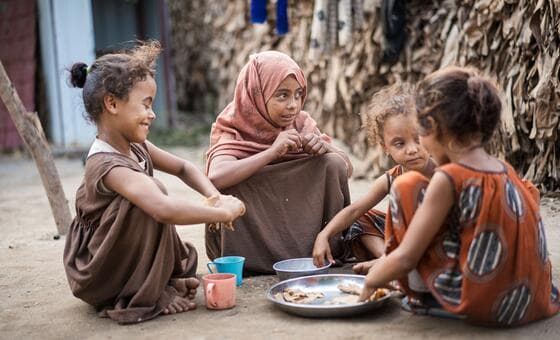
A UN News report uses the case of Safa, a 14-year-old girl in Yemen, whose father recently married her to an older man after her mother died and amid rising fighting. The father told the reporter he feared being killed and leaving Safa unprotected. The article presents this example as illustrative of a broader pattern of harm to women and girls during Yemen’s conflict but provides the story as an individual case and does not supply broader statistical evidence in the supplied text.
The account is reported as fact in the piece but is limited to one named example; wider prevalence and official data are not included in the supplied content.
Source and Framing Analysis
The supplied source is a single UN News article that presents a named individual case and frames it as indicative of broader suffering. The piece supplies direct reporting of the girl's situation and the father's stated motive; it does not offer statistical data or corroborating sources within the supplied text, so the scale and frequency of similar cases are asserted but not documented in this package.
How sources covered this story
This section compares the evidence and framing in linked reports. The Christian assessment above addresses the conduct described in the story; it does not grade a journalist’s faith or the morality of covering an event.
Compare 1 reports
Reporting 75/100
- Distinctive contribution
- Names the victim (Safa), her age (14), and the motive attributed to the father (fear he might be killed in hostilities), showing child marriage used as a perceived protective measure during conflict.
- Framing
- A compact human-interest framing that presents the event as a tragic consequence of the crisis; it attributes the action to the father's fear for family safety and implies coercive/ survival-driven motives rather than cultural celebration.
- Omissions or uncertainty
- Single-sentence excerpt: no geographic specificity beyond 'Yemen', no confirmation whether 'Safa' is a pseudonym, no detail on the 'elderly' man (age, relation), no information on consent, legal or community response, corroboration, or wider statistical context linking this case to broader trends.
- Why these scores
- Clear, specific, and evocative detail appropriate for a human-interest lede, but limited in scope. The excerpt responsibly communicates the immediate fact and motive without sensational language, yet it lacks sourcing, contextual data, and verification detail that would be expected to support broader claims; for a brief anecdote this quality is solid but incomplete.
Christian commentary · About the conduct described in this story
Biblical Reflection
The story spotlights how war magnifies vulnerability and pushes grieving families into choices that damage children. Christian teaching calls us to protect the weak, pursue justice, and show mercy; here that means refusing to normalize child marriage or to excuse it as inevitable. Speaking truth about harm and advocating for protective systems are expressions of love for neighbors in crisis.
Practically, believers can respond by praying for survivors, supporting reputable humanitarian agencies that prioritize child protection, and pressing local and international actors to fund and enforce programs that keep girls in school and out of forced unions.
Scripture in context
- 1 — Micah’s call addresses Israel’s moral life—centering justice, mercy, and humility before God—against a backdrop of social injustice and ritualism in the prophetic era. — Applied to this story, the passage urges Christians to seek justice for exploited children, to show mercy in practical ways, and to act humbly in responding—preferring protection and restoration over judgmental distance.
A suggested response for readers, separate from the assessment above.
Faithful Response
Pray for affected children, donate to established child-protection and humanitarian organizations working in Yemen, and contact legislators or church networks urging support for programs that prevent child marriage and support orphans and widows.
Reflection and Discussion
- 1How should Christians weigh cultural complexity and the call to protect children's dignity in conflict zones?
- 2In what concrete ways can faith communities partner with humanitarian efforts to prevent child marriage?
Sources
Reporting links are evidence inputs; Sanctuary News' biblical reflection is commentary.
This is a developing, single-source report. Details may change as more reporting becomes available.
- 1.Married off at 14: In Yemen’s war, women and girls suffer ‘devastating consequences’official_document