News Summary
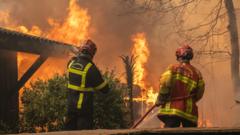
Reported facts: BBC reports that more than 250,000 people have fled wildfires in France and Spain; French authorities said fires near Bordeaux were not under control; Spain's prime minister warned of "complex hours" ahead. Attributed claims: the statements about control and the PM's warning are attributed to French authorities and Spain's prime minister, respectively. Uncertainty: the article does not give casualty figures, displaced-person breakdowns by region, causes of the fires, exact locations beyond Bordeaux, or details on property damage, firefighting capacity, or forecasts.
Source and Framing Analysis
This piece is a short, single-source news brief drawing on official statements. Material uncertainties that affect understanding include lack of casualty and damage data, absence of named localities beyond 'near Bordeaux,' and no corroborating independent sources. The article's framing emphasizes urgency and scale but does not provide granular evidence, which limits readers' ability to assess long-term impact or underlying causes.
Biblical Reflection
The immediate Christian response to large-scale natural disaster is shaped by two complementary commitments: truth and mercy. Truth demands careful attention to what is actually reported and restraint from drawing broad conclusions from limited information—particularly about causes or long-term consequences. Mercy calls us to respond rapidly to human suffering: pray, give, and mobilize care through reliable relief organizations and local churches. Scripture repeatedly models both honesty about circumstances and active compassion toward those in need, so our posture should be neither alarmist nor indifferent.
We should also watch for hidden narratives that can arise around disasters—political blame, sensationalized images, or simplistic climate explanations—without abandoning responsible concern. Christians can model a posture of lament for loss, practical assistance for neighbors, and advocacy for systems that protect vulnerable communities (for example, better emergency planning, housing support, and resources for firefighters and first responders). Above all, maintain humility: we rarely have the whole picture immediately, but we can always act to love and serve our neighbors in tangible ways.
Finally, pastoral care matters: communities directly affected will need sustained accompaniment, not just one-time donations. Encourage congregations to commit to ongoing support, long-term rebuilding, and listening to those most harmed while resisting the temptation to exploit suffering for other agendas.
Scripture in context
- 1Psalm 46 — A communal song that expresses trust in God as refuge and strength amid national or personal calamity, urging believers not to fear despite upheaval. — Use this Psalm's call to trust as a pastoral resource to comfort displaced people and to steady volunteers and leaders; it supports both prayerful dependence and calm, purposeful service in crises.
Faithful Response
Pray specifically for those displaced, for firefighters, and for local leaders making evacuation and relief decisions.
Give to vetted local and international relief organizations providing shelter, food, and medical care—prefer sustained commitments over one-off publicity gestures.
Offer practical volunteer help through local churches or emergency-response groups (donate supplies, host evacuees, provide transportation or childcare) rather than amplifying unverified claims online.
Stay informed from multiple reliable sources before forming public judgments about causes, responsibility, or policy prescriptions.
Reflection and Discussion
- 1How does Scripture shape our priorities between immediate relief and long-term justice when communities are displaced?
- 2In what ways might our responses unintentionally harm vulnerable people, and how can we prevent that?
- 3How do we hold together urgent compassion and careful truth-seeking when information is limited?
Sources
Reporting links are evidence inputs; Sanctuary News' biblical reflection is commentary.
This outlook currently relies on fewer than two linked sources. Broaden verification before teaching from it.
- 1.More than 250,000 flee wildfires in France and Spainprimary_reporting