News Summary
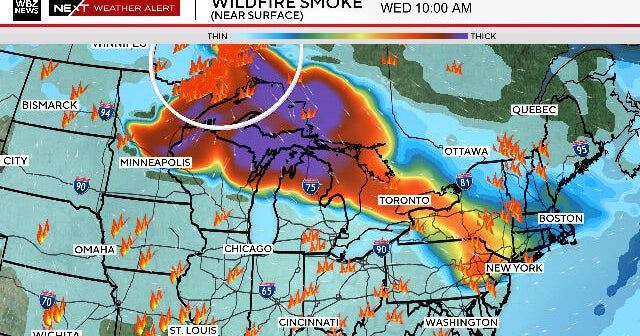
In mid-July 2026, large wildfires in Canada and northern Minnesota produced heavy smoke that spread across the U.S. Midwest and Northeast. Minnesota issued air quality alerts from Tuesday through Friday for areas including the Twin Cities, Alexandria and Two Harbors; officials expected hazardous levels in parts of northeast Minnesota and issued evacuation orders for some residents. Michigan announced a statewide air quality alert due to Canadian smoke. Forecasts and National Weather Service statements warned smoke would reach parts of New England, northern Pennsylvania, Detroit, Milwaukee and potentially as far south as Washington, D.C., within days. Health officials and meteorologists warned that fine particulate matter from smoke can cause or worsen respiratory and cardiovascular symptoms and advised staying indoors, using N95 masks if outside, and improving indoor air filtration. Climate and drought conditions were cited by a Columbia University climate scientist as factors creating conditions for more frequent and intense fires; reporting referenced research linking warming from fossil fuels to increased wildfire activity and cited a study associating chronic wildfire pollution with tens of thousands of U.S. deaths annually.
Biblical Reflection
The article reports a clear public-health and environmental hazard with practical guidance; its core claims about smoke spread, air-quality alerts, health risks, and the role of heat and drought are consistent with established science. From a Christian perspective, this news calls for two responses: truthful stewardship and compassionate neighbor-care. Truth requires acknowledging human contribution to climate-driven risks where evidence supports it and resisting both denial and fatalism. Mercy requires concrete aid to the vulnerable—children, the elderly, people with lung or heart disease, and those displaced by evacuations—through shelter, resources (masks, clean air spaces), and community support. Humility and courage mean praying and advocating for longer-term protection of creation and public health (mitigation, adaptation, preparedness) without scapegoating. The report largely focuses on medical and meteorological facts rather than political argument, which helps public safety; readers should still watch for framing that minimizes systemic causes or reduces the response to only personal choices. Churches and Christian organizations can embody gospel witness by providing practical relief, clear information, and steady pastoral presence to those affected.
Scripture in context
This outlook does not yet include contextual Scripture citations. Do not treat a general biblical theme as an exegetical conclusion.
Faithful Response
No prescribed response is offered. Consider the reflection prompts below in your own church context.
Reflection and Discussion
- 1Does the reporting clearly separate immediate public-health guidance from broader causes, and how should Christians weigh both immediate aid and long-term stewardship?
- 2Who in our communities is most vulnerable to smoke and heat, and how can our congregations practically prioritize their protection?
- 3Are we allowing fear or complacency to shape our response, or are we responding with informed compassion and responsible advocacy?
Sources
Reporting links are evidence inputs; Sanctuary News' biblical reflection is commentary.
This outlook currently relies on fewer than two linked sources. Broaden verification before teaching from it.
- 1.Original reportprimary