News Summary
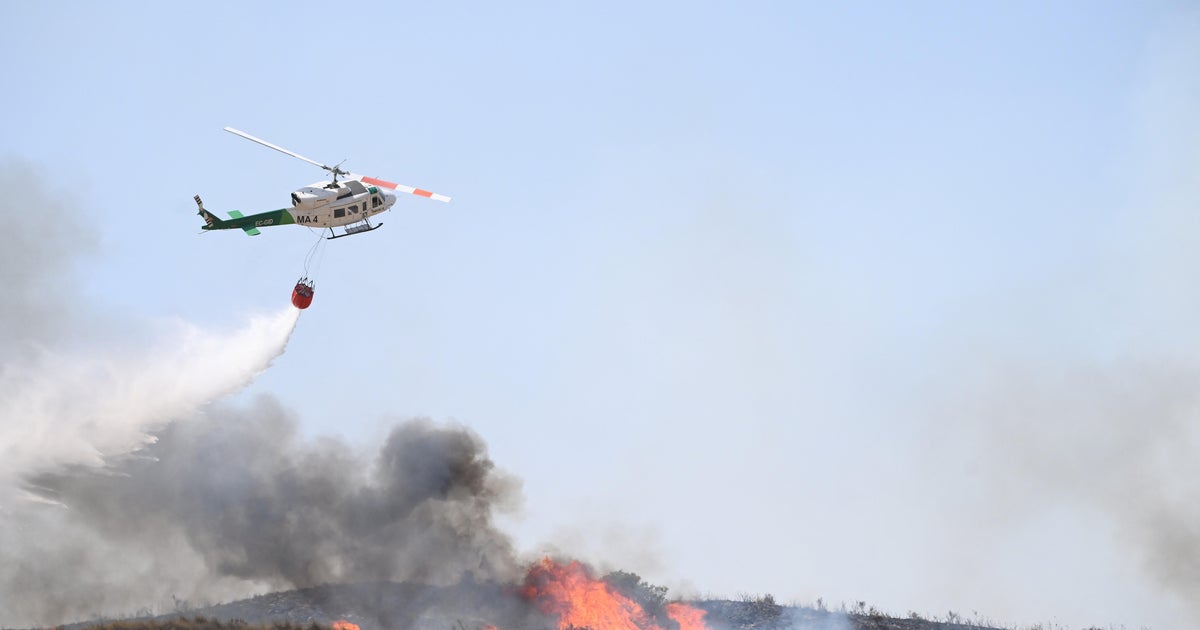
A wildfire that began late Thursday near the Sierra de Los Filabres mountains in Almería province, Spain, has burned about 25 square miles and killed at least 12 people. Hundreds of firefighters, supported by helicopters and fixed‑wing aircraft, worked to contain the blaze; crews conducted controlled burns around the perimeter. Authorities evacuated about 1,448 people from roughly 11 areas. Officials say most victims were foreign nationals who ignored shelter‑in‑place orders; seven died on foot after abandoning cars and four are believed to be British pending identification. Autopsies and DNA sampling were under way. Justice Minister Félix Bolaños attributed the fire’s ferocity to a climate emergency and local officials reported the fire advanced as fast as 328 feet per minute at its most intense. The report places the event in the broader context of recent record heat in Spain and Europe, noting Spain’s large 2025 fire season and that Europe is warming faster than the global average.
Biblical Reflection
The article reports a grave human tragedy and links it to a pattern of extreme heat that scientific monitoring supports. Factually, the immediate cause of death for many appears tied to evacuation decisions and the fire’s speed; identification of victims is still ongoing. The Justice Minister’s attribution to a "climate emergency" reflects a policy and scientific interpretation consistent with regional temperature records and the EU Copernicus data noted in the piece, though single events have complex causes (weather, land conditions, human actions). Journalistic framing is largely measured, with a survivor account that personalizes the danger without overt sensationalism. From a Christian perspective, this story calls for compassionate response to the suffering—practical aid for the displaced, support for first responders, and truthfulness in public conversation. It also invites sober stewardship: caring for vulnerable neighbors now and working responsibly to reduce risks that make extreme weather and wildfires more frequent or severe. Christians should resist politicizing grief for advantage, seek accurate causes and solutions, and pursue mercy and justice for those most affected.
Scripture in context
This outlook does not yet include contextual Scripture citations. Do not treat a general biblical theme as an exegetical conclusion.
Faithful Response
No prescribed response is offered. Consider the reflection prompts below in your own church context.
Reflection and Discussion
- 1How does the article balance immediate causes (evacuation choices, local conditions) with systemic causes (heat waves and climate trends), and where might nuance be missing?
- 2Whose vulnerability is assumed or overlooked in the coverage—migrant workers, tourists, rural residents—and how should that shape Christian concern and relief efforts?
- 3Are public leaders and media treating this primarily as an emergency response story, a climate policy issue, or both; what does that choice reveal about priorities and responsibilities?
Sources
Reporting links are evidence inputs; Sanctuary News' biblical reflection is commentary.
This outlook currently relies on fewer than two linked sources. Broaden verification before teaching from it.
- 1.Original reportprimary