News Summary
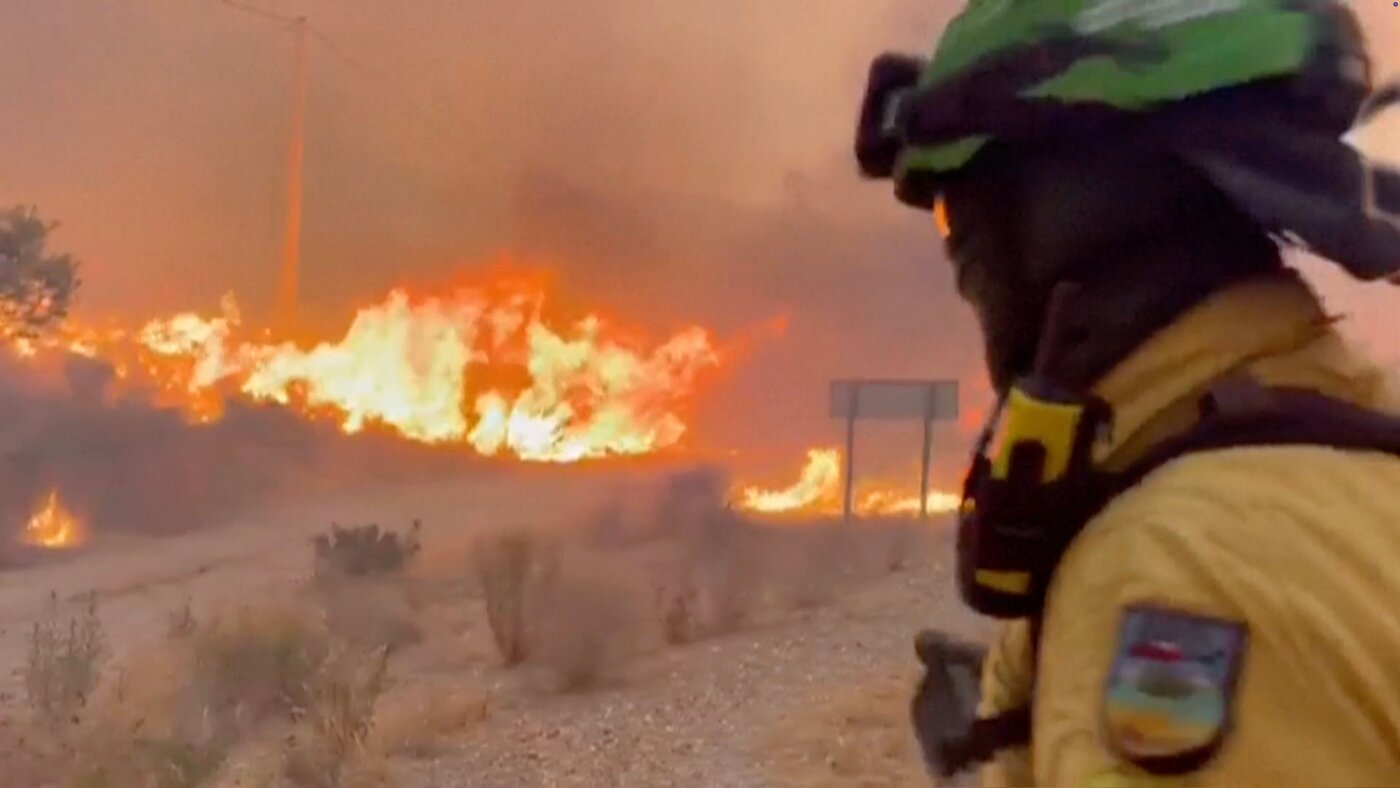
A fast-moving wildfire near Los Gallardos in Almería province, southern Spain, killed at least 12 people overnight into Friday and left 23 others unaccounted for, authorities said. Eight people were injured. Some victims were found inside burned vehicles and others died after abandoning cars and fleeing on foot; officials said many ignored shelter-in-place instructions. Regional leaders said four British nationals and other foreign nationals appeared to be among the dead. The blaze consumed more than 3,200 hectares (about 7,900 acres). Some 150 firefighters and 220 soldiers from Spain’s emergency military unit were deployed. Callers reporting the initial fire said a fallen power line may have sparked it, but authorities had not confirmed a cause. The article places the fire in the wider context of ongoing extreme heat across Spain and Europe, noting record temperatures, high wildfire risk, other large fires in France and the eastern Pyrenees, and scientific warnings that warming and drought increase wildfire frequency and intensity. It also cites recent Spanish and European wildfire statistics and past deadly fires in the region.
Biblical Reflection
The article is largely factual and situates a local human tragedy within broader environmental trends. It responsibly notes uncertainty about cause (callers reported a fallen power line but officials had not confirmed it) while also reporting the likely role of extreme heat, wind, and drought in enabling rapid fire spread. From a Christian pastoral perspective, the story calls us to lament and to act: lament for the lives lost and the traumatized survivors, show compassion to strangers (many victims were foreign nationals), and exercise stewardship toward creation and public structures that protect human life. Be wary of quick politicization—accurate attribution (infrastructure failure vs. climate-driven risk) matters for justice and prevention—but avoid letting policy debates eclipse immediate mercy. The article’s framing that links fires to rising temperatures aligns with mainstream climate science; Christians should neither deny factual causes nor treat such reporting as a substitute for compassionate response and thoughtful civic engagement to prevent future harm.
Scripture in context
This outlook does not yet include contextual Scripture citations. Do not treat a general biblical theme as an exegetical conclusion.
Faithful Response
No prescribed response is offered. Consider the reflection prompts below in your own church context.
Reflection and Discussion
- 1Do we respond first with compassion for victims and practical help, or with immediate blame and political point-scoring?
- 2How does emphasizing climate-driven risk change our responsibilities toward prevention, infrastructure, and the poor who are most vulnerable?
- 3Are we attending to both immediate needs (rescue, shelter, grieving families) and longer-term solutions (maintenance, planning, and care for creation)?
Sources
Reporting links are evidence inputs; Sanctuary News' biblical reflection is commentary.
This outlook currently relies on fewer than two linked sources. Broaden verification before teaching from it.
- 1.Original reportprimary