News Summary
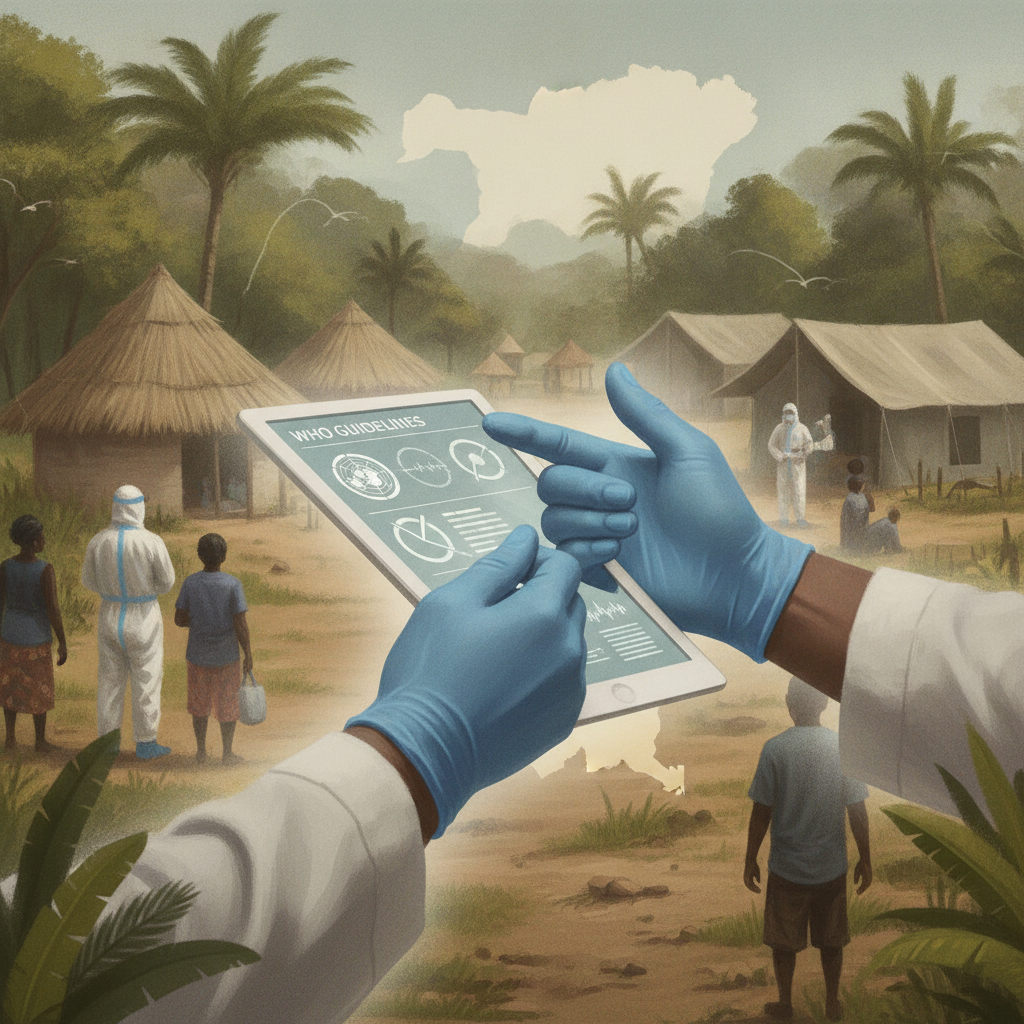
Reported facts: WHO published its first comprehensive clinical-management guidelines for filovirus disease covering Ebola and Marburg viruses; the guidelines include 16 evidence-based recommendations and stress early supportive care; the release comes while the DRC is responding to an Ebola outbreak caused by the Bundibugyo virus. Attributed claims: the guidelines are evidence-based and will improve survival if implemented. Uncertainties: the story does not provide independent verification of the guideline contents, details about the strength or source of the evidence for each recommendation, or how the guidance will be implemented or resourced in affected countries.
Source and Framing Analysis
Source role: the piece is a WHO communication announcing guidance, so it functions as primary reporting of an institutional release. Missing voices: local clinicians, patients, national health authorities, and independent external expert commentary are absent. Incentives: WHO seeks to inform and guide clinical practice and public health response; as an institutional actor it presents recommendations in a constructive, authoritative tone. Disputed claims/verification needs: the article claims the guidelines are "evidence-based" and lists 16 recommendations but provides no external evaluation of the evidence quality or independent studies showing improved outcomes; independent review by national health authorities or peer reviewers would help. What requires independent verification: the content and strength of the evidence behind each recommendation, feasibility in resource-limited settings, and the scale and current status of the Bundibugyo outbreak in the DRC.
Biblical Reflection
This announcement reflects a technocratic, public-health response grounded in evidence-based clinical practice and international coordination. The WHO guidance aims to reduce mortality and standardize care across settings, but its effectiveness depends on local capacity, supplies, and trust in health systems. Christians should welcome efforts that protect life and relieve suffering while also remaining attentive to equity, the needs of vulnerable communities, and the potential for stigma or misinformation. The article reports the release of guidance without assessing implementation challenges or local health-system constraints; the faithful response is to support both practical care and truthful communication that calms fear and protects neighbors.
Scripture in context
- 1Luke 10:25-37 (Parable of the Good Samaritan) — In Luke, Jesus answers a question about 'who is my neighbor' by telling a parable where a man beaten and abandoned receives aid from an unexpected neighbor (the Samaritan). The story challenges social boundaries in first-century Judea and reframes religious duty as active compassion toward any person in need. — The passage calls Christians to cross social and cultural barriers to care for those suffering; applied here, it urges support for practical medical care, advocacy for equitable access, and pastoral presence in outbreak settings rather than indifference or fearful exclusion.
Faithful Response
Individuals can: (1) pray for patients, health workers, and public-health leaders; (2) support trusted relief organizations financially or through volunteering where appropriate; (3) avoid spreading unverified information and help combat stigma against affected communities; (4) stay informed from authoritative sources and encourage evidence-based precautions within their networks.
Reflection and Discussion
- 1Which local perspectives (health workers, patients, community leaders) would help us better judge how these WHO guidelines can be implemented fairly?
- 2What assumptions about expertise, authority, or risk underlie our initial emotional reactions to disease news, and how should those be tested?
Sources
Reporting links are evidence inputs; Sanctuary News' biblical reflection is commentary.
This outlook currently relies on fewer than two linked sources. Broaden verification before teaching from it.
- 1.WHO issues comprehensive guidelines on filovirus disease, including Ebola and Marburg diseaseofficial_document