News Summary
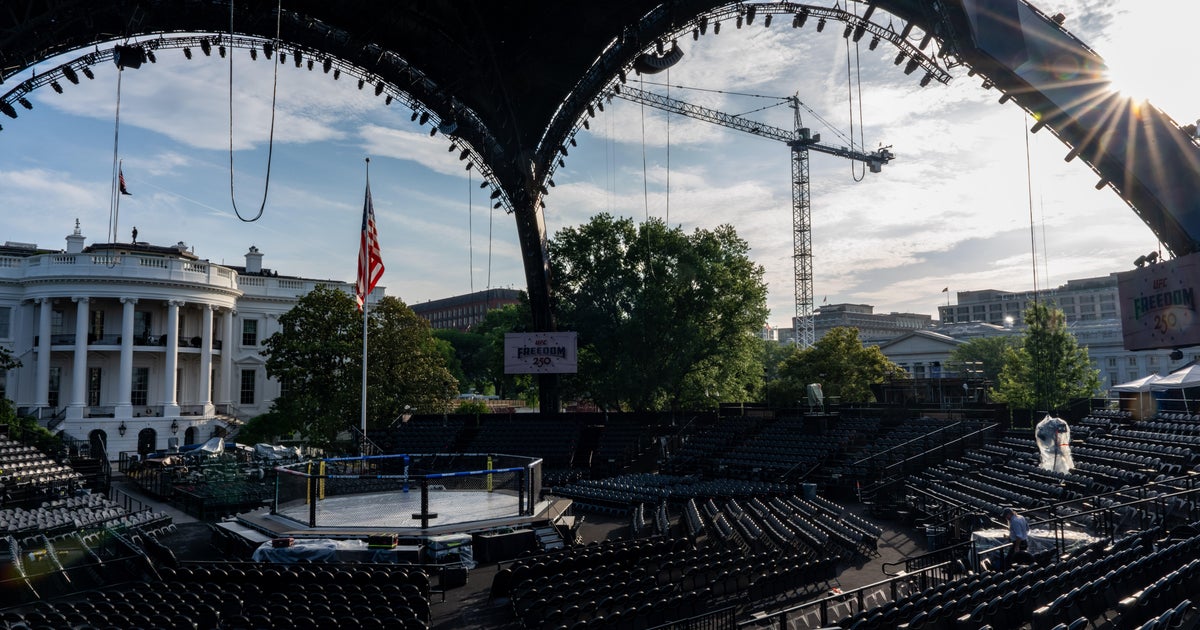
On June 14, 2026 the White House South Lawn hosted UFC Freedom 250, a series of mixed-martial-arts bouts timed to the nation's 250th anniversary and coinciding with President Trump's 80th birthday. The main card (streamed on Paramount+) featured an undisputed UFC lightweight title fight between Ilia Topuria and Justin Gaethje; earlier undercard fights began in the late afternoon. About 5,000 guests, including members of the military, were expected on the South Lawn and additional spectators could view from the Ellipse. Event rigging erected near the White House included a more-than-92-foot structure known as the "Claw." UFC CEO Dana White, a longtime friend of the president, helped bring the event to the White House; the event is one of several planned by Freedom 250. Two Virginia residents sued to block the use of the White House for what they called a private, for-profit sports event; a judge declined to enjoin the event after the Justice Department argued the plaintiffs filed too late and had not shown harm. The article also reports on a public verbal spat between the two headlining fighters and brief comments from them about the matchup.
Biblical Reflection
This report describes an unprecedented blending of a major sporting spectacle with the presidential residence and political celebration. Factually the article is straightforward; it reports the event, logistics, the streaming partner, legal challenge, and fighter publicity without obvious fabrication. The deeper concerns are ethical and civic: the use of an official government venue for a high-profile, commercially branded contest and for an event tied to the president's birthday raises questions about stewardship of public trust, separation between public office and private gain, and equal treatment under the law. Christians should note two tensions: (1) the yearning for national celebration and shared cultural moments is understandable and can be good, and (2) stewardship, justice, and respect for public institutions require careful boundaries so the dignity of the office is preserved and citizens' trust is not eroded. The tone of official legal filings quoted in the piece (dismissive of plaintiffs' objections) suggests a narrative that prioritizes spectacle and partisan celebration over concerns raised about access and commercialization. A faithful Christian response would call for clear accountability, transparency about public resource use, and charitable but honest critique — not reflexive partisanship — while praying for leaders to act with humility and justice.
Scripture in context
This outlook does not yet include contextual Scripture citations. Do not treat a general biblical theme as an exegetical conclusion.
Faithful Response
No prescribed response is offered. Consider the reflection prompts below in your own church context.
Reflection and Discussion
- 1Does hosting a for-profit, branded sporting event at an official presidential residence change how we think about public stewardship and the boundary between private interest and the state?
- 2What signals does a national leader send when the trappings of office are used for high-profile celebration, and how should Christians weigh respect for authority with calls for accountability?
- 3How might spectacle around national anniversaries bolster unity or deepen division, and which outcomes should shape decisions about public events?
Sources
Reporting links are evidence inputs; Sanctuary News' biblical reflection is commentary.
This outlook currently relies on fewer than two linked sources. Broaden verification before teaching from it.
- 1.Original reportprimary