News Summary
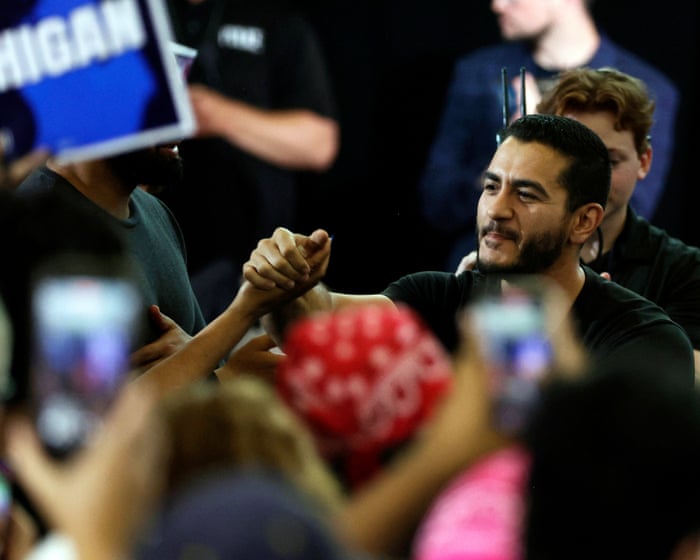
The Guardian reports that some Michigan voters who cast “uncommitted” ballots in the February 2024 Democratic primary — roughly 100,000 such votes are cited in the article — as a protest over President Biden’s support for Israel have begun re-engaging with the Democratic Party to support progressive candidates. The piece profiles Zainab Bibi Ahmed, who voted uncommitted in Feb 2024 and is now volunteering for Michigan Senate nominee Abdul El‑Sayed. The article attributes the moral intensity behind these shifts, in part, to graphic coverage of the Gaza campaign and cites Amnesty International’s description of events as a “live‑streamed genocide.” The story frames these returns as part of a broader progressive mobilization but does not supply systematic data tying the earlier uncommitted protest votes to a quantified wave of returns or a measured electoral impact.
Source and Framing Analysis
Source: The Guardian (single primary reporting source for this cluster). The article uses human‑interest reporting (named voter anecdote) plus a numeric claim (~100,000 uncommitted votes) to illustrate a political reaction to U.S. policy on Gaza and to show a motive for re‑engagement behind progressive candidates. Strengths: clear attribution of charged language (e.g., Amnesty International phrasing) and a concrete voter profile that makes the phenomenon relatable. Material uncertainty and framing risks: the reporting is anecdotal and the article does not provide systematic evidence showing how many of the roughly 100,000 uncommitted primary voters have actually returned to active Democratic participation or how that translates into votes for specific candidates. The Amnesty International phrase is a serious, value‑laden characterization; the article attributes it correctly but its inclusion heightens rhetorical intensity and may shape readers’ emotional responses. Readers should distinguish documented facts (who said what, volunteer activity, the existence of ~100k uncommitted ballots as reported) from implied causal claims about statewide electoral effects that the article does not empirically establish.
How sources covered this story
Sanctuary separately assesses reporting quality and alignment with Christian virtues. The virtues assessment considers truthfulness, dignity, compassion, justice, peacemaking, humility, and care for vulnerable people. It does not assess a publisher's faith or reward religious language.
Compare 1 reports
Reporting 75/100Virtues 80/100
- Distinctive contribution
- Names a specific Michigan Senate nominee (Abdul El‑Sayed) energizing returning voters, gives the reported size of the uncommitted-vote phenomenon (~100,000) in the Feb 2024 Michigan Democratic primary, and cites Amnesty International’s phrasing (“live-streamed genocide”) to show the moral framing that motivated voters.
- Framing
- Human-interest/political: frames the story around voters who abandoned the Democratic Party over Biden’s Israel policy and are now returning to support a progressive nominee, suggesting a grassroots re-engagement driven by moral outrage about Gaza.
- Omissions or uncertainty
- Excerpt does not show source/methodology for the 100,000 figure, lacks broader data on how widespread this shift is statewide or nationally, offers no direct quotes from the candidate or party officials, and does not provide timing or context for Amnesty’s statement (date, full quote, or report reference). It’s an excerptary anecdote without countervailing perspectives or statistical follow-up.
- Why these scores
- The excerpt is concise and attributes a contested characterization to Amnesty rather than stating it as the outlet’s own judgment, and it reports a specific numeric claim that helps quantify the phenomenon. However, the supplied text omits sourcing for the 100,000 figure, broader corroborating data, and alternative perspectives; those limitations reduce but do not negate its utility as a clear, attributed news lead. The excerpt treats people respectfully (names a voter, explains motives) and attributes morally weighty language to Amnesty rather than asserting it as unquestioned fact, which reflects humility and honesty. It highlights concern for suffering (Gaza) and political responses without dehumanizing language. Score is not higher because the excerpt lacks explicit emphasis on care, reconciliation, or concrete constructive responses beyond political re-engagement.
Biblical Reflection
Christian discernment should hold together truth and compassion: grieve civilian suffering without allowing grief to calcify into partisan hatred; press leaders for just and humane policies while refusing to reduce complex realities to slogans. The article reminds believers that moral outrage can withdraw people from civic participation, but that genuine alignment of conscience and candidate can restore engagement. In public life Christians should pursue mercy (care for vulnerable civilians), justice (truthful accountability and protection of basic human rights), peacemaking (seeking ceasefires and relief), humility (listening to those most harmed), and dignity (avoiding dehumanizing rhetoric). Political action should be an expression of neighbour‑love, not an identity that eclipses it.
Scripture in context
- 1Matthew 5:9 — Jesus’ teaching in the Sermon on the Mount emphasizes the character of those who belong to God’s kingdom and calls followers to be peacemakers. — This passage invites Christians to pursue reconciliation and protection of the vulnerable in public life. It calls for political engagement that seeks peace and human flourishing rather than triumphalism or dehumanization.
Faithful Response
Pray for all civilians harmed by the Israel‑Palestine conflict and for political leaders on every side. Listen to and prioritize the testimonies of people directly affected by violence. Support verified humanitarian relief for civilians regardless of nationality or politics. Create safe church spaces for lament and difficult conversations rather than partisan shaming. When engaging civically, research candidates’ records on human rights and humanitarian aid, vote with conscience, and advocate for policies that seek ceasefire, protection of civilians, and accountability consistent with international law. Resist dehumanizing language and be ready to repent and repair relationships where political advocacy has become cruel.
Reflection and Discussion
- 1How does public grief over distant suffering shape our political loyalties, and how can Christians hold mercy for victims without trading charity for partisanship?
- 2Where in our civic conversations might righteous anger be masking deeper needs for reconciliation, truth, or tangible help for those harmed?
- 3When a candidate appears to align with our sense of justice, how will we keep our support bounded by ongoing prayer, humility, and care for all affected parties?
- 4How can our congregation practically support vulnerable civilians and refugees, while also creating spaces for members with differing political convictions to listen to one another?
Sources
Reporting links are evidence inputs; Sanctuary News' biblical reflection is commentary.
This outlook currently relies on fewer than two linked sources. Broaden verification before teaching from it.
- 1.‘I hate Democrats, but I love Abdul’: voters who left over Gaza return for progressive pushprimary_reporting