News Summary
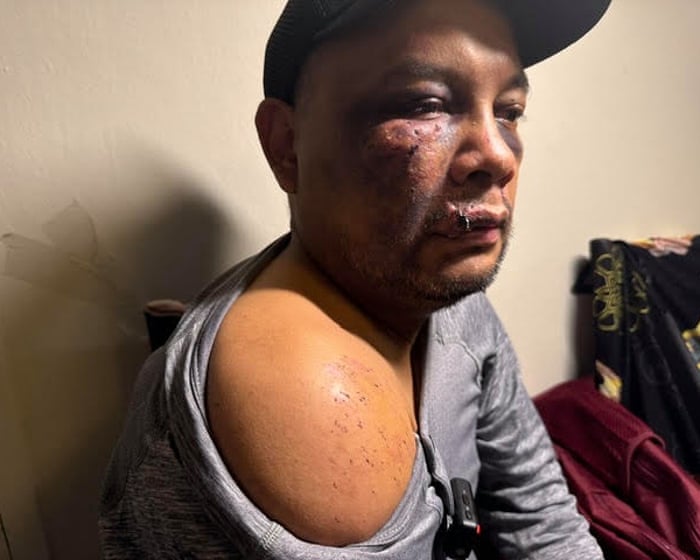
The Guardian reports that on 11 August José Mejía Hernandez, 45, was arrested by U.S. immigration agents in Arlington, Virginia, and was subsequently hospitalized with a brain injury and severe facial bruising. Mejía Hernandez’s lawyers provided the newspaper with photographs and medical records documenting his injuries and say he was later transferred to an ICE office and fitted with an ankle monitor. Mejía Hernandez, through his lawyers, recalled being struck by some kind of stun device and said he does not remember events after that until waking in the hospital. The article does not include a statement from ICE or independent eyewitness or video corroboration of how the injuries occurred.
Source and Framing Analysis
The Guardian account is based principally on materials and statements provided by the injured man’s lawyers: photos and medical records plus the client’s recollection as relayed by counsel. That provides documentary evidence of injury but represents one side of the event. The article frames key claims as allegations attributed to Mejía Hernandez and his lawyers rather than presenting them as established fact. Absent from the piece is an ICE response, independent eyewitness testimony, surveillance or body-camera video, or independent medical confirmation of how the injuries were caused. Those absences leave material uncertainties about the sequence of events and the proximate cause of the reported brain injury and bruising.
How sources covered this story
Sanctuary separately assesses reporting quality and alignment with Christian virtues. The virtues assessment considers truthfulness, dignity, compassion, justice, peacemaking, humility, and care for vulnerable people. It does not assess a publisher's faith or reward religious language.
Compare 1 reports
Reporting 78/100Virtues 82/100
- Distinctive contribution
- Names the alleged victim (José Mejía Hernandez, 45), states he was hospitalized with a brain injury and severe facial bruising after an arrest by immigration agents, notes he was walking to a bus stop in Arlington on 11 August when two agents from an unmarked vehicle chased him, and reports that his lawyers provided photos and medical records; also mentions transfer to an ICE office and fitting of an ankle monitor.
- Framing
- The excerpt frames the claims as allegations, attributing key assertions to the victim’s lawyers and noting that they shared photos and medical records. It uses concrete, non-sensational language and reports specific actions (hospitalization, transfer, ankle monitor) rather than making unqualified claims.
- Omissions or uncertainty
- No statement or response from ICE or law enforcement is included; medical-provider details and the specific medical diagnosis/treatment are not provided; there is no description of how the injury occurred (e.g., use of force, fall, medical event); the legal or immigration status of the subject and any charges are not stated; witnesses beyond the lawyer are not cited; timing and chain of custody for the photos/records are not detailed.
- Why these scores
- The excerpt responsibly attributes allegations to the victim's lawyers, cites supporting materials (photos and medical records), and supplies concrete details (name, age, date, location). It is concise and avoids asserting unverified facts. It is limited, however, by the absence of an official response or independent medical confirmation in the supplied text and lacks fuller context or follow-up, which reduces comprehensiveness but not basic reliability. The excerpt demonstrates truthfulness by attributing claims rather than asserting them as established fact, and it treats the subject with dignity (naming him, noting injuries) rather than dehumanizing language. It shows concern for a potentially vulnerable person (reporting medical harm) and uses sober, non-sensational language. The score is moderated downward because the supplied text does not include official responses or broader contextualization that could contribute to justice-seeking clarity.
Biblical Reflection
This report raises urgent pastoral concerns about the dignity and safety of a neighbor in custody. Christians are called to weigh claims carefully: the article presents medical records and photos and attributes personal recollections to the injured man and his lawyers, but it lacks an official ICE account and independent corroboration of the use of force. The facts as reported indicate serious physical harm coinciding with an immigration enforcement action, which should provoke prayerful concern, demand for accountability, and compassionate care for the injured person. From a Christian moral perspective, the story highlights tensions between state authority and protection of vulnerable persons. The possibility that a person sustained a brain injury while being detained requires both justice-seeking (investigation) and mercy (attending to suffering). Christians should avoid quick partisan conclusions, pressing for truth while resisting dehumanizing rhetoric toward migrants or agents. Faithful response includes advocating for transparent investigation, medical care for victims, and humane treatment for those in custody.
Scripture in context
- 1Luke 10:25-37 (Parable of the Good Samaritan) — Jesus tells this parable in response to a question about 'Who is my neighbor?' In its first-century context the story subverts ethnic and religious prejudice by making the helper a Samaritan—someone despised by many Jews—and defines neighborliness as concrete care for a hurt person regardless of identity. — The passage calls Christians to cross social boundaries to care for the injured and vulnerable, to prioritize practical compassion over legal status or group identity, and to insist on tangible aid and restoration while also pursuing justice for harm done.
Faithful Response
Pray for José Mejía Hernandez, his family, those who will investigate this incident, and for just and merciful outcomes.
If congregationally appropriate, identify and connect the injured person or family with local legal aid, medical, and social services; prioritize concrete assistance over partisan rhetoric.
Advocate for transparent, independent review if there is credible evidence of excessive force—contact oversight bodies or elected representatives while using sober, fact-focused language.
Prepare pastoral accompaniment: offer nonjudgmental presence, ensure pastoral confidentiality, and mobilize community resources to help with medical needs, transportation, or advocacy.
Reflection and Discussion
- 1What assumptions do I bring about migrants, enforcement agents, or criminality that might shape my initial reaction before all facts are known?
- 2How can our congregation pursue both mercy and justice in this case—caring for the injured while insisting on transparent investigation?
- 3What practical steps can our church take to protect the dignity and safety of immigrant neighbors in our community?
Sources
Reporting links are evidence inputs; Sanctuary News' biblical reflection is commentary.
This outlook currently relies on fewer than two linked sources. Broaden verification before teaching from it.
- 1.Man suffered brain injury and severe bruising after ICE arrest in Virginia, records showprimary_reporting