A little more detail
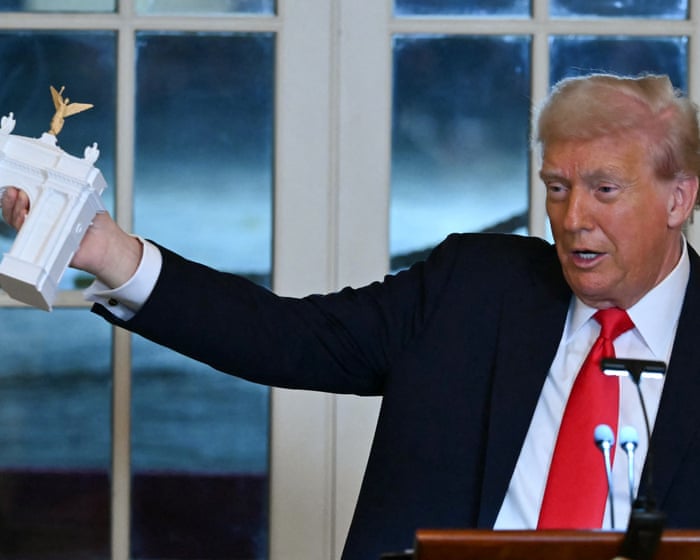
The District of Columbia and the Commonwealth of Virginia filed a federal lawsuit seeking to block construction of a proposed 250-foot memorial arch tied to former President Donald Trump. Reporting from The Guardian and PBS indicates there are now three separate lawsuits calling for a halt to potential work on the site. The proposed arch would sit on a grassy patch off the bridge that spans the Potomac River near Arlington National Cemetery. The Guardian reports the administration has said construction could begin as early as next week and supplies a visual comparison that the arch would be roughly 100 feet taller than the Statue of Liberty from its base to the torch; PBS corroborates the size (250 feet), the location, and the total number of lawsuits but does not include the administration timing or the height comparison.
Source and Framing Analysis
The Guardian and PBS independently corroborate core facts (multiple lawsuits, a roughly 250-foot monument, and the site beside the Potomac near Arlington National Cemetery). The Guardian supplies distinctive details: it names the plaintiffs (D.C. and Virginia), reports that the suits were filed in federal court on Saturday, attributes an administration statement that construction could begin 'as early as next week,' and uses an evocative comparison to the Statue of Liberty. PBS provides concise, neutral corroboration of the monument's height, location, and the existence of three lawsuits but does not name plaintiffs or report the administration's timetable. Neither excerpt supplies the full legal complaints, docket numbers, the specific federal office that authorized or funded the project, permit status, or detailed sourcing for the administration's timeline.
Reporting assessments supplied with the source excerpts: The Guardian passage was rated in the supplied materials with a reportingQualityScore of 76 and a christianVirtuesAlignmentScore of 78; the PBS excerpt received a reportingQualityScore of 72 and a christianVirtuesAlignmentScore of 75. Both are presented factually and without overtly inflammatory language; the Guardian’s language ('mounting', 'imminent') and the Statue of Liberty comparison heighten urgency and visual impact, which can shift attention toward spectacle rather than procedural questions. Important omissions across both pieces include the precise legal claims in each suit, whether permits or contracts allow immediate construction, the authorizing office and funding source, and responses from other local stakeholders.
How sources covered this story
Sanctuary separately assesses reporting quality and alignment with Christian virtues. The virtues assessment considers truthfulness, dignity, compassion, justice, peacemaking, humility, and care for vulnerable people. It does not assess a publisher's faith or reward religious language.
Compare 2 reports
Rank 1
The Guardian: Virginia and DC sue to stop Trump’s arch as government looks to start constructionReporting 76/100Virtues 78/100
- Distinctive contribution
- Identifies plaintiffs (D.C. and Virginia), filing in federal court (with a day reference), administration's timetable for construction, and a vivid size comparison (100 ft taller than the Statue of Liberty from base to torch).
- Framing
- Presents legal challenges as 'mounting' and construction as 'imminent,' creating a sense of urgency; otherwise factual reporting with some rhetorical emphasis via the Statue of Liberty comparison.
- Omissions or uncertainty
- Does not specify the legal claims or statutes relied upon, which court exactly (district court name), sources for the administration's timeline, or responses from other stakeholders; the comparison to the Statue of Liberty is evocative but lacks context about measurement conventions.
- Why these scores
- The excerpt provides useful, specific details and attribution (identifying plaintiffs and noting an administration statement), but it compresses complex items (legal grounds, evidentiary basis for the timeline) into brief claims without sourcing those specifics in the excerpt. The evocative height comparison is helpful visually but could use precise basis. The passage reports contentious developments without inflammatory language, names public actors, and supplies context that helps readers understand urgency and scale. It does not demean parties or exploit suffering; however, it focuses on political/legal conflict rather than human impacts, so it is neutral-to-positive on virtues of truthfulness and justice.
Reporting 72/100Virtues 75/100
- Distinctive contribution
- Concise independent confirmation of the number of lawsuits, the monument's proposed height (250 ft), and its specific siting on a grassy patch off the bridge spanning the Potomac to Arlington National Cemetery.
- Framing
- Neutral, factual statement of litigation and the basic physical characteristics and location of the proposed monument.
- Omissions or uncertainty
- Does not identify the plaintiffs, the court where suits were filed, the legal grounds, timeline for potential construction, or any government statements; no sourcing for the 'three lawsuits' claim is shown in the excerpt.
- Why these scores
- The excerpt is a concise factual summary and avoids sensational language, but it lacks attribution (who filed suits), dates, legal context, and supporting detail. For a brief news blurb this is adequate but limited in specificity and sourcing. The language is neutral and non-dehumanizing, presenting facts without inflammatory rhetoric. It shows respect for truthful reporting and avoids exploiting emotional reactions, though it provides little context about consequences or affected people.
Biblical Reflection
Christians should pursue truth, mercy, and justice in how public memory and public space are decided. That means: support transparent legal review; insist public officials disclose who authorized or funded the project and how community input was considered; protect the dignity and well-being of neighbors affected by any construction. At the same time, practice humility and restraint: avoid triumphalism or dehumanizing rhetoric, pray for judges and officials tasked with impartial decisions, and prioritize peaceful, law‑respecting advocacy that centers vulnerable people rather than political spectacle.
Scripture in context
- 1 — Paul instructs early Christians about the role of governing authorities in maintaining order while communities live under imperial rule. The passage balances respect for lawful authority with obligations to conscience and justice. — Christians can respect lawful processes while still calling for accountability and justice. Prayerful engagement and faithful citizenship mean supporting lawful review, protecting neighbors who may bear the costs or harms of public projects, and advocating for transparent, fair procedures rather than partisan spectacle.
Faithful Response
Pray for wisdom for judges, government officials, community members near the site, and all parties involved before forming public judgments.
Seek verified information: read filing summaries or reliable reporting rather than sharing slogans. Ask for docket numbers and primary documents when possible.
Support lawful channels: if you oppose or support the project, engage through public comment periods, contact elected representatives respectfully, and, if appropriate, support organizations pursuing legal review.
Provide pastoral care: host information sessions that summarize confirmed facts, explain how the court process works, and create space for congregants to express fears and disagreements without dehumanizing others.
Model humility and neighbor-love: avoid amplifying spectacle or partisan triumphalism; center the needs and voices of those living closest to the site and those likely to be affected materially.
Reflection and Discussion
- 1Whose voices are centered or marginalized in decisions about this public memorial and its siting?
- 2How should Christians balance respect for legal authority with a prophetic concern for justice and care for vulnerable neighbors?
- 3What stewardship responsibilities do we have for shared public spaces, and how should those responsibilities shape civic engagement?
Sources
Reporting links are evidence inputs; Sanctuary News' biblical reflection is commentary.
- 1.Virginia and DC sue to stop Trump’s arch as government looks to start constructionprimary_reporting
- 2.Virginia and D.C. sue over Trump's arch, adding to legal challenges as government wants work to beginadditional_reporting