News Summary
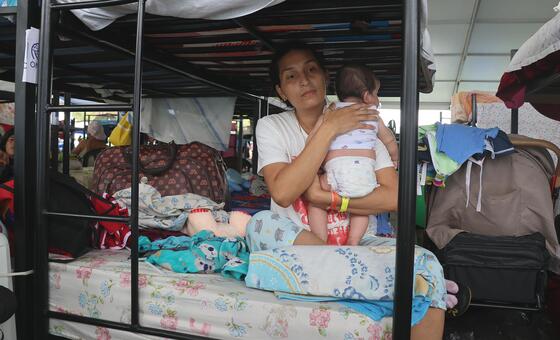
Reported facts: UN News reports that twin earthquakes struck Venezuela one month prior and that a senior UNFPA official said thousands of women and girls face difficulty accessing essential healthcare and protection services. Attributed claims: the scale of disrupted access is presented as 'thousands' and is attributed to UNFPA; the quote 'Women do not stop giving birth in an emergency' is attributed to the UNFPA official. Uncertainty: the article provides no independent verification, no precise numbers, no locations or descriptions of which services are disrupted, and no details on government or other response efforts.
Source and Framing Analysis
The story is built on a single UN source — a senior UNFPA official speaking to UN News — which is a credible humanitarian actor but is a single perspective. The framing centers humanitarian needs of women and girls, which is appropriate to the source, but the lack of specific data (who, where, how many, which services) limits the ability to assess scale and to weigh policy or operational responses. The piece does not present local governmental statements, independent field assessments, or precise metrics to corroborate the magnitude of the claim.
Biblical Reflection
This report touches a straightforward moral claim: disasters worsen existing vulnerabilities, and pregnant women and girls have particular, non-negotiable needs. Scripture and Christian tradition repeatedly call believers to attend to those without strong advocates. The focus on reproductive and protection services aligns with biblical concern for life, dignity, and the neighbor. Christians should receive this report as a sober reminder that mercy requires both immediate relief and ongoing systems of care.
At the same time, the reporting is limited in detail. That means Christians should avoid assuming more than the facts warrant or weaponizing this story for unrelated agendas. Truth-telling requires attending both to the stated needs (as UNFPA reports them) and to gaps in evidence. Faithful compassion balances urgency with prudence: support trusted relief channels, ask clarifying questions of aid providers, and encourage accountable use of resources so help reaches pregnant women and girls who are most at risk.
Finally, the Gospel repeatedly invites active presence among suffering people — not only pity but long-term solidarity. Long-term recovery will require attention to health infrastructure, maternal care, shelter, protection from exploitation, and the civic structures that restore normal life. Christians can be advocates for those priorities while practicing humility about what the limited report actually establishes.
Scripture in context
- 1Matthew 25:35–40 — In Matthew 25 Jesus speaks about the final judgment in terms of care for those who are hungry, thirsty, strangers, naked, sick, or imprisoned; the righteous are commended for serving such neighbors. The passage interprets righteous action as practical compassion toward tangible human need. — This passage frames disaster response as an integral part of Christian discipleship — helping pregnant women and vulnerable households in an emergency is not optional charity but an expression of faithful love.
- 2Luke 10:25–37 (Parable of the Good Samaritan) — Jesus tells a story about a man attacked and left injured; a Samaritan, moved with compassion, provides immediate care and ongoing support. The parable instructs listeners about neighbor-love across boundaries and religious expectations. — The parable encourages Christians to cross social, political, and cultural divides to offer practical care and protection for those harmed by disaster, prioritizing immediate needs and sustained recovery.
Faithful Response
Pray specifically for pregnant women, mothers, and girls in the affected regions and for aid workers on the ground.
Give to and partner with reputable humanitarian organizations that provide reproductive, maternal, newborn, and protection services in disaster zones (confirm they have vetted local partners).
Contact elected officials or church networks to ask that relief funds and policies prioritize maternal health, safe childbirth, and protections for women and girls in disaster response plans.
Educate your congregation or small group about the specific needs raised and avoid circulation of unverified details; encourage disciplined, evidence-based generosity.
Reflection and Discussion
- 1How does Scripture’s call to care for the vulnerable shape how we prioritize aid for women and girls in disasters?
- 2Are we prepared to support both immediate relief (safe childbirth and protection) and long-term recovery (health systems, shelter, social protection)?
- 3What information do we need before acting so our compassion is effective rather than performative?
Sources
Reporting links are evidence inputs; Sanctuary News' biblical reflection is commentary.
This outlook currently relies on fewer than two linked sources. Broaden verification before teaching from it.
- 1.‘Women do not stop giving birth in an emergency’ – one month after Venezuela quakesofficial_document