News Summary
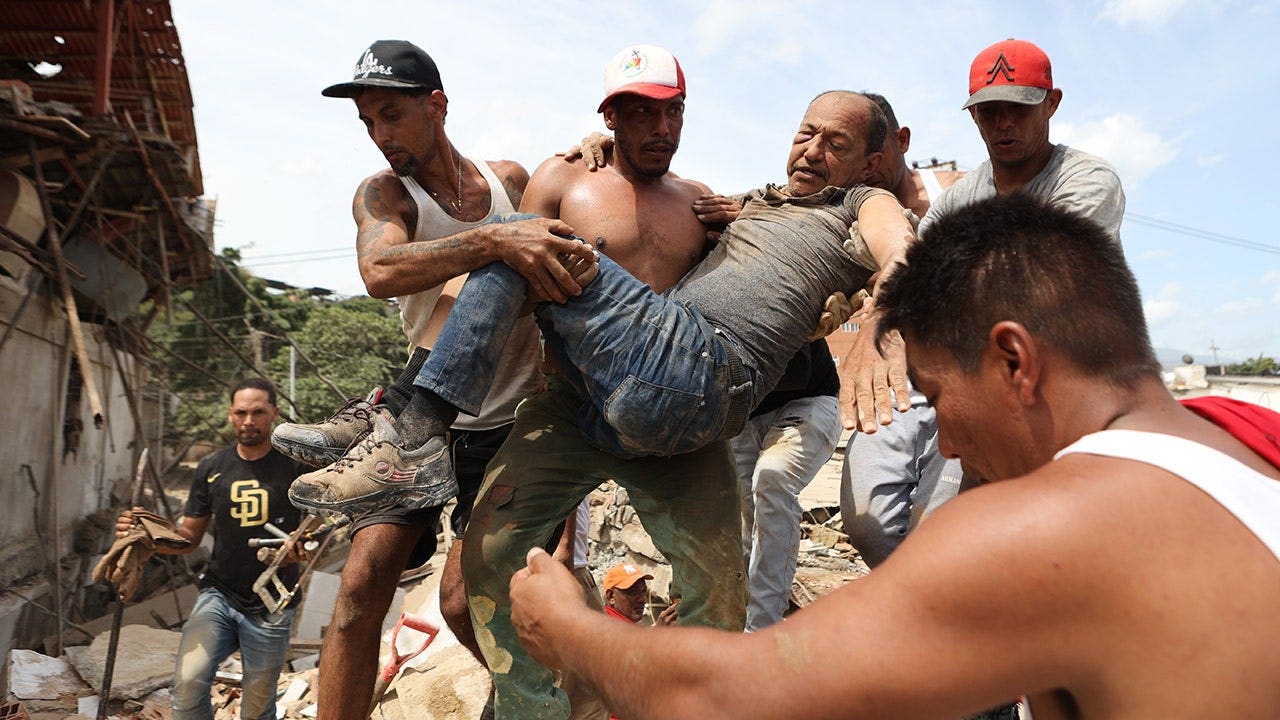
Two powerful earthquakes — reported as magnitude 7.2 and 7.5 — struck northern Venezuela on Wednesday night roughly 120 miles west of Caracas. Venezuelan officials reported at least 589 dead, about 2,980 injured, and thousands missing; the death toll was expected to rise as rescue efforts continued. The coastal La Guaira region sustained heavy damage; the main airport there was closed and hospitals were damaged and evacuated. Dramatic rescue scenes from collapsed buildings were widely reported. Venezuela’s acting president, Delcy Rodríguez, declared parts of La Guaira a disaster zone, requested assistance, and appealed for heavy construction equipment. The U.S. government activated a humanitarian response, pledging $150 million in aid and deploying Navy ships; U.S. Southern Command sent Marine Corps Maj. Gen. Kevin J. Jarrard to Caracas to coordinate Department of Defense support for relief, using aircraft and other assets to move personnel, search-and-rescue teams, and supplies. Local responders and international partners were reported to be engaged in search-and-rescue and relief operations.
Biblical Reflection
The report primarily conveys an urgent humanitarian crisis and documents concrete international relief steps. The facts presented — casualty counts, infrastructure damage, and the arrival of U.S. military support — align with standard disaster reporting, but casualty and damage figures remain provisional and likely to change as rescue operations continue. Readers should note a U.S.-centered emphasis (aid amount, military coordination) that may shape perception of the response; local capacities, regional partners, and affected communities’ voices receive less attention in the piece. From a Christian perspective, the story calls for compassionate, nonpartisan aid and careful discernment: aid that alleviates suffering reflects neighbor-love, while politicizing relief or treating military presence as primarily strategic risks diverting attention from the immediate needs of survivors. Christians should press for accuracy, prioritize support to reputable relief organizations working on the ground, and advocate for aid distribution that protects the vulnerable and respects human dignity during both rescue and long-term rebuilding.
Scripture in context
This outlook does not yet include contextual Scripture citations. Do not treat a general biblical theme as an exegetical conclusion.
Faithful Response
No prescribed response is offered. Consider the reflection prompts below in your own church context.
Reflection and Discussion
- 1How does the story’s focus on U.S. aid and military coordination shape our understanding of whose leadership matters in this crisis, and whose local voices may be missing?
- 2Are casualty and damage figures presented as final facts or provisional estimates — and how should that affect our willingness to act or to judge responses?
- 3In what ways might the involvement of armed forces help or complicate purely humanitarian goals, and how should Christians weigh expedience against the need for dignity and impartiality in aid?
Sources
Reporting links are evidence inputs; Sanctuary News' biblical reflection is commentary.
This outlook currently relies on fewer than two linked sources. Broaden verification before teaching from it.
- 1.Original reportprimary