News Summary
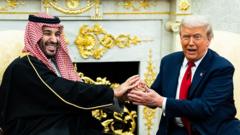
The BBC reports that the United States is preparing to announce a deal that would allow Saudi Arabia to develop a nuclear programme. The article says the agreement would fulfil a long-standing Saudi objective and notes it could raise concerns in Israel and among some U.S. lawmakers. The BBC frames the story as reporting others' accounts and does not provide details on the deal’s scope, safeguards, timeline, or direct statements from the U.S., Saudi Arabia, the IAEA, Israel, or Congress.
Source and Framing Analysis
The article is a short BBC report presented as reporting other sources rather than as an official announcement. Material uncertainties affect the story: it does not specify whether the programme is limited to civilian energy, whether enrichment or reprocessing would be allowed, what verification and safeguards would apply, or whether any legally binding non-proliferation commitments accompany the deal. Because the piece lacks these details, the framing can unintentionally normalize the outcome without showing the technical, legal, and security specifics that determine real-world risk.
Biblical Reflection
This report raises weighty moral and practical questions for Christians thinking about global peace and power. Nuclear technology—while potentially used for legitimate civilian energy—carries risks of proliferation, regional insecurity, and civilian harm when states acquire capabilities that could be diverted or escalated. Christians should prize truth and transparency: we need clear information about what is being permitted, what safeguards exist, and how civilian and military uses are separated.
From a pastoral perspective we should also hold together justice and mercy. Justice calls for accountability, non-proliferation safeguards, and the protection of vulnerable populations from the catastrophic effects of conflict; mercy calls us to care for neighbors across borders and to pray for leaders whose decisions affect millions. Practically, that means seeking reliable information, encouraging public scrutiny and international oversight, and praying for peacemaking rather than triumphalism or fear-driven escalation.
At the same time, avoid assuming bad motives or fixating on partisanship. The single report leaves many factual gaps. Christians should resist premature certainties, pursue discernment, and advocate for policies that reduce the risk of war and protect civilians, while loving those on all sides of the dispute as neighbors.
Scripture in context
- 1Matthew 5:9 — In the Sermon on the Mount, Jesus describes the character of those who belong to his kingdom, including a call to be peacemakers amid hostility and injustice. — This passage invites Christians to prioritize peacemaking and reconciliation when national policies carry risks of violent conflict, urging us to advocate for paths that minimize harm and promote peace rather than fueling competition or fear.
Faithful Response
Pray for wisdom for leaders in the U.S., Saudi Arabia, Israel, and international institutions and for protection of civilians.
Seek reliable sources (official statements, IAEA documents, expert analysis) before forming firm judgments; avoid spreading unverified claims.
Advocate—through letters, conversations, or voting—for transparency, international safeguards, and diplomatic measures that reduce proliferation risk and prioritize peaceful security.
Cultivate a congregational posture of lament for potential suffering and compassion for people on all sides, rather than political triumphalism.
Reflection and Discussion
- 1What evidence would persuade me that the reported deal includes adequate safeguards and monitoring, and what would make me rightly alarmed?
- 2How can the call to be a peacemaker shape public conversation about national security without retreating into naivety?
- 3In what ways should concern for vulnerable civilians in the Middle East influence Christian civic engagement on foreign policy?
Sources
Reporting links are evidence inputs; Sanctuary News' biblical reflection is commentary.
This outlook currently relies on fewer than two linked sources. Broaden verification before teaching from it.
- 1.US to announce deal allowing Saudi Arabia a nuclear programme, reports sayprimary_reporting