News Summary
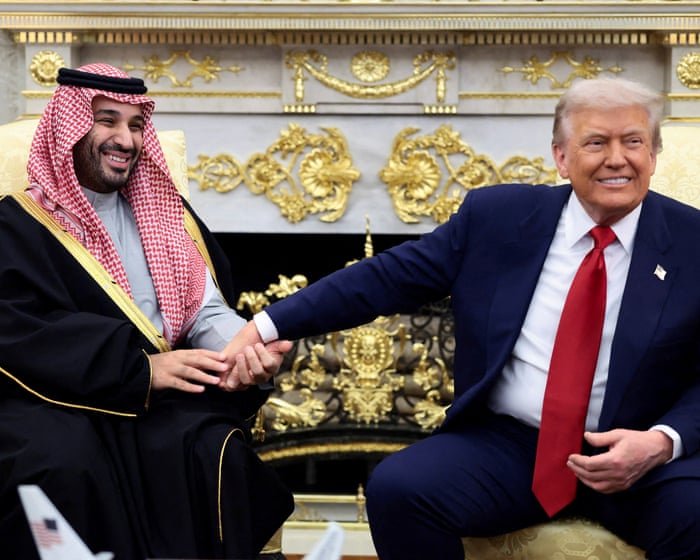
Reported facts: The Guardian editorial states that the US announced a civil nuclear cooperation deal with Saudi Arabia that could permit future uranium enrichment and limit the fullest IAEA inspection rights. Attributed claims: The article cites experts’ longstanding warnings that a civilian nuclear program could create a path to a Saudi nuclear weapon and quotes Crown Prince Mohammed bin Salman as saying Saudi Arabia would seek a weapon if Iran got one. Interpretive claim: The editorial asserts that the deal weakens the previously touted ‘gold standard’ (the UAE’s waiver of enrichment and full IAEA monitoring) and that this precedent could be cited by Russia or China in future nuclear agreements. Uncertainty: The editorial is interpretive and does not supply the full text of the US–Saudi agreement or independent verification of all its provisions.
Source and Framing Analysis
This is an editorial from The Guardian, not an investigative report of the agreement’s full text. The piece frames the announcement as a dangerous weakening of non‑proliferation norms and highlights expert warnings and a provocative quote from Saudi leadership to support that view. Material uncertainties hinge on the specific legal text of the cooperation agreement, the exact inspection exemptions (if any), and how the IAEA and other governments will respond—none of which the editorial reproduces or cites in full. The framing prioritizes the risk narrative and precedent concerns over an exposition of clause‑by‑clause treaty language.
Biblical Reflection
Theological and pastoral reflection:
1) Truth and discernment: Christians should distinguish factual reporting (that an agreement was announced) from judgmental inferences (that it will inevitably lead to more nuclear weapons). The editorial raises plausible risks; prudence calls us to demand transparency and documented terms rather than accept assumptions. Truth‑seeking includes asking for the primary documents and independent technical assessments.
2) Justice and neighbor‑love: The potential erosion of safeguards raises justice questions—whose security is prioritized, and at what cost? If weaker standards make war or arms races more likely, the suffering will fall disproportionately on civilians. A Christian response centers the protection of the vulnerable and advocates policies that reduce the likelihood of armed conflict.
3) Humility and peacemaking: We should avoid demonizing actors or issuing premature moral certainties. Pray for leaders on all sides, support credible diplomatic processes and multilateral institutions (like the IAEA) that promote verification, and press for policies that prioritize de‑escalation. Where the editorial calls out double standards, Christians can call for consistent application of norms in ways that promote trust and long‑term peace.
Scripture in context
- 1Matthew 5:9 — Part of the Sermon on the Mount, this beatitude blesses those who seek peace and recognizes peacemaking as a kingdom virtue in the teaching of Jesus to a first‑century Jewish audience under Roman rule. — The passage calls Christians to value and pursue peacemaking even in political contexts; it invites prayerful advocacy for diplomatic solutions, verification regimes, and policies that reduce the risk of violence.
- 2Proverbs 11:1 — Wisdom literature that contrasts honest measures and righteous conduct with deceit; in its ancient Near Eastern context it addresses commercial and civic honesty in community life. — This passage encourages Christians to insist on integrity and consistent standards in public life—applying to calls for transparent, evenhanded international agreements that do not privilege short‑term advantage over long‑term safety.
Faithful Response
Pray regularly for policymakers, diplomats, and IAEA experts directly involved in nuclear negotiations.
Ask church leaders to provide clear, nonpartisan briefings or resources that summarize primary documents and verified technical assessments so congregations can understand risks without sensationalism.
Contact representatives (respectfully) to request publication of the agreement text and independent IAEA review, emphasizing care for regional civilians and long‑term stability.
Support humanitarian and peacebuilding organizations that reduce incentives for arms races by addressing insecurity, refugee needs, and regional development.
Reflection and Discussion
- 1What specific evidence would change your view about whether this agreement weakens non‑proliferation norms?
- 2How should Christians balance critique of policy with prayers for leaders and concern for those most at risk from escalation?
- 3In what ways does consistency or perceived double standards in international policy affect long‑term prospects for peace and trust?
Sources
Reporting links are evidence inputs; Sanctuary News' biblical reflection is commentary.
This outlook currently relies on fewer than two linked sources. Broaden verification before teaching from it.
- 1.The Guardian view on a US-Saudi nuclear agreement: an offer that further erodes international safeguards | Editorialprimary_reporting