A little more detail
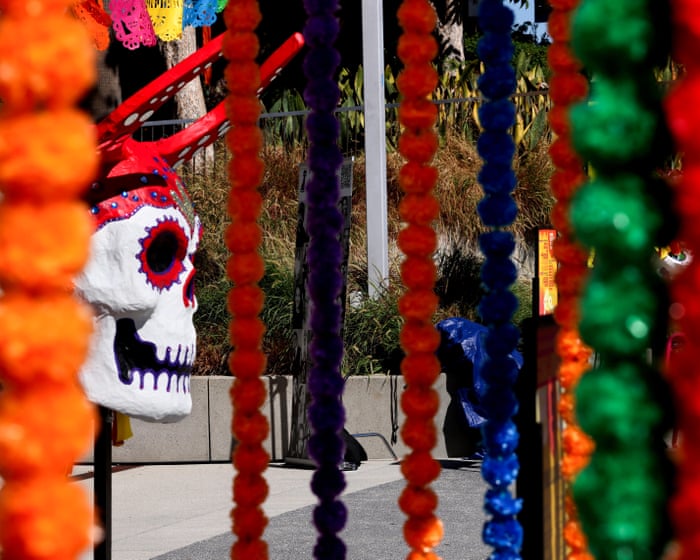
Cities across the US, including Henderson, Kentucky, have revived public Día de los Muertos (Day of the Dead) events after cancellations in 2025. A human-interest report in The Guardian profiles a local family — a US‑born 19‑year‑old and her undocumented parents — who sold traditional foods and built an ofrenda to honor a recently deceased relative. The article places these revivals alongside reporting that ICE enforcement and arrests continue, and participants describe the celebrations as a way to bring joy, remember loved ones, and support one another amid anxiety about immigration enforcement.
Source and Framing Analysis
The cluster rests on a single, human-interest report published by The Guardian. The article offers detailed, on-the-ground testimony and a vivid local vignette that illuminate how cultural remembrance functions for families under stress. Its framing emphasizes personal experience, cultural continuity, and community resilience rather than systematic enforcement data. Key omissions include independent statistics about ICE arrests, official statements from immigration authorities or local government, and broader sample corroboration across multiple cities. Because reporting is single-source and anecdotal, the piece reliably conveys participants' feelings and activities but leaves open questions about scale, causation (whether and how enforcement directly caused 2025 cancellations), and the exact nature or timing of the referenced ICE actions. Readers and those responding pastorally should attribute the specific factual details to The Guardian and treat enforcement claims as reported rather than independently verified.
How sources covered this story
Sanctuary separately assesses reporting quality and alignment with Christian virtues. The virtues assessment considers truthfulness, dignity, compassion, justice, peacemaking, humility, and care for vulnerable people. It does not assess a publisher's faith or reward religious language.
Compare 1 reports
Reporting 74/100Virtues 86/100
- Distinctive contribution
- Reports revival of public Day of the Dead events after 2025 cancellations and gives a specific local example (Henderson, Kentucky). Provides a named human vignette: 'Julia', 19, US-born, her undocumented parents from Mexico who sell aguas frescas, horchatas and sweet bread, and built an ofrenda including flowers and a violin to honor a grandfather who died in 2023.
- Framing
- Human-interest framing that juxtaposes cultural revival with a background of ongoing immigration enforcement (implied by the headline). Emphasizes cultural continuity, family memory, and everyday economic/cultural activity (food vending) by an undocumented family.
- Omissions or uncertainty
- No supporting data or sourcing about the scope or causes of the 2025 cancellations; no details or statistics about the referenced ICE arrests (numbers, locations, dates); no voices beyond the single family anecdote; no explanation of who organized the revivals or public safety/policy context. The excerpt uses a nickname/first name only and lacks corroborating quotes or official statements in the supplied text.
- Why these scores
- The excerpt is specific and concrete (dates, place, age, family activities) and responsibly humanizes participants without sensational language. However, it is brief and anecdotal, lacks sourcing, data, or broader context about the cancellations or the referenced ICE arrests in the supplied text. As a concise human-interest report it performs well, but would benefit from fuller attribution and contextual detail. The supplied text treats vulnerable people (undocumented immigrants) with dignity and compassion, highlighting family memory and cultural expression rather than stigmatizing language. It centers human flourishing and empathy. Points are withheld only because the excerpt lacks broader contextual information that could strengthen justice-oriented reporting (e.g., facts about enforcement impacts).
Biblical Reflection
This story highlights how communal practices of remembering the dead — ofrendas, music, shared food — offer emotional resilience when immigrant families face legal uncertainty and fear. The juxtaposition of revived cultural events with ongoing ICE enforcement points to communities intentionally choosing life, memory, and mutual care in a climate of anxiety. From a Christian perspective, the story calls attention to human dignity: it invites mourning with those who mourn, to protect and stand with vulnerable neighbors, and to support cultural practices that sustain families. It also calls for sober truth-seeking: charity toward affected people should be matched by careful verification before public advocacy or assigning institutional blame.
Scripture in context
- 1 — Within Paul's letter to the Romans, this verse advises the community to share others' joys and sorrows as part of mutual belonging and ethical life in the church. — The passage calls Christians to stand with mourning families and celebrate their acts of remembrance, balancing sympathy with solidarity and practical care rather than using grief for partisan advantage.
Faithful Response
Prioritize accompaniment and presence: listen to affected families, honor their cultural practices, and offer practical support (meals, childcare, help with event logistics).
Partner with trusted local organizations (legal aid, immigrant-rights groups, cultural associations) before offering specialized help; compile vetted resources and referrals rather than improvising legal advice.
Avoid publicizing unverified enforcement claims; amplify the voices of those directly impacted rather than speaking for them, and verify facts before advocacy that targets institutions or individuals.
Protect dignity in speech and action: celebrate cultural memory, oppose dehumanizing rhetoric, and seek restorative, peace-seeking responses that prioritize the safety of vulnerable neighbors.
Practical ministry steps drawn from local pastoral guidance: host listening sessions, form volunteer teams for event logistics and safety, and prepare congregational responses that combine pastoral care with measured civic engagement.
Reflection and Discussion
- 1How does our faith call us to honor the dead and comfort the living in fearful times?
- 2In what concrete ways can worshipping communities support cultural practices that sustain immigrant families while avoiding premature or unverified public accusations?
Sources
Reporting links are evidence inputs; Sanctuary News' biblical reflection is commentary.
This is a developing, single-source report. Details may change as more reporting becomes available.
- 1.Día de los Muertos celebrations rise from the dead as ICE arrests continue: ‘It’s important to bring joy in dark times’primary_reporting