News Summary
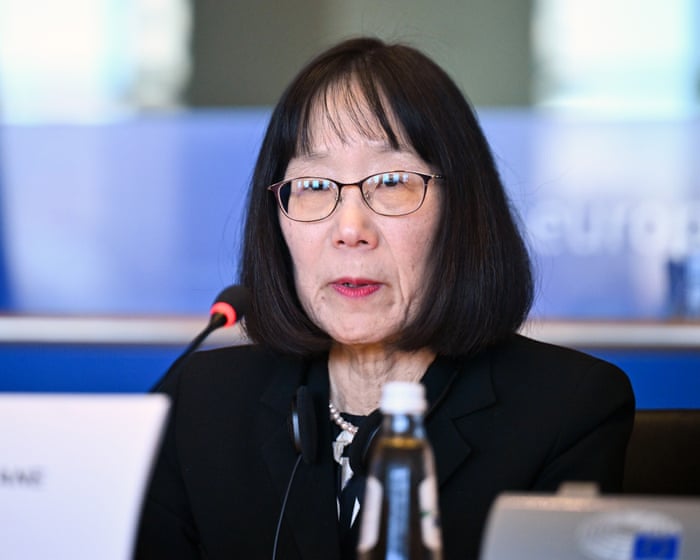
The Guardian reports that the United States will impose sanctions targeting International Criminal Court (ICC) President Tomoko Akane and ICC prosecutor Abdoulaye Seye. The article attributes the announcement to Marco Rubio, described in the piece as the US secretary of state, and quotes Rubio characterizing the Hague-based ICC in strongly negative terms. The piece states Seye had been investigating alleged Israeli crimes in Gaza. The supplied report does not include details on the legal basis, the specific measures comprising the sanctions, timing or mechanisms for enforcement, nor does it record any response from the ICC, the named individuals, Israel, Palestinian authorities, or other governments.
Source and Framing Analysis
Source: The Guardian (single reported source in the supplied material). Framing: the article centers a forceful, delegitimizing statement attributed to a U.S. official and reports the designations as a discrete U.S. policy action. Strengths: names the two ICC officials identified and reproduces the announcing official's evaluative language, which is material to understanding the political posture behind the decision. Weaknesses and uncertainties: reporting appears to rest on a single announcement without independent documentation of the sanctions' legal authority, scope, or mechanisms. The piece also includes a factual attribution that requires verification (it refers to Marco Rubio as 'the US secretary of state'); that inconsistency reduces confidence in the reporting of institutional details. Notably absent are responses from the ICC, Tomoko Akane, Abdoulaye Seye, Israel, Palestinian representatives, or other states—leaving the reader without countervailing perspectives or evidentiary support for the claim that the ICC is 'corrupt' or has 'exceeded its mandate.' In short, the article reports a consequential policy declaration but lacks corroborating detail and balancing sources needed to evaluate the claim’s substance or likely effects.
How sources covered this story
Sanctuary separately assesses reporting quality and alignment with Christian virtues. The virtues assessment considers truthfulness, dignity, compassion, justice, peacemaking, humility, and care for vulnerable people. It does not assess a publisher's faith or reward religious language.
Compare 1 reports
Reporting 48/100Virtues 50/100
- Distinctive contribution
- Names the two individuals targeted (Tomoko Akane and Abdoulaye Seye), identifies the latter as involved in investigating alleged Israeli war crimes in Gaza, and reproduces the announcing official's strongly worded quote calling the Hague-based ICC 'corrupt and fatally politicized.'
- Framing
- Frames the action as a direct US attack on the ICC and presents the announcer's rhetoric uncontextualized; the tone of the quoted language is highly critical of the ICC and signals a hostile, delegitimizing US stance toward the court.
- Omissions or uncertainty
- No date or procedural details for the sanctions are given; the nature and legal basis of the sanctions are unspecified; no explanation of why those two individuals were targeted beyond a short reference to an investigation; no response or comment from the ICC or the named individuals; the excerpt attributes the announcement to 'Marco Rubio' and calls him 'the US secretary of state' without clarification (an attribution that requires verification); no sourcing beyond the named official's statement is provided.
- Why these scores
- The excerpt reports a Material development and reproduces a direct quote, but it includes at least one clear factual problem in attribution (it calls Marco Rubio 'the US secretary of state') and lacks essential contextual details (what the sanctions are, legal justification, reactions). The piece cites a statement but provides no supporting specifics or multiple sources. Those shortcomings materially reduce reliability for readers seeking a full, accurate account. The excerpt is not dehumanizing and attributes the strong language to an official, which respects basic truth-telling about source of claims. However, the misattribution and absence of context or attention to affected individuals' perspectives limit its alignment with virtues like truthfulness, humility, and care for the vulnerable. The report neither demonstrates evident compassion nor provides context that would promote justice- or peace-seeking understanding.
Biblical Reflection
A Christian outlook must hold together commitments to truth, mercy, justice, peacemaking, humility, and care for the vulnerable. Practically this means: seek fuller, verified information about what the sanctions do and why they are being imposed; insist that political leaders provide clear legal justification and that actions do not further imperil victims or block avenues for accountability; advocate for processes that protect victims and ensure fair, transparent investigations; and combine prophetic critique of power with pastoral care for people harmed by conflict. Christians should resist partisan reflexes—neither cheered dismissal of international accountability nor uncritical defense of institutions—but press for accountability that safeguards human dignity and promotes reconciliation where possible.
Scripture in context
- 1Isaiah 1:17 (general reference) — Isaiah admonishes a community whose ritual had become disconnected from justice and care for the vulnerable. — Reminds Christians to prioritize concrete justice—defending the oppressed and ensuring wrongs are addressed—over institutional prestige or political rhetoric.
- 2Matthew 5:9 (general reference) — Jesus blesses peacemakers in the Sermon on the Mount. — Urges pursuit of peace and reconciliation alongside truth and justice, recognizing peacemaking often requires courageous, truthful confrontation that builds the common good.
Faithful Response
Pray for victims of violence, investigators, judges, and policymakers to have wisdom, integrity, and compassion.
Seek fuller information from multiple reliable sources before reaching definitive judgments about institutional corruption or legal claims.
Ask elected representatives for transparent explanations of the legal basis, intended effects, and safeguards of any sanctions.
Support humanitarian organizations and legal-aid groups that assist victims of conflict and preserve access to accountability mechanisms.
Encourage congregational teaching that distinguishes prophetic critique from partisan cheerleading and models humility in public judgment.
Reflection and Discussion
- 1How does our commitment to Christ-shaped justice shape our evaluation of state actions that may weaken institutions of international accountability?
- 2Where might humility temper our eagerness to delegitimize institutions, and how can that humility protect vulnerable people?
- 3What concrete steps can our congregation take to support victims of conflict and ensure their access to aid and legal redress if international mechanisms are constrained?
- 4How should we weigh allegations of institutional failure against the need for independent evidence and due process?
Sources
Reporting links are evidence inputs; Sanctuary News' biblical reflection is commentary.
This outlook currently relies on fewer than two linked sources. Broaden verification before teaching from it.
Download source notes