A little more detail
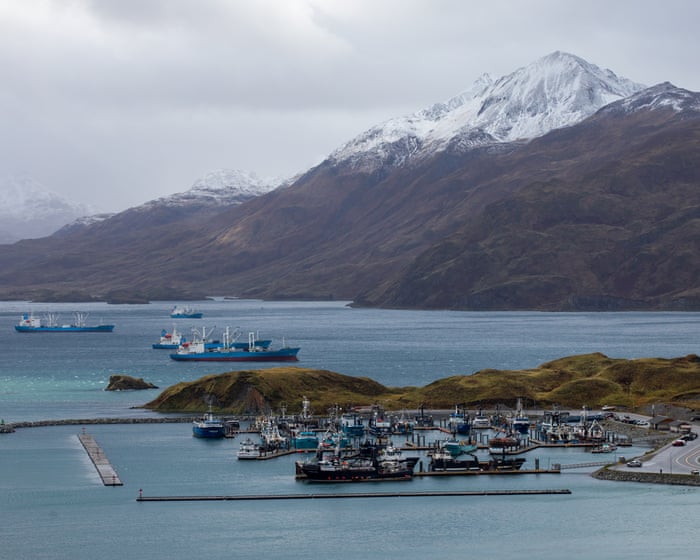
Reporting from The Guardian describes residents of Unalaska — a major U.S. seafood port on the Bering Sea — saying recent federal budget cuts and the Trump administration’s military actions toward Iran have disrupted local fishing work and applied economic and political pressure to the community. The piece foregrounds local testimony about fear, hazardous working conditions at the start of crab season, and perceived links between national policy decisions and local hardship.
Source and Framing Analysis
Primary source: The Guardian feature (supplied excerpt). The article centers local voices and vivid, place-specific detail (Unalaska’s role in Bering Sea fisheries, crab season timing, thousands employed). It frames the story critically of the named administration, linking federal budget cuts and military escalation to local economic disruption and suggesting political consequences for Republicans. That framing is an editorial choice: the reporting faithfully records residents’ claims but the piece, in the supplied material, does not provide independent budget documents, economic data, or detailed causal analysis tying specific federal actions to quantified local losses. Where the article moves from local testimony to judgments about national political outcomes, it mixes reporting and interpretation. Readers should therefore treat the causal connection as a locally reported interpretation that needs corroboration from independent economic, budgetary, and policy sources.
How sources covered this story
Sanctuary separately assesses reporting quality and alignment with Christian virtues. The virtues assessment considers truthfulness, dignity, compassion, justice, peacemaking, humility, and care for vulnerable people. It does not assess a publisher's faith or reward religious language.
Compare 1 reports
Reporting 72/100Virtues 78/100
- Distinctive contribution
- Names Unalaska as the US's most productive seafood port employing thousands, situates immediate human activity (a crabber preparing for dangerous conditions) and connects local economic vulnerability to named national policies and military action — a concrete local example tying policy to lived effects.
- Framing
- Critical of the named administration and its policies; frames Unalaska as geographically and politically distant from Washington and emphasizes harm and disruption caused by federal budget cuts and military action. The language is evaluative (e.g., “disastrous war”) and highlights risk to Republican political control as a consequence.
- Omissions or uncertainty
- The excerpt asserts major causal links (e.g., “Trump’s cuts” and “his disastrous war with Iran” causing chaos and threatening Republican control of Congress) without supplying evidence, dates, specific programs cut, economic data, or detailed sourcing. It gives no numbers beyond “thousands,” no direct quotes or attributions supporting the political-impact claim, and no countervailing perspectives in the supplied text.
- Why these scores
- The passage is vivid and specific about place and occupational hazard, which is strong feature writing. However, the supplied text makes broad causal and political assertions using charged language without presenting supporting evidence or attribution in the excerpt. That weakens the immediate evidentiary quality even though the piece appears to be a feature that may supply such support later. The excerpt centers working people and the dangers they face, expressing concern for their welfare and the community’s economic well‑being, which aligns with compassion and care for vulnerable persons. It does not dehumanize subjects or sensationalize suffering. The critical framing towards policymakers reflects moral judgment but is not itself a breach of truthfulness in the excerpt; however, stronger score would require more explicit sourcing and balancing perspectives.
Biblical Reflection
A Christian outlook holds two commitments at once: pursue truth about cause and effect without rushing to partisan certainty, and respond with mercy and practical care for neighbors whose livelihoods are threatened. This means listening to and amplifying affected workers, advocating for transparent policy that protects vulnerable laborers, working for de-escalation of conflict that harms civilians, and providing immediate material and pastoral support to those facing hardship. Humility is required in assessing claims about causation; justice and peacemaking require action to protect workers and de-escalate harms that cross borders.
Scripture in context
- 1 — Sermon on the Mount, beatitudes and teachings about the character of God’s people. — The call to be peacemakers applies here: Christians can pray and work for de‑escalation of international conflict and for domestic policies that reduce harm to workers and communities.
- 2 (conceptual reference) — Prophetic summons to act justly, love mercy, and walk humbly before God. — Concerns about economic harm invite Christians to pursue justice for vulnerable workers, offer mercy to those suffering economic displacement, and practice humility in political judgment.
- 3–37 (Good Samaritan pattern) — A teaching that reframes ‘neighbor’ as any person in need. — Whether or not one agrees with the political analysis, the story calls the church to practical neighbor‑care: listen, give relief where needed, and advocate for policies that protect livelihoods.
Faithful Response
Pray for Unalaska’s workers, families, and leaders, and for wisdom among national decision‑makers.
Listen to and amplify local testimony while avoiding premature partisan conclusions about causation.
Support local relief and worker-assistance efforts (financial help, counseling, job services) coordinated through trusted local organizations.
Organize congregational education: host listening sessions with community members or policy experts to understand fisheries policy, budgets, and supply chains.
Advocate with humility and evidence: request transparent budget and policy details from relevant federal agencies and lawmakers, and press for worker protections and contingency supports.
Work for peace and de‑escalation in international affairs to reduce harm to civilian livelihoods and supply chains.
Reflection and Discussion
- 1Do I respond first with partisan certainty or with compassionate listening to those who suffer?
- 2What concrete steps can my congregation take to support workers whose livelihoods are at risk?
- 3What further information do we need before assigning causal responsibility to specific policies?
- 4How can we hold leaders accountable for both national security decisions and the economic consequences those decisions bring to vulnerable communities?
Sources
Reporting links are evidence inputs; Sanctuary News' biblical reflection is commentary.
This is a developing, single-source report. Details may change as more reporting becomes available.
- 1.It’s closer to Beijing than Washington – and residents of this Alaskan outpost are reeling from Trump’s policiesprimary_reporting