News Summary
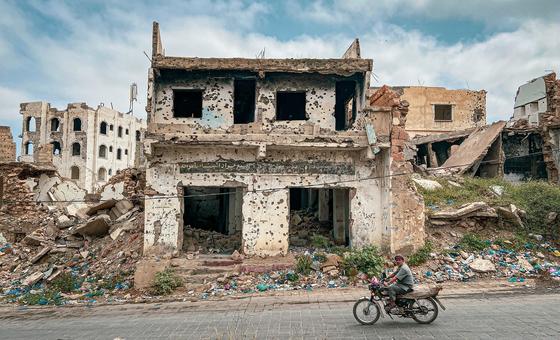
The UN Security Council held an open debate on Yemen, reported via UN News live coverage, amid warnings of escalating military clashes and a worsening humanitarian situation. The UN News item records Security Council participants raising concern that recent Houthi missile strikes on Saudi Arabia and on commercial vessels could threaten the 2022 truce between the Houthi movement and the Yemeni government, and it frames the violence as rippling from broader US–Iran regional tensions. The item is a summary of diplomatic concern rather than an investigative account: it offers no casualty figures, no specific incident timelines, no named quotes, and limited independent corroboration of the missile‑strike claims or the causal linkage to the US–Iran war.
Source and Framing Analysis
Source: UN News (live coverage of a Security Council debate). Framing: diplomatic and humanitarian—UN News relays what Council members discussed and the risks they identified, emphasizing threats to a 2022 truce and the humanitarian consequences of renewed fighting. Strengths: appropriately cautious language (reporting fears/risks rather than asserting unverified facts) and attention to humanitarian impact and peacemaking. Limitations: the piece is a secondary summary of Council deliberations, lacking named attributions, incident-level detail (dates, locations, casualty counts), and independent corroboration of the specific operational claims it mentions (for example, the reported missile strikes and their effects). The article links Yemen’s instability to broader regional tensions (described as rippling from a US–Iran war); that linkage reflects Council discussion but is not demonstrated with on-the-ground evidence in the excerpt. Readers should treat the item as reporting diplomatic concern and context rather than definitive, corroborated incident reporting.
How sources covered this story
Sanctuary separately assesses reporting quality and alignment with Christian virtues. The virtues assessment considers truthfulness, dignity, compassion, justice, peacemaking, humility, and care for vulnerable people. It does not assess a publisher's faith or reward religious language.
Compare 1 reports
Reporting 78/100Virtues 80/100
- Distinctive contribution
- Identifies the Security Council open debate as a forum for discussion; explicitly connects Yemen’s escalation to spillover from the US–Iran war and notes Houthi missile strikes on Saudi Arabia and commercial vessels as specific threats to the 2022 truce.
- Framing
- UN/diplomatic and humanitarian framing: cautious, public‑international‑law and peace-oriented language stressing risks to a truce and worsening humanitarian conditions rather than assigning definitive blame.
- Omissions or uncertainty
- No specific incidents, dates, casualty figures or locations are given; no direct quotes or attributions to named officials; no evidence or sources for claims about missile strikes or their effects; no Houthi, Yemeni government, Saudi, or commercial-vessel perspectives included; lacks detail on how the 2022 truce might be breached.
- Why these scores
- Concise, cautious language appropriate for a UN News brief; it responsibly frames developments as threats and fears rather than definitive claims. The piece appropriately signals diplomatic concern and humanitarian impact. It is limited in detail and sourcing (brief excerpt), but within its apparent purpose it is accurate and measured. The excerpt emphasizes peacemaking and concern for vulnerable populations by highlighting risks to a ceasefire and a worsening humanitarian situation. Language is non‑sensational and avoids dehumanization. The text models humility and restraint by framing developments as threats/fears rather than asserted facts. Score is limited by lack of explicit mention of aid responses or protections for civilians.
Biblical Reflection
A Christian response to the Security Council debate centers on truth, mercy, justice, peacemaking, humility, and the protection of vulnerable neighbors. Truth: discern and communicate clearly what is reported (a Council debate and expressed concerns) and what remains unverified (specific strike details, causal chains). Mercy and care: prioritize the suffering of civilians—pray for and support humanitarian relief that reaches all noncombatants. Justice and peacemaking: advocate for diplomatic measures that protect civilians, preserve or restore ceasefires, and create conditions for accountability and aid access. Humility: recognize the complexity and information gaps in international crises; avoid partisan simplifications or dehumanizing language about any group. Practically, the church should lament, pray, inform its members with sober facts, back credible humanitarian actors, and press policymakers for humane, nonpartisan protections for civilians and expanded humanitarian access.
Scripture in context
- 1Matthew 5:9 (Beatitudes) — Part of the Sermon on the Mount where Jesus describes attitudes and behaviors blessed by God, urging his followers to embody righteousness, mercy, and peacemaking in a countercultural way. — This passage invites Christians to pursue peace actively—through prayer, reconciliation, advocacy for victims, and work that reduces suffering—rather than passively accepting violence as inevitable.
Faithful Response
Pray regularly for civilians in Yemen, for diplomats and negotiators, and for humanitarian workers on the ground.
Support reputable relief organizations that deliver aid impartially to civilians in Yemen (financial gifts or verified relief channels).
Provide measured, fact-focused briefings to your congregation; discourage spreading unverified claims and teach basic source-literacy about diplomatic reporting.
Advocate to elected officials for diplomatic engagement, protection of civilians, and unimpeded humanitarian access—framing appeals on humanitarian and human-rights grounds rather than partisan interests.
Offer pastoral care and safe spaces for members affected by the conflict (refugees, immigrants, family ties), and coordinate with trusted NGOs for practical support.
Reflection and Discussion
- 1How does Scripture shape our response when international political crises threaten civilian lives—how do truth, mercy, and justice interact in our priorities?
- 2Where might our own political sympathies cause us to overlook suffering by particular groups in this conflict, and how can we correct for that?
- 3What practical steps can our congregation take that reflect patient, costly peacemaking (prayer, advocacy, and sustained humanitarian support) rather than quick or partisan gestures?
Sources
Reporting links are evidence inputs; Sanctuary News' biblical reflection is commentary.
This outlook currently relies on fewer than two linked sources. Broaden verification before teaching from it.
- 1.Security Council LIVE: Escalating attacks threaten peace in Yemenofficial_document