News Summary
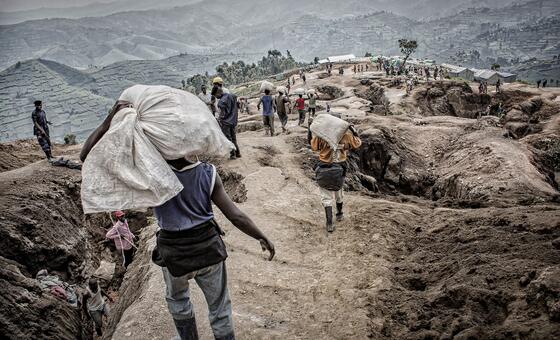
Reported facts: The UN Security Council met to discuss critical minerals (lithium, cobalt, copper) and their role in the clean energy transition; the article reports demand for these minerals is expected to triple by 2030 and presented the Council's question about whether mineral wealth will fuel peace or finance conflict and corruption. Attributed claims: The projection of demand and the implied risks of funding conflict are presented as context or questions raised during the meeting. Uncertainty: The article is a live-updates briefing and does not provide detailed data sources, specific member-state positions, or empirical evidence linking particular mineral revenues to named conflicts in this report.
Source and Framing Analysis
The piece is framed as a live briefing with a central dichotomy — minerals as either a force for peace or a driver of conflict — which foregrounds the policy dilemma but leaves many specifics unstated. Key uncertainties include the origin of the 'triple by 2030' projection (no source citation in the brief), which countries or companies were named in the Security Council debate, and evidence tying particular mineral flows to corruption or armed groups; the live-updates format emphasizes immediacy over in-depth sourcing.
Biblical Reflection
The UN discussion calls Christians to a posture of sober discernment. Scripture repeatedly urges justice in economic dealings and concern for the powerless; so when extraction of natural resources is linked to both climate goals and to risks of exploitation, we must hold competing goods in tension. The clean-energy transition is a legitimate global priority, and pursuing it need not be morally neutral. Christians should be proponents of technologies and policies that minimize harm to people and creation, and they should insist that climate solutions do not deepen poverty or fund violence.
The central worldview operating in the article is pragmatic and policy-oriented: resources are framed primarily as strategic inputs (to energy systems or to state budgets) rather than as elements embedded in human communities. That framing can obscure the lived moral questions — displacement, labor conditions, environmental damage, and governance failures — that require both technical fixes and moral accountability. A Christian response should combine truth-telling about abuses with mercy toward affected communities and courageous advocacy for structural reforms: transparent contracts, community consent, fair revenue-sharing, and corporate accountability.
Finally, Christians must practice humility and peacemaking while advocating for justice. The Security Council's debate is one arena where policy can shift incentives; but local communities, civil-society actors, churches, and faith leaders also play critical roles in modeling reconciliation, economic fairness, and care for creation. Prayerful, informed engagement — not simplistic cheerleading for 'green transition' nor fatalistic acceptance of resource-driven conflict — best honors Christ's call to love neighbor and steward creation.
Scripture in context
- 1Proverbs 11:1 — A wisdom-proverb addressing justice in economic dealings, condemning dishonest measures and commending integrity in trade within ancient Israelite wisdom literature. — This passage underscores the moral importance of honest economic practices; applied to modern mineral governance it calls for transparency and fair dealings in contracts, royalties, and labor to prevent exploitation.
- 2Luke 12:48 — Jesus teaches about responsibility: those given much are held to greater account, a theme of stewardship and ethical responsibility within the Gospel narrative. — Leaders, corporations, and consumers who benefit from mineral wealth bear heightened responsibility to ensure their actions do not harm vulnerable people or enable corruption.
Faithful Response
Pray for leaders, affected communities, and negotiators at the UN to pursue justice and peace.
Educate yourself and your congregation about ethical supply chains and the human cost of mineral extraction.
Support organizations and companies that commit to transparency, fair labor, environmental safeguards, and community consent in mining regions.
Advocate to elected officials for policies requiring accountability and anti-corruption measures in resource contracts and trade.
Reflection and Discussion
- 1How should concerns for the environment and for the poor shape our support for technologies dependent on mined resources?
- 2Where do we see opportunities for the church to act as mediator or advocate in communities harmed by extractive industries?
- 3What criteria should Christians demand of governments and companies to ensure resource wealth contributes to human flourishing rather than to corruption?
Sources
Reporting links are evidence inputs; Sanctuary News' biblical reflection is commentary.
This outlook currently relies on fewer than two linked sources. Broaden verification before teaching from it.
- 1.Security Council LIVE: Can critical minerals fuel peace instead of conflict?official_document