A little more detail
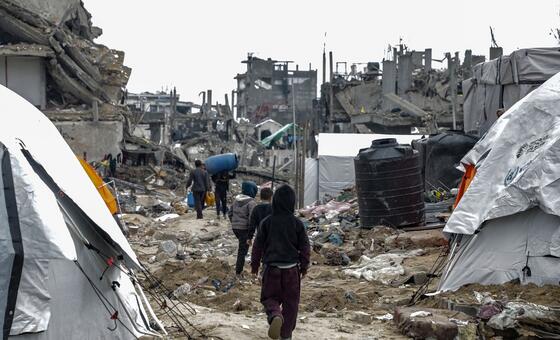
The UN human rights office (OHCHR) warned that Israeli forces are pushing Palestinians into ever-smaller areas of the Gaza Strip, destroying civilian infrastructure and attacking displacement sites. OHCHR described the deepening displacement as a 'nightmare' and said there are concerns about possible ethnic cleansing. The reporting attributes these allegations to OHCHR and does not provide independent corroborating incident-level evidence or responses from other parties.
Source and Framing Analysis
Primary source: UN News’ report relaying a statement and assessment from the Office of the UN High Commissioner for Human Rights (OHCHR). Strengths: the article attributes serious, specific allegations (forced displacement into shrinking areas, damage to civilian infrastructure, attacks on displacement sites, and concern about ethnic cleansing) to a major human-rights institution, which is appropriate and important for public awareness. Limitations and uncertainties: the piece as supplied lacks incident-level detail, casualty or displacement figures, the OHCHR’s evidentiary basis or methodology, and responses or contextual explanations from parties named (including Israeli authorities). The OHCHR’s phrasing raises grave human-rights concerns but is not itself a judicial finding of criminal intent; the report functions as a rights-based warning and an appeal for accountability and humanitarian access. Readers should treat the allegations as institution-attributed claims that require independent corroboration, fuller documentation, and responses from other actors to reach legal or factual determinations.
How sources covered this story
Sanctuary separately assesses reporting quality and alignment with Christian virtues. The virtues assessment considers truthfulness, dignity, compassion, justice, peacemaking, humility, and care for vulnerable people. It does not assess a publisher's faith or reward religious language.
Compare 1 reports
Reporting 78/100Virtues 82/100
- Distinctive contribution
- Attributes strong allegations to OHCHR (pushing Palestinians into ever-smaller areas; destroying civilian infrastructure; attacking displacement sites) and flags concerns about ethnic cleansing, providing an authoritative human-rights perspective that is more specific and normative than a generic news summary.
- Framing
- Framed as an authoritative institutional warning (OHCHR) emphasizing a worsening humanitarian crisis and the potential for ethnic cleansing. Language is strong and condemnatory but clearly attributed to the UN rights office rather than presented as undisputed fact.
- Omissions or uncertainty
- The excerpt lacks supporting detail: no dates, locations within Gaza, casualty or displacement figures, specific incidents, evidence or methodology, quotes from OHCHR officials, or any response from Israeli authorities. It does not explain why OHCHR raises the prospect of ethnic cleansing or the threshold for that determination.
- Why these scores
- The brief excerpt responsibly attributes serious allegations to OHCHR and highlights their concern, which is appropriate sourcing. It is concise and avoids presenting unattributed assertions. Points are deducted because the supplied text contains no supporting specifics, evidence, or alternative perspectives (e.g., responses from those accused), limiting its completeness for a reader seeking fuller context. The report draws attention to suffering and vulnerability and cites a human-rights institution, aligning with truth-telling, concern for the vulnerable, and justice-seeking. The language is not dehumanizing and is properly attributed. Score is not higher because the excerpt does not include corrective detail, specific humanitarian remedies, or explicit calls for protection that would demonstrate stronger stewardship or peacemaking guidance.
Biblical Reflection
The UN report centers on the protection of vulnerable people, a core Christian concern. The OHCHR warning should be taken seriously as an appeal for protection, access, and accountability while recognizing it is not a court judgment of intent. Christian responses should combine truth-seeking with mercy: pray for the displaced and those delivering aid; support impartial humanitarian relief; press leaders for civilian protection, unhindered humanitarian access, and independent investigation; and resist dehumanizing language about any group. Scripture urges care for strangers and the wounded and calls believers to pursue justice and peace while showing compassion to vulnerable neighbors.
Scripture in context
- 1 — A teaching of Jesus about final judgment where he identifies himself with the hungry, the stranger, the sick, and the imprisoned; the passage emphasizes concrete acts of care as the criterion for compassion. — This text calls Christians to attend to people forced from home and in need, treating care for refugees and the displaced as central to faithful obedience.
- 2 (Parable of the Good Samaritan) — A parable Jesus tells in response to a question about 'neighbor,' redefining neighborliness as practical mercy across social boundaries. — The story urges Christians to cross ethnic, political, or cultural lines to help those in immediate danger, refusing to let identity determine compassion.
Faithful Response
Pray for those displaced, for caregivers and humanitarians on the ground, and for truthful, transparent reporting and investigation.
Support vetted, neutral humanitarian organizations providing relief to civilians in Gaza and neighboring host areas.
Contact elected officials to urge protection of civilians, unfettered humanitarian access, and independent, credible investigations into alleged rights violations.
Avoid sharing unverified claims; prioritize sources that cite evidence and named observers and that include responses from implicated parties.
Reflection and Discussion
- 1How does this OHCHR warning challenge us to place the dignity and protection of displaced civilians front and center?
- 2What assumptions or loyalties shape my immediate response when I hear allegations of ethnic cleansing or other grave abuses?
- 3In what concrete ways can our congregation support impartial humanitarian relief and the pursuit of truthful accountability?
Sources
Reporting links are evidence inputs; Sanctuary News' biblical reflection is commentary.
This is a developing, single-source report. Details may change as more reporting becomes available.
- 1.UN rights office warns of deepening displacement ‘nightmare’ in Gazaofficial_document