News Summary
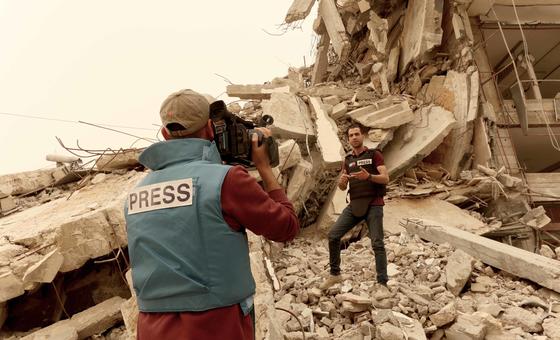
UN News summarized a new United Nations report arguing that a free press plays a critical role during disasters and emergencies. The UN News item highlights one concrete example from the report: a single New York Times article about a disaster was linked to an additional $500,000 in official aid. The UN News piece attributes both the general conclusion and the specific monetary example to the UN report but does not supply methodological detail, identify the disaster or article involved, or present independent corroboration within the brief summary.
Source and Framing Analysis
Source: UN News published a short notice summarizing a UN report. Framing: the UN News item emphasizes the positive public‑goods role of journalism in mobilizing resources and saving lives. Strengths: the item cites a named institutional source (a UN report) and gives a concrete, attention‑grabbing example that aids public understanding. Limits and uncertainties: the summary omits crucial methodological details (how causation between the article and the $500,000 was established, the timeframe measured, which disaster and New York Times article were referenced, and whether the example is typical or exceptional). The UN’s emphasis on transparency and information in crises is institutionally consistent with highlighting press benefits, so readers should consult the full report to evaluate scope, robustness, and counterexamples. In short: the attribution is clear but evidentiary gaps remain.
How sources covered this story
Sanctuary separately assesses reporting quality and alignment with Christian virtues. The virtues assessment considers truthfulness, dignity, compassion, justice, peacemaking, humility, and care for vulnerable people. It does not assess a publisher's faith or reward religious language.
Compare 1 reports
Reporting 72/100Virtues 80/100
- Distinctive contribution
- Reports a specific monetary impact attributed to a single news article ($500,000 in additional official aid) and summarizes the UN report's central claim that a free press plays a critical role in saving lives.
- Framing
- Positive/affirming of the value of a free press; uses a specific, attention-grabbing example to illustrate the broader finding.
- Omissions or uncertainty
- The excerpt lacks crucial context: which NYT article and which disaster, how the $500,000 figure was measured or attributed (methodology, counterfactual), time frame, whether this is an isolated example or representative, and whether the UN report presents caveats or uncertainty.
- Why these scores
- The excerpt responsibly attributes its finding to a named, authoritative source (a new UN report) and gives a clear, specific quantitative claim, which aids verifiability. However, it is brief and omits important methodological and contextual details needed to assess causation or generalizability, which limits its completeness. The content emphasizes truth-telling and the public-good role of journalism in protecting lives and guiding aid—values that align with care for vulnerable people, justice, and truthfulness. The excerpt is not exploitative or dehumanizing; however, it does not explicitly discuss compassion, accountability, or the affected populations' dignity, so it does not score at the very highest tier.
Biblical Reflection
A Christian response affirms truth, mercy, justice, peacemaking, humility, and care for vulnerable neighbors. The UN report’s claim — that journalism can mobilize significant aid — supports the biblical impulse to expose suffering so it may be addressed. At the same time, Christian discernment warns against equating visibility with worth: attention that channels resources to some while leaving others unseen can deepen injustice. Christians should therefore celebrate truthful reporting that protects life and holds power accountable, while advocating for equitable systems of care that do not depend solely on headlines. Practically, that means supporting reliable journalism, sustaining aid to less‑visible needs, protecting the dignity of reported persons, and exercising humility in public speech and charity.
Scripture in context
- 1Ephesians 4:15 — Paul instructs the church to speak the truth in love so the body grows into maturity rather than being driven apart. — Applied to this story, the passage calls leaders, journalists, and Christians to pursue truthful exposure of need in ways that build up and protect vulnerable people rather than exploiting or sensationalizing them.
- 2Isaiah 1:17 — Isaiah urges God’s people to learn to do justice, rescue the oppressed, defend the fatherless, and plead for the widow. — This summons connects public attention and accountability to a biblical ethic: revealing injustice and suffering is one means by which society can be called to rescue and defend those at risk.
- 3Luke 10:25–37 (Good Samaritan) — Jesus teaches that neighborly love includes practical rescue and compassion for those in need, regardless of prior acquaintance or status. — The parable reminds Christians that saving lives requires concrete action beyond awareness; media attention that generates aid can be a means of neighborly compassion, but the church must also pursue care for those who receive little or no attention.
Faithful Response
Pray regularly for journalists, humanitarian workers, and policymakers involved in emergency response, asking God for wisdom, justice, and mercy.
Support reliable, independent journalism (financially or through advocacy) while encouraging ethical reporting standards that protect dignity and privacy.
Donate to vetted relief organizations and maintain channels of support for less‑visible crises, not only headline cases.
Build congregational media literacy: verify reports before sharing, avoid amplifying unverified images or accounts, and teach discernment about media influence on sympathy and giving.
Partner locally or through trusted agencies for sustained responses that outlast headline cycles, and consider church strategies to identify and assist overlooked vulnerable people.
Reflection and Discussion
- 1How does Scripture shape the way I evaluate publicity that mobilizes aid? When is public attention an instrument of justice, and when does it risk distorting compassion?
- 2Am I prone to equating the size of a crisis with how much I care? How should my congregation resist that tendency?
- 3What responsibilities do journalists, aid organizations, and the church share for protecting the dignity of those we seek to help?
- 4How can our congregation support sustained care for people and places that rarely make headlines?
Sources
Reporting links are evidence inputs; Sanctuary News' biblical reflection is commentary.
This outlook currently relies on fewer than two linked sources. Broaden verification before teaching from it.
- 1.What’s journalism worth in disasters and emergencies? A lot, says a new UN reportofficial_document