News Summary
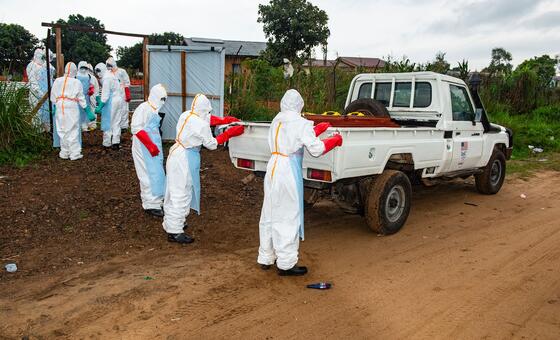
Facts reported: a treatment centre in the Democratic Republic of the Congo established to contain an Ebola outbreak was attacked and medics' operations were disrupted; a mobile UN peacekeeping base was moved next to the centre; UN reporting states this enabled local authorities to continue responding. Attributions/characterizations: the article characterizes the Ebola outbreak as 'fast-moving.' Uncertainties: the report does not provide independent epidemiological data about case numbers or trends, nor does it identify the attackers, casualty figures, or provide detailed statements from local officials.
Source and Framing Analysis
The single supplied source is UN News, a UN outlet. The article focuses on the immediate link between the attack, the security response (peacekeepers), and the continuation of the public-health response. Material uncertainties that affect interpretation include lack of detail about who carried out the attack, the scale and trajectory of the outbreak, and independent confirmation of the causal chain that peacekeeper presence directly enabled containment. The piece frames the solution as security-led protection for health workers, which highlights a securitized approach to humanitarian access without exploring underlying causes of violence or longer-term public-health measures.
Biblical Reflection
This report presents a clear moral tension Christians should notice: the gospel calls us to protect and care for the vulnerable, especially the sick, yet in many places force—and the presence of armed or uniformed protectors—becomes the enabler of that care. The presence of UN peacekeepers next to a damaged Ebola treatment centre may be necessary to preserve life and allow medics to work; prudence and courage can coexist in such responses. At the same time, Christians should ask whether securitized responses are accompanied by efforts to address root causes—mistrust, misinformation, social displacement, or political contestation—that make health workers targets.
Truth matters: the article supplies a straightforward sequence of events but lacks independent data about the outbreak's scale and the attack's perpetrators. Christian discernment calls us to avoid quick, emotive conclusions and instead to insist on accurate facts so that charity is properly directed. Mercy and justice require both immediate protection for caregivers and sustained efforts to restore community trust, attend to trauma, and rebuild systems that keep the sick from being weaponized.
Practically, this is an occasion for humility and intercession. Pray for the safety of health workers and for peace; give to credible humanitarian responders; support initiatives that combine security with community engagement and public-health expertise. Remember that protecting life sometimes requires short-term forcefulness but must always aim toward reconciliation, care for neighbors, and the restoration of human dignity.
Scripture in context
- 1Luke 10:25–37 (the Parable of the Good Samaritan) — In a discussion about 'who is my neighbor,' Jesus tells a story contrasting religious bystanders with a Samaritan who shows practical compassion to an injured stranger; the passage critiques indifference and prescribes neighbor-love enacted through care. — The passage presses Christians to see the wounded and to act: protecting and restoring health workers and caring for the sick are concrete ways of being a neighbor, even across ethnic, political, or security divides.
Faithful Response
Pray specifically for the safety of health workers, patients, and peacekeepers in affected areas.
Give to vetted humanitarian and medical organizations working in the DRC that prioritize both protection and community engagement.
Encourage your church to learn about how conflict disrupts healthcare and to support advocacy for safe access for medical teams.
Resist sensationalized stories; seek verified information before forming policy or charitable responses.
Reflection and Discussion
- 1What does placing security forces beside medical units reveal about trust between communities and health workers, and how should that shape our support?
- 2Does the article’s emphasis on peacekeepers risk making protection the primary story rather than the needs of patients and public-health solutions?
- 3How can Christians balance immediate protection of vulnerable people with long-term work to address causes of violence and mistrust?
Sources
Reporting links are evidence inputs; Sanctuary News' biblical reflection is commentary.
This outlook currently relies on fewer than two linked sources. Broaden verification before teaching from it.
- 1.After an Ebola centre was attacked, peacekeepers moved in next doorofficial_document