News Summary
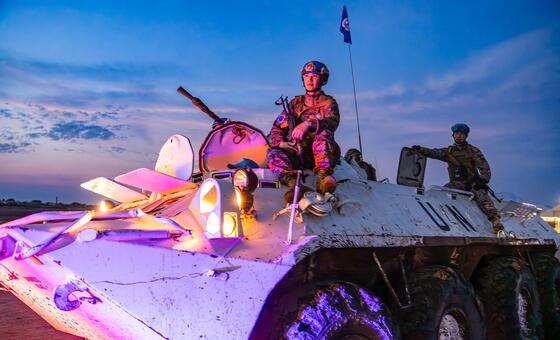
The UN News explainer presents United Nations peace operations as actors that help countries move from armed conflict toward stability. The piece cites illustrative historical examples: supporting the first democratic elections after civil wars in Mozambique and Cambodia; disarming thousands of child soldiers in Sierra Leone; and assisting in securing Namibia’s independence from South Africa. The article frames these as contributions toward creating and preserving peace but does not provide dates, operational details, mission names, metrics of success, or discussion of limitations and controversies.
Source and Framing Analysis
Source: UN News (a United Nations-run outlet). Framing: institutional and constructive—emphasizes positive contributions of UN peace operations and uses historical examples to illustrate roles in democratization, disarmament, and decolonization. Strengths: concise, serviceable summary that highlights tangible ways international operations can reduce violence and help transitions. Limitations and omissions: the explainer lacks operational specifics (timelines, mandates, troop- or resource-levels), quantitative metrics of success or failure, perspectives of affected local populations, and any mention of contested outcomes or well-known criticisms of some UN missions (e.g., limits to mandate, sustainability of outcomes, incidents of misconduct). Readers should treat the piece as an institutional overview, useful for understanding claimed contributions but incomplete as an independent evaluation of effectiveness or accountability.
How sources covered this story
Sanctuary separately assesses reporting quality and alignment with Christian virtues. The virtues assessment considers truthfulness, dignity, compassion, justice, peacemaking, humility, and care for vulnerable people. It does not assess a publisher's faith or reward religious language.
Compare 1 reports
Reporting 75/100Virtues 78/100
- Distinctive contribution
- Names specific historical outcomes—support for the first democratic elections in Mozambique and Cambodia—as examples of UN peace operations’ contributions to post-conflict transitions.
- Framing
- Presents UN peace operations in a positive, constructive frame, emphasizing their role in facilitating democratic transitions and lasting peace.
- Omissions or uncertainty
- No dates, operational details, metrics of success, scope of UN involvement, or sources/attribution are provided. It does not explain how the support was delivered, the actors involved, or any challenges or contested outcomes.
- Why these scores
- The excerpt is a concise, serviceable explainer sentence that responsibly summarizes a role of UN operations and gives illustrative examples. However, it lacks specificity, sourcing, dates, and explanatory detail that would increase verifiability and depth. For a short explainer lead this is adequate but limited. The passage supports themes of peacemaking and restoration (transitioning from conflict to lasting peace) and treats affected countries respectfully. It neither sensationalizes nor dehumanizes. The score is tempered by the absence of critical perspective on limitations or harms, which would further advance justice and humility.
Biblical Reflection
From a Christian perspective, UN peace operations exemplify a public, institutional form of peacemaking that can protect vulnerable people and create space for civic life to recover—actions many Christians can affirm as aligned with the call to pursue peace and care for the neighbor. The Christian response should include sober gratitude for lives spared and institutions that reduce immediate harm, together with prophetic responsibility: advocate for transparency, prioritize victims (especially children and displaced persons), insist on accountability where harm occurs, and support long-term accompaniment that seeks restorative justice and human dignity. Christian practice here combines prayer, informed advocacy, and concrete support for communities affected by conflict.
Scripture in context
- 1UN News explainer: 'UN peace operations work to create, preserve peace' — Institutional explainer summarizing the roles and illustrative accomplishments of UN peace operations worldwide. — Use as a succinct statement of how the UN portrays the practical contributions of its missions—supporting first post-conflict elections, disarming child soldiers, and assisting decolonization transitions—while recognizing the item is a high-level institutional account that omits operational detail and critique.
- 2Matthew 5:9 (Sermon on the Mount) — A teaching in the Gospels that affirms those who actively pursue peace within a broader ethic of humility, mercy, and righteousness. — This passage encourages Christians to value peacemaking in both personal and public spheres; it supports welcoming efforts that protect life and enable communities to recover, while also calling for moral seriousness about how peace is pursued and sustained.
Faithful Response
Pray for civilians, peacekeepers, local leaders, and aid workers in conflict-affected areas, asking for protection, wisdom, and restoration.
Educate congregations about the history, contributions, and limitations of UN peace operations so advocacy is informed and attentive to victims’ needs rather than sentimental.
Advocate for policies and funding that prioritize civilian protection, child protection, survivor-centered accountability, and long-term reconstruction rather than short-term visibility.
Support or partner with reputable humanitarian and child-protection organizations that provide sustained accompaniment to communities recovering from conflict.
Hold institutions and governments accountable where missions fall short—demand transparency, independent investigation of alleged abuses, and reforms that center justice and dignity for the most vulnerable.
Reflection and Discussion
- 1Does an institutional account of peacebuilding adequately name the suffering and perspectives of local populations, or does it risk presenting 'peace' as a finished product?
- 2How should Christians balance gratitude for lives spared with prophetic critique where peace operations fall short or cause harm?
- 3In what practical ways can our congregation support long-term reconciliation and the protection of children, displaced persons, and other vulnerable groups affected by conflict?
Sources
Reporting links are evidence inputs; Sanctuary News' biblical reflection is commentary.
This outlook currently relies on fewer than two linked sources. Broaden verification before teaching from it.
- 1.Explainer: UN peace operations work to create, preserve peaceofficial_document