News Summary
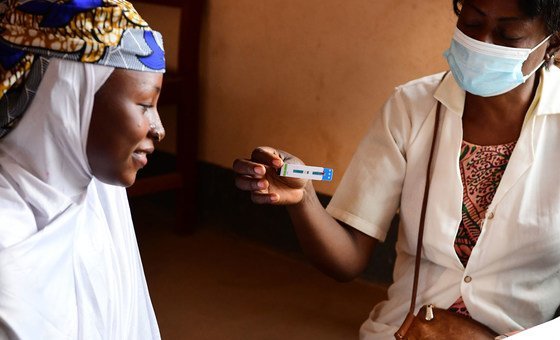
Reported facts: A UN report (27 July 2026) states that unequal access to breakthrough HIV prevention medicines and a sharp decline in global funding are slowing progress in preventing HIV, and warns the AIDS epidemic could resurge; the report was released ahead of the 26th International AIDS Conference in Rio de Janeiro. Attributed claims: The article summarizes the UN's assessment that high prices and funding cuts have 'stalled' a prevention revolution. Uncertainty: The article does not provide the report's underlying data, specific price levels, exact funding decline figures, country-by-country impacts, or which prevention medicines are referenced.
Source and Framing Analysis
The article is based on a single UN report and presents the report's warnings without additional independent data or country-level detail. Key terms—'breakthrough prevention medicines,' 'high prices,' and 'sharp decline'—are used without numeric specifics in the summary provided, which leaves readers unable to assess magnitude or which populations are most affected. The framing emphasizes risk and urgency, appropriately reflecting the UN warning, but the lack of concrete figures or external corroboration is a material gap for readers judging scale and policy responses.
Biblical Reflection
This report highlights a moral and practical crisis: scientific advances alone are not enough if medicines remain unaffordable and programs lose funding. Christians should respond with clear-eyed truthfulness—acknowledging the facts the UN identifies—compassion for those most at risk, and a commitment to justice that presses for affordable care and sustained support for vulnerable communities. Our faith calls us both to care for immediate needs and to advocate for systemic changes that reflect neighbor-love and stewardship of resources.
Scripture in context
- 1Luke 10:25-37 (Parable of the Good Samaritan) — In a teaching context about neighborliness and mercy, Jesus tells a story in which a Samaritan helps an injured stranger while others pass by; the parable challenges social and religious boundaries and redefines 'neighbor' as the one who shows mercy. — The passage urges care for people in immediate need regardless of social identity and calls disciples to cross barriers—economic, ethnic, or political—to relieve suffering; applied here, it challenges Christians to support equitable access to prevention and to minister without stigma to those affected by HIV.
Faithful Response
Pray specifically for people living with or at risk of HIV, for decisionmakers, and for international health workers.
Give to or partner with trusted organizations that provide prevention, treatment, and stigma-reduction programs, especially those serving low-income and marginalized communities.
Advocate for policies that expand affordable access to prevention medicines and sustain funding for public-health programs at national and international levels.
Educate your congregation to reduce stigma around HIV and promote compassion and confidentiality for affected persons.
Reflection and Discussion
- 1How does this report change the way you think about the relationship between medical progress and social justice?
- 2Where does your community need to act—through prayer, generosity, advocacy, or education—to prevent vulnerable people from being left behind?
Sources
Reporting links are evidence inputs; Sanctuary News' biblical reflection is commentary.
This outlook currently relies on fewer than two linked sources. Broaden verification before teaching from it.
- 1.High prices and funding cuts stall HIV prevention revolutionofficial_document