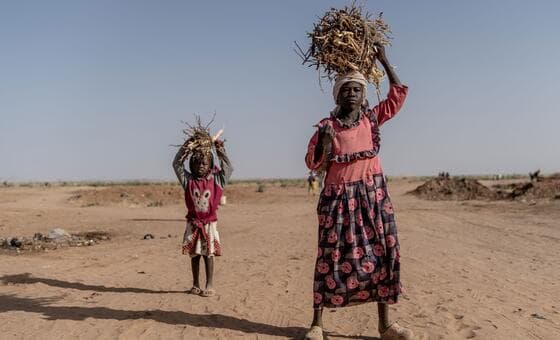
A little more detail
UN officials reported on 3 November 2026 that drone strikes in Sudan are increasingly targeting civilian infrastructure. The attacks are said to be interrupting electricity, water and fuel supplies and to be impeding humanitarian aid operations, which the UN warns is placing civilian lives at risk. The UN country head framed the situation as a humanitarian crisis focused on people rather than politics. The article provides these claims as the UN official's assessment and does not include casualty figures, precise locations, or independent confirmation.
Source and Framing Analysis
The story is a single-source report based on statements by the UN's top official in Sudan; the publisher is the UN’s own news service. That makes the account authoritative for the UN perspective but leaves important factual details — responsible actors, casualty counts, and specific locations — unreported. The humanitarian framing centers human impact rather than military or political narratives, which clarifies the UN's priorities but also narrows the piece to a policy and relief lens.
How sources covered this story
This section compares the evidence and framing in linked reports. The Christian assessment above addresses the conduct described in the story; it does not grade a journalist’s faith or the morality of covering an event.
Compare 1 reports
Reporting 75/100
- Distinctive contribution
- Attributes an urgent warning to the UN’s top official in Sudan and explicitly lists the types of civilian services affected (electricity, water, fuel) and the consequence of hampered humanitarian delivery.
- Framing
- Humanitarian-impact framing: presents the situation as an urgent risk to civilians and to aid operations, emphasizing disruption of essential services rather than political or military justification.
- Omissions or uncertainty
- Does not name the UN official, provide dates, locations, casualty or displacement figures, or identify parties responsible for the drone strikes. No evidence or sources beyond the attributed warning are supplied; severity, scale, and temporal trend ('intensifying') are not quantified.
- Why these scores
- Clear and concise attribution to a credible actor (UN’s top official) and identification of concrete impacts (electricity, water, fuel, humanitarian access) make this a useful brief. It responsibly signals risk without definitive unverified claims. It is limited by lack of specifics (who is responsible, where exactly, metrics or corroborating data) and therefore cannot serve as a comprehensive account.
Christian commentary · About the conduct described in this story
Biblical Reflection
The reported attacks on civilian infrastructure should trouble Christians because they directly harm sleeping, sick, and vulnerable people whom Scripture calls us to value and protect. Paul’s instruction to live peaceably and seek the welfare of neighbors invites believers to oppose violence that targets lifelines and to advocate for safe passage of aid.
Practically, Christians can pray for the afflicted and aid workers, support trustworthy relief organizations, and speak for humanitarian access with humility and truth—bearing witness to Christ’s care for the least, even amid geopolitical complexity.
Scripture in context
- 1 — Paul urges believers to do what is possible to live peaceably with others as part of his ethical instructions to communities facing division and conflict. — This passage calls Christians to seek peace and oppose actions that make peaceful coexistence and basic human welfare impossible; it undergirds a pastoral response that centers protection of civilians and practical peacemaking.
A suggested response for readers, separate from the assessment above.
Faithful Response
Pray and give to vetted humanitarian partners working in Sudan, stay informed through reliable sources, and advocate with elected leaders or church networks for safe, unhindered humanitarian access.
Reflection and Discussion
- 1How does this report challenge our assumptions about war being separate from civilian suffering?
- 2Where can we, as a community, amplify protection for vulnerable people in Sudan?
Sources
Reporting links are evidence inputs; Sanctuary News' biblical reflection is commentary.
This is a developing, single-source report. Details may change as more reporting becomes available.
- 1.‘This is not about politics. This is about people’: UN warns of impact of deadly drone strikes in Sudanofficial_document