News Summary
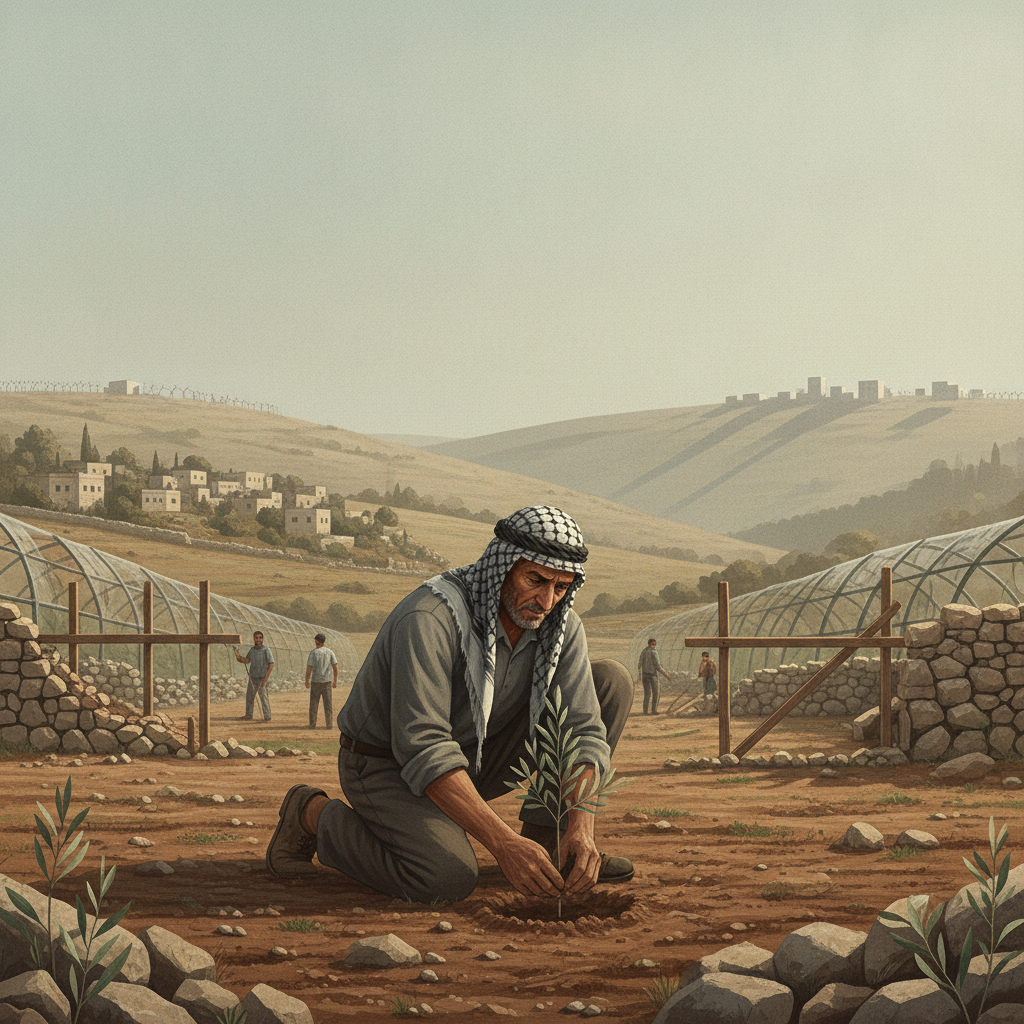
Reported facts: The UN is supporting Gaza farmers rebuilding smallholdings damaged during the Hamas–Israel war; the World Food Programme has warned of increased settler violence in the West Bank. Attributed claims: The article attributes the rebuilding support to the UN and the security warning to the WFP. Uncertainties: The report does not provide numbers of farmers helped, the geographic extent of damage, details of UN assistance programs, specific incidents or timelines of settler violence, nor direct eyewitness accounts.
Source and Framing Analysis
The article is short and framed as a humanitarian update. Material uncertainties that affect the story include lack of quantitative data (how many farmers, acreage lost), absence of specific locations inside Gaza, and no detailed description of the incidents prompting the WFP warning. The framing foregrounds need and protection concerns rather than political analysis or attribution of specific acts, which limits partisan spin but leaves key factual gaps.
Biblical Reflection
This report highlights two linked humanitarian concerns: the material devastation to livelihoods in Gaza and the security risks confronting civilians and aid workers in the West Bank. The article is brief and factual in intent, focusing on needs rather than assigning detailed blame. Christians should respond with compassion for those who have lost homes and means of subsistence, advocate for protection of civilians and humanitarian access, and resist narratives that dehumanize either side. The underlying worldview is humanitarian: prioritize relief, recovery, and protection for vulnerable people. Still, the short report leaves important factual gaps (scale, responsible actors for specific incidents, and precise UN measures) that require further verification before firm public judgments are made.
Scripture in context
- 1Luke 10:25–37 (Parable of the Good Samaritan) — In this teaching episode Jesus answers a question about 'neighbor' by telling a story in which a Samaritan, an outsider despised by the original questioner’s community, acts mercifully toward a wounded man when others pass by. The parable emphasizes concrete mercy that crosses social boundaries. — The passage calls Christians to practical compassion for people in need irrespective of their identity, and to risk social norms to provide aid and protection — an appropriate lens for responding to displaced farmers and civilians threatened by violence.
Faithful Response
Pray specifically for affected farmers, aid workers, and those harmed by settler violence; make prayer a sustained habit rather than a one-off reaction.
Support reputable humanitarian organizations providing seeds, tools, cash assistance, and protection for civilians; give through vetted channels like UN agencies or well-known relief partners.
Educate oneself and one’s church about the humanitarian realities without rushing to partisan conclusions; prioritize the dignity of victims in language and action.
Advocate peacefully for humanitarian access and civilian protection through letter-writing to policymakers, ecumenical statements, or joining nonpartisan campaigns that protect civilians.
Reflection and Discussion
- 1Who are the most vulnerable in this situation, and how does Scripture call us to prioritize their care?
- 2How can we hold together truth-telling and compassion when facts are incomplete and tensions are high?
- 3What forms of long-term solidarity (not just short-term aid) should Christians promote for communities whose livelihoods are destroyed by war?
Sources
Reporting links are evidence inputs; Sanctuary News' biblical reflection is commentary.
This outlook currently relies on fewer than two linked sources. Broaden verification before teaching from it.
- 1.Gaza farmers battle to rebuild as WFP warns of West Bank settler violenceofficial_document