News Summary
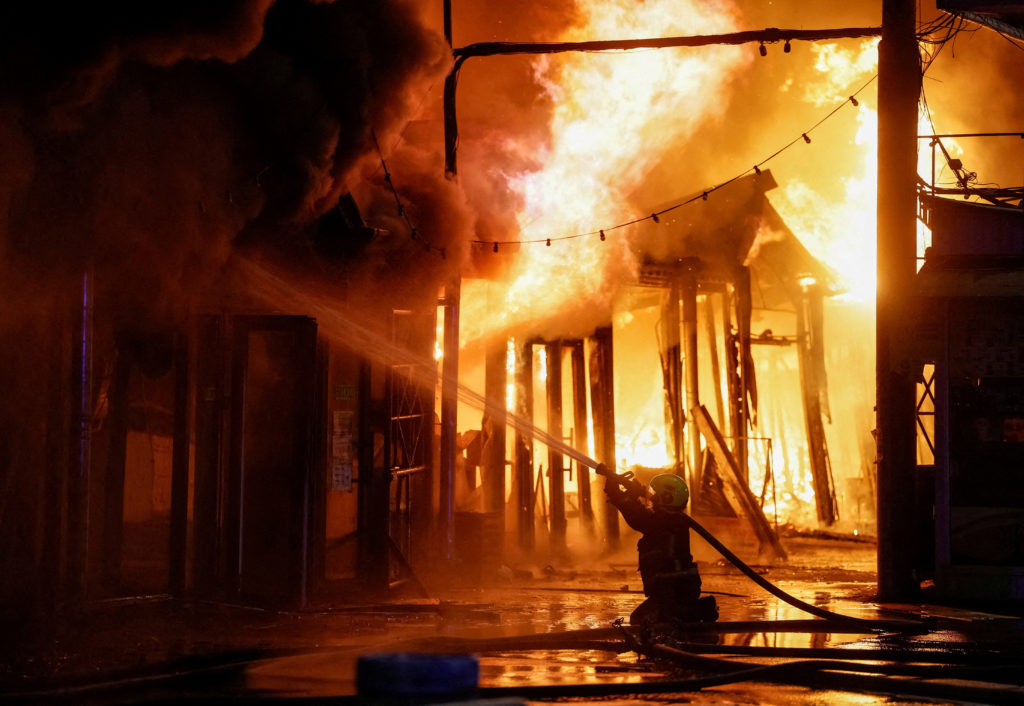
Multiple outlets report that Ukrainian forces carried out a large aerial operation inside Russian territory that involved drones and long‑range strikes and that killed at least six people. NPR’s supplied text characterizes the strike as occurring on Sunday and involving “hundreds of drones”; PBS’s supplied text places the action in a broader campaign this year against military‑industrial and energy targets. Neither supplied excerpt independently verifies precise locations, the identities (civilian or military) of those killed, or a complete weapons inventory.
Source and Framing Analysis
Both supplied accounts frame the event as a major Ukrainian strike inside Russia and use the comparative phrase “one of its largest.” NPR supplies immediate operational details in the supplied text (timing: Sunday; a reported count: “hundreds of drones”; casualty figure: at least six). PBS situates the strike within a stepped‑up campaign this year, noting long‑range missiles and swarming drones and identifying military‑industrial and energy facilities as the kinds of targets Kyiv has been striking. The two pieces therefore contribute complementary details, but notable omissions remain in both supplied excerpts: no independent forensic verification of damage or casualties, no precise geolocations inside Russia, and no explicit attribution or corroborating statements from Ukrainian or Russian officials in the supplied texts. Those gaps limit assessments of proportionality, target discrimination, and humanitarian impact.
Free every morning
Get the Daily Briefing
The stories shaping today—sourced carefully and considered through Scripture. No outrage bait.
Confirm by email. Unsubscribe at any time.
How sources covered this story
Sanctuary separately assesses reporting quality and alignment with Christian virtues. The virtues assessment considers truthfulness, dignity, compassion, justice, peacemaking, humility, and care for vulnerable people. It does not assess a publisher's faith or reward religious language.
Compare 2 reports
Reporting 78/100Virtues 76/100
- Distinctive contribution
- Reports the scale ('hundreds of drones'), the timing ('Sunday'), and a concrete casualty figure ('at least six people'), which are material details beyond generic statements of escalation.
- Framing
- Straightforward, concise news lede-style framing that emphasizes scale and human cost without emotive language.
- Omissions or uncertainty
- Supplied text does not attribute the casualty figure or drone-count to a source (officials, independent monitors, Russian authorities); it does not specify locations of strikes, whether the dead were civilians or military personnel, nor provide corroborating evidence or context about damage or response.
- Why these scores
- The line is clear and informative for a lede, giving specifics that matter (scale, casualties, timing). It indicates uncertainty with 'at least' and 'one of Kyiv's largest' which are cautious. The main limitation in the supplied excerpt is lack of source attribution and detail; as a brief report element it is solid but not comprehensive. The wording treats the human cost plainly and avoids sensationalism or dehumanizing language. It could better serve compassion and justice by specifying whether victims were civilians or combatants and by providing sourcing; nonetheless the tone is measured and factual.
Reporting 72/100Virtues 74/100
- Distinctive contribution
- Summarizes an observable change in campaign posture this year and identifies weapons (long-range missiles, swarms of drones) and target categories (military industry, energy infrastructure).
- Framing
- Neutral, descriptive framing that characterizes an escalation in attacks and specifies weapon types and target sectors without emotive language.
- Omissions or uncertainty
- No dates or specific incidents tied to the claim; no sourcing or attribution for the assessment; no casualty or damage figures; no geographic specificity inside Russia; no Russian or Ukrainian official statements cited here.
- Why these scores
- Concise and cautiously worded; useful for context. However, the supplied excerpt lacks attribution, sourcing, specifics (when/where), and supporting evidence. It responsibly avoids definitive unsourced claims but is too brief to be a full account of events. Language is non-sensational and factual, avoiding dehumanization or inflammatory phrasing. The excerpt does not foreground civilian suffering (an omission), but it does not exploit or sensationalize the violence; it neutrally documents escalation and targets.
Biblical Reflection
Begin with lament for lives lost and compassion for those who suffer on every side. Christians should pursue truthful reporting and evidence while resisting celebrations that dehumanize victims. Press for accountability where civilian harm or reckless targeting may have occurred; insist on proportionality and discrimination in the use of force. Place humanitarian relief for the vulnerable at the center of response. This posture honors truth, mercy, justice, peacemaking, humility, and care for neighbors—prioritizing grief, the dignity of all persons affected, and the work of reducing future harm.
Scripture in context
- 1Matthew 5:9 — Part of the Sermon on the Mount describing the vocation of those in God's kingdom. — Calls Christians to be peacemakers. In the face of wartime reporting this urges us to pursue reconciliation, seek ways to limit suffering, and avoid celebrating violence as moral victory.
- 2Romans 12:17-21 — Ethical instruction about responding to wrongdoing without repaying evil with evil. — Counsels restraint and justice tempered by mercy; prompts Christians to press for accountability, protect noncombatants, and pursue restorative paths where possible rather than unreflective escalation.
Faithful Response
Pray specifically for the victims, wounded, grieving families, emergency responders, and leaders working for de‑escalation.
Support reputable humanitarian organizations providing aid to civilians affected by the fighting on all sides.
Demand transparent, verifiable information about civilian harm and press civic authorities and international bodies for accountability where warranted.
Avoid sharing unverified casualty counts, imagery, or triumphalist messaging that dehumanizes people on either side.
Provide pastoral care: organize times of lament, offer counseling to those personally affected, and create educational moments about the complexities of war and peacemaking.
Coordinate congregational giving toward humanitarian relief rather than material support for escalation.
Free every morning
Get the Daily Briefing
The stories shaping today—sourced carefully and considered through Scripture. No outrage bait.
Confirm by email. Unsubscribe at any time.
Reflection and Discussion
- 1How do we hold together support for legitimate national defense and the biblical call to protect noncombatants and pursue peace?
- 2What kinds of evidence should we seek before concluding that a particular military strike was just or unjust, and how should Christians press for that evidence?
- 3How can our prayers and actions practically comfort victims while also advocating restraint, accountability, and long‑term pathways to peace?
- 4How should congregations respond pastorally when news of distant violence provokes anger, fear, or triumphalism among members?
Sources
Reporting links are evidence inputs; Sanctuary News' biblical reflection is commentary.
- 1.Ukraine launches one of its largest aerial attacks of the war, killing at least 6 people in Russiaprimary_reporting
- 2.Ukraine launches one of its largest aerial attacks of the war, killing at least 6 people in Russiaadditional_reporting